




![[WATCH] 'Hookah pee ke aa raha hoon' - MS Dhoni's candid remark to Rishabh Pant goes viral](https://g-mob.glance-cdn.com/public/fc/image/TDfS7ES_jTn0.webp)

The Flick of a Finger
The carrom ball gets its name from the popular indoor board game, and the comparison is direct and accurate. The delivery is propelled by a sharp flick of the middle finger against the ball, similar to how a player flicks a striker on a carrom board.
Instead of a conventional release where the ball rolls over the fingers to create spin, the carrom ball is squeezed out from the front of the hand. This unorthodox action, a sudden snap of the middle finger and thumb, is the foundation of its deception. In some parts of India, particularly Tamil Nadu, it's also known as the 'sodukku ball', which translates to 'snapping of fingers'.
The Unconventional Grip
To bowl a carrom ball, a spinner holds the ball between the thumb, the bent middle finger, and the forefinger. The key is the position of the middle finger, which is bent and poised to do the work. The grip itself is a form of misdirection. To a batter watching intently, the bowler's hand and arm rotation might suggest a standard off-break or leg-break. However, the true action happens at the last moment, hidden from view until the ball is on its way. Unlike a traditional spinner who uses their wrist and index finger, the carrom baller relies entirely on that powerful flick to generate the spin or, just as importantly, a lack of it.
The Physics of Deception
The magic of the carrom ball lies in the unpredictable spin it generates. By flicking the ball with the middle finger, a bowler can create revolutions that cause the ball to behave in multiple ways without a significant change in bowling action. Depending on how the finger strikes the ball, it can go straight on with backspin, making it skid low and fast off the pitch. It can also be made to spin like a leg-break (away from a right-handed batter) or an off-break (into a right-handed batter). This variation is what confounds batters. They expect the ball to turn based on the bowler's action, but the flick imparts a different trajectory, leading to false shots, edges, and LBWs. Some bowlers, like Ravichandran Ashwin, have even developed a 'reverse carrom' which uses a similar grip to impart backspin, causing the ball to drift in unexpectedly.
A Forgotten Art Reborn
While it feels like a modern invention, the technique dates back to the 1940s. Australian Jack Iverson was the first known bowler to use this method in Test cricket after World War II, though he didn't call it a carrom ball. Fellow Australian John Gleeson used a similar grip a decade later, but the delivery largely vanished from the international scene by the late 1970s. It exploded back into cricketing consciousness in 2008 when Sri Lankan mystery spinner Ajantha Mendis used it with devastating effect, most notably against India in the Asia Cup final. Mendis's success popularised the delivery and inspired a new generation of spinners to master the difficult art.
Modern Masters of the Craft
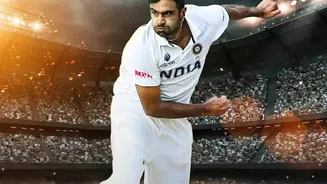
In the modern era, especially with the rise of T20 cricket, the carrom ball has become a vital weapon. Indian off-spinner Ravichandran Ashwin is perhaps its most famous and successful modern proponent. He has used the delivery to dismiss some of the best batters in the world and has continuously innovated with it. Other notable practitioners include West Indies mystery spinner Sunil Narine, whose carrom balls were instrumental in Kolkata Knight Riders' Indian T20 League title wins, and Indian bowler Varun Chakravarthy, who has also made a name for himself with this variation. The ability to bowl a delivery that defies convention and expectation keeps these bowlers a step ahead in the constant battle between bat and ball.