


Ghevar from Rajasthan
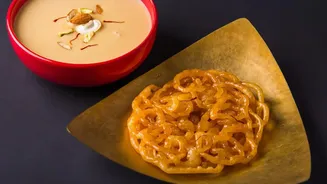
A quintessential sweet of Teej and Raksha Bandhan, Ghevar is a stunning, disc-shaped delicacy from Rajasthan. This honeycomb-like cake is made by deep-frying a batter of all-purpose flour (maida) and then soaking it in sugar syrup. Its preparation is closely
tied to the monsoon season, as the humid weather is believed to be essential for achieving its signature porous and spongy texture. While the plain version is a classic, Ghevar is often adorned with toppings like rabri (thickened sweet milk), mawa (milk solids), and chopped nuts, transforming it into an even more decadent treat. Traditionally, sending a box of Ghevar to a married daughter's home is a cherished custom during Teej, symbolising sweetness and prosperity.
Thekua from Bihar and Jharkhand
Deeply woven into the cultural fabric of Bihar, Jharkhand, and parts of Uttar Pradesh, Thekua is a rustic and crunchy sweet biscuit. It is the most revered prasad (sacred offering) during the Chhath Puja, a festival dedicated to the Sun God. Made from whole wheat flour, ghee, and sweetened with either sugar or jaggery, the dough is often flavoured with fennel seeds and cardamom. Before being deep-fried to a perfect golden-brown, the dough is pressed into intricate patterns using special wooden moulds. The result is a delicious, long-lasting snack that has been a cherished part of the region's culinary heritage for centuries.
Pootharekulu from Andhra Pradesh
Often called 'paper sweet', Pootharekulu is an exceptionally delicate and unique sweet from Atreyapuram in Andhra Pradesh. The name literally translates to 'coated sheet' in Telugu. It is crafted from paper-thin layers of rice starch, which are made by deftly wiping a thin cloth dipped in rice batter over an inverted hot pot. Each translucent sheet is then brushed with ghee and layered with powdered sugar or jaggery and finely chopped nuts. This intricate, melt-in-your-mouth sweet has earned a Geographical Indication (GI) tag, recognising its unique origin and preparation method, which remains a cottage industry for hundreds of families in the region.
Chhena Poda from Odisha
Hailing from Odisha, Chhena Poda translates to 'burnt cheese' and is often described as India’s answer to cheesecake. This unique dessert is made from well-kneaded fresh cottage cheese (chhena), sugar, and semolina, which is then baked for several hours until the outside caramelises into a beautiful brown crust while the inside remains soft and moist. Its invention is credited to a confectioner in Nayagarh district who, in the mid-20th century, experimented by leaving sweetened leftover chhena in a warm oven overnight. Today, Chhena Poda is an essential offering to Lord Jagannath in Puri and a beloved sweet during festivals like Durga Puja.
Pitha from Assam
Pitha is not a single sweet but a whole category of rice cakes that are central to celebrations in Assam, especially during the Bihu festivals. Made from glutinous bora saul (sticky rice), pithas come in countless forms—steamed, fried, and roasted. One of the most iconic is the Til Pitha, a thin rice-flour crepe filled with a mixture of roasted black sesame seeds and jaggery, then rolled into a tight cylinder. Another popular variety is the Narikol Pitha, a half-moon shaped pastry with a sweet grated coconut filling. Whether it's the steamed Tekeli Pitha cooked over a kettle's spout or the fried Ghila Pitha, these delicacies showcase the incredible versatility of rice in Assamese cuisine.