






The Urban Heat Island Explained
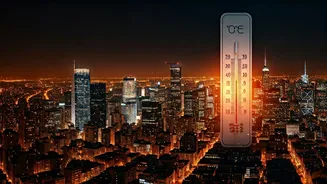
The phenomenon you're experiencing is known as the Urban Heat Island (UHI) effect. It’s what happens when a city experiences much warmer temperatures than its surrounding rural areas. In India's major metropolitan hubs, this can mean a temperature difference
of anywhere from 2 to 10 degrees Celsius. This isn't just about daytime discomfort; the real issue often begins after the sun goes down, when cities fail to cool off, preventing our bodies from getting the recovery period they need from daytime heat exposure.
The Daily Cycle of Heat Absorption
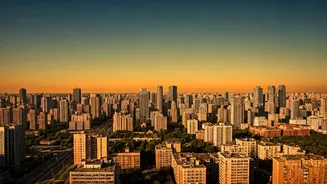
To understand why nights stay so warm, we first need to look at what happens during the day. Urban landscapes are dominated by materials like asphalt, concrete, and dark-coloured rooftops. These surfaces are excellent at absorbing and storing solar radiation from the sun. Unlike natural landscapes with vegetation and water, which use a process called evapotranspiration to cool the air, our concrete jungles simply soak up the heat all day long. Think of the city as a massive battery, charging up with thermal energy from sunrise to sunset.
How Cities Trap Heat at Night
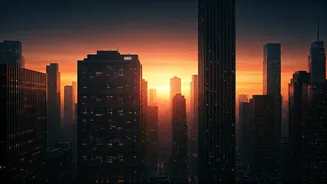
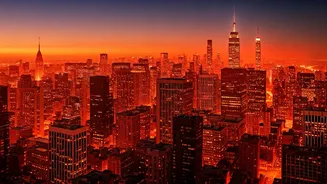
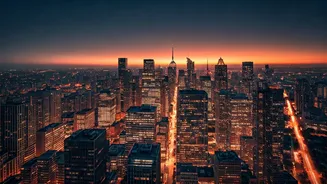
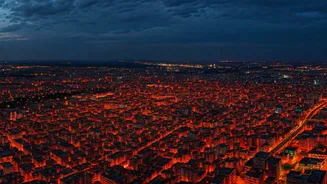
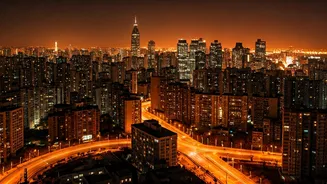
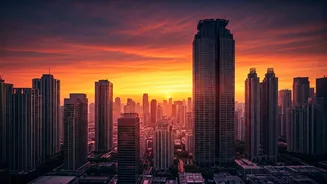
When night falls, this is when the 'trapped radiation' part of the headline comes into play. The buildings, roads, and pavements that spent all day absorbing heat begin to release it back into the environment as long-wave infrared radiation. In a rural area with open spaces, this heat would simply radiate upwards into the night sky. But in a dense city, this process is severely hampered. The tall buildings create what are known as 'urban canyons', which block the heat from escaping. The radiation is bounced back and forth between building surfaces, effectively trapping it at street level and keeping the air temperature stubbornly high.
The Materials Making Our Cities Hotter
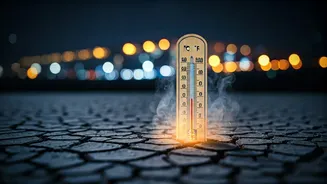
The choice of building materials is a primary driver of the urban heat island effect. Traditional materials like dark asphalt can absorb up to 95% of the sunlight that hits them. Concrete and bricks also have high thermal mass, meaning they can store a lot of heat. This stored heat is slowly released throughout the evening and night, which is why a pavement can still feel warm to the touch hours after sunset. The lack of green cover and water bodies, which have a natural cooling effect, further compounds the problem in cities like Delhi, Mumbai, Pune, and Ahmedabad.
The Impact on Health and Energy
Persistently high nighttime temperatures are more than just uncomfortable; they pose significant public health risks. They prevent the human body from cooling down and recovering during sleep, leading to increased stress, heat-related illnesses, and worsening of conditions like cardiovascular and respiratory diseases. This is especially dangerous for vulnerable populations, including the elderly, children, and outdoor workers. Furthermore, the heat leads to a dangerous feedback loop: as cities get hotter, residents use more air conditioning, which consumes vast amounts of energy and pumps more waste heat out into the urban environment, further raising the ambient temperature.
Paving the Way for Cooler Cities
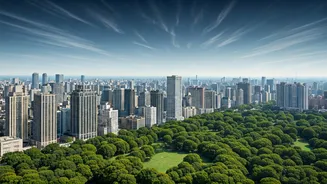
The good news is that this is not an unsolvable problem. Urban planners and policymakers are increasingly looking at solutions to mitigate the UHI effect. Strategies include implementing 'cool roofs' and 'cool pavements' made of reflective materials that absorb less sunlight. Increasing urban green spaces by planting trees, creating parks, and installing green roofs on buildings also makes a significant difference. These nature-based solutions provide shade and cool the air through evapotranspiration, helping to break the cycle of heat absorption and radiation.