



An Ephemeral Paradise
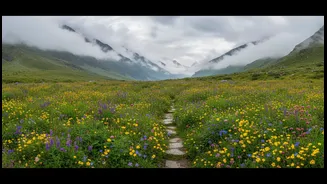
For nearly seven months, the Valley of Flowers National Park lies dormant, buried under a thick blanket of Himalayan snow. But each year, as the monsoon clouds gather, it undergoes a spectacular transformation. The park typically opens on June 1st and
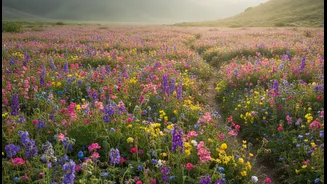
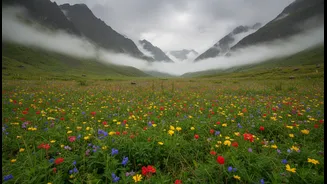
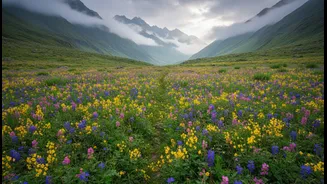
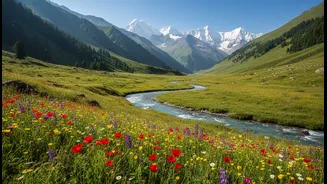
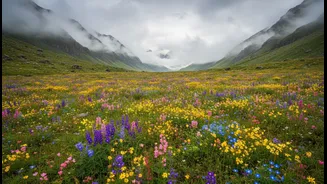
closes in October, but the real magic is concentrated in an even shorter period. The peak blooming season, when the valley explodes into a carpet of colour, lasts only from mid-July to mid-August. This narrow window isn't a bug; it's the main feature. The sense of urgency it creates, the knowledge that this vibrant spectacle is temporary, is precisely what elevates it from a beautiful place to a must-do pilgrimage for nature lovers.
Nature's Monsoon Symphony
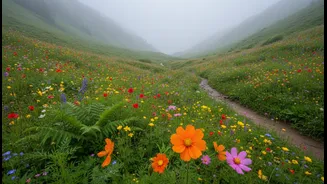
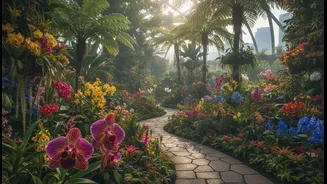
Unlike most Himalayan treks that are best avoided in the rain, the Valley of Flowers owes its very existence to the monsoon. The seasonal rains and moist soil create the perfect microclimate for over 500 species of alpine flowers to burst forth. This is when the valley's most sought-after residents make their appearance. The meadows are painted with the vibrant hues of Himalayan Balsam, Geraniums, and Primulas. Trekkers search the rocky crevices for the almost mythical Blue Poppy, while the ethereal, night-blooming Brahma Kamal—the state flower of Uttarakhand—can be found on the higher slopes. Other unique blooms include the fascinating Cobra Lily and the fragrant Himalayan Bellflower. Each week brings a subtle change in the valley's colour palette as different species take their turn to dominate the landscape.
A UNESCO World Heritage Site
The global significance of this region was officially recognised in 2005 when it was declared a UNESCO World Heritage Site, an extension of the Nanda Devi National Park. This designation isn't just for its outstanding natural beauty but for its role as a habitat for rare and endangered animals, including the snow leopard, Asiatic black bear, and blue sheep. The valley serves as a unique transition zone between the Zanskar and Great Himalayan ranges, fostering exceptional biodiversity. This protected status underscores the fragility of the ecosystem and reinforces the need for the strict seasonal limits on visitors, adding to the feeling that a visit here is a rare privilege.
The Journey Itself
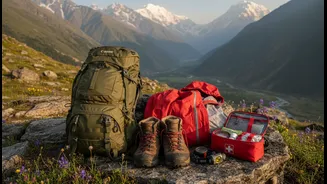
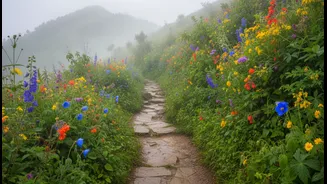
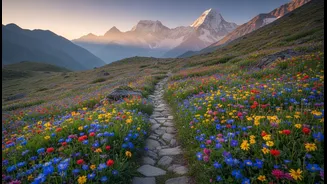
Reaching this floral wonderland is an adventure in itself. The journey begins at Govindghat, from where a trek leads to the small settlement of Ghangaria, the base camp for the valley. Ghangaria is the last point of human habitation and the entry point for both the Valley of Flowers and the sacred Sikh pilgrimage site of Hemkund Sahib. The trek into the valley from Ghangaria is a moderate walk of about three to four kilometres through stone-paved paths, crossing streams and wooden bridges. Trekkers are required to enter and exit the park on the same day, as overnight stays are prohibited to protect the delicate environment. This structured access ensures the journey remains a day-trip into paradise, preserving its untouched feel.