

The Invisible Enemy: Carbon Dioxide
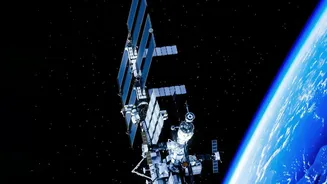
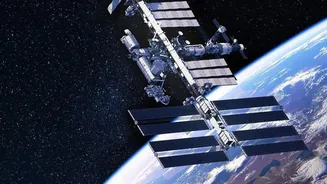
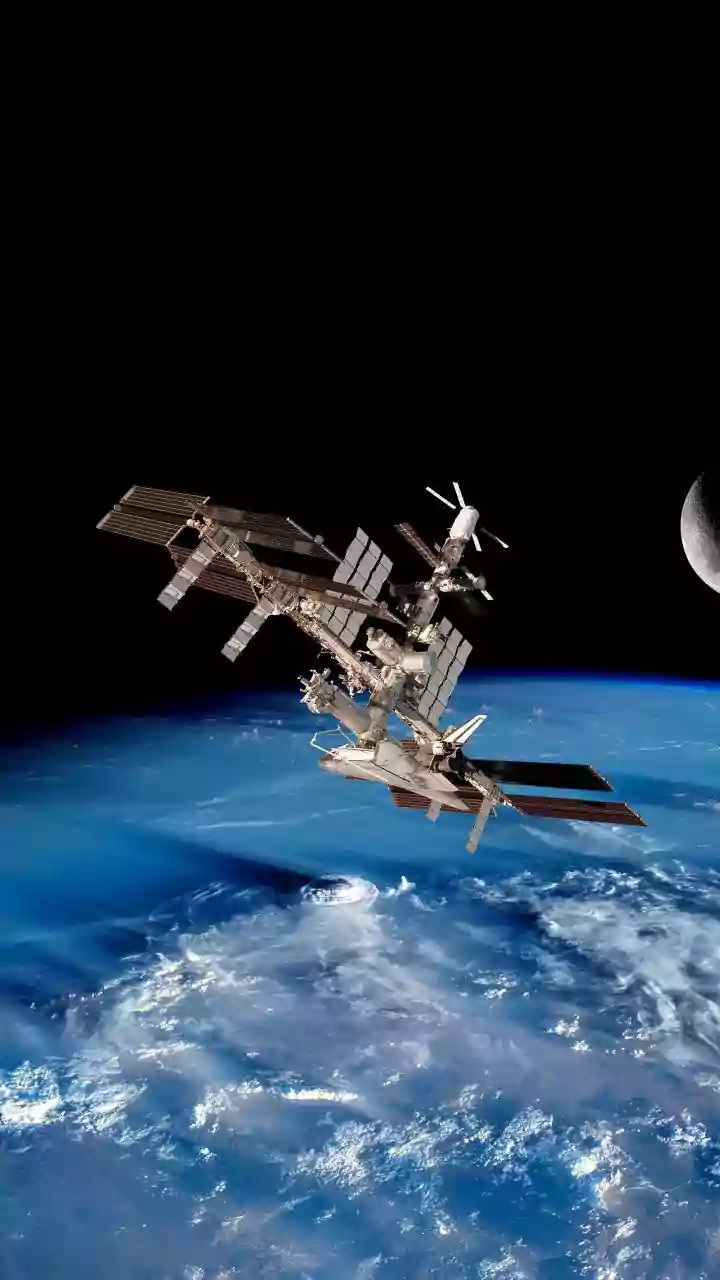
On Earth, we rarely think about the air we breathe. It's a vast, self-regulating system. In a spacecraft like the International Space Station (ISS) or a future Mars transit vehicle, the atmosphere is a finite, precious resource that must be meticulously
managed. The most immediate threat to an astronaut's respiration isn't a lack of oxygen, but the buildup of carbon dioxide (CO2). Every time an astronaut exhales, they release CO2 into the cabin. Without a system to remove it, CO2 levels would quickly rise to toxic concentrations, leading to headaches, dizziness, and eventually, incapacitation and death. Early space missions like Apollo used disposable lithium hydroxide canisters to scrub CO2 from the air, a solution that is simply not feasible for long-duration missions where resupply is impossible.
The Workhorse: Regenerative CO2 Scrubbers
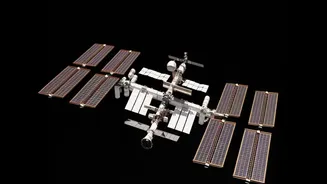
Modern life support, like the Environmental Control and Life Support System (ECLSS) on the ISS, relies on regenerative technology. The primary tool for CO2 removal is the Carbon Dioxide Removal Assembly (CDRA). This sophisticated system uses beds of materials called molecular sieves, often a type of mineral called zeolite, which are designed to trap specific molecules. Air from the cabin is passed through these beds, which capture the CO2 molecules while allowing oxygen and nitrogen to pass through. The key innovation is that these systems are 'regenerable'. Once a sieve bed is saturated with CO2, it is taken offline and heated, which forces it to release the captured gas. This CO2 is then vented into space or, in more advanced systems, sent to another device for further processing.
From Waste Gas to Valuable Resource
For missions to Mars, even venting CO2 is seen as wasteful. The ultimate goal is a 'closed-loop' system where every resource is recycled. Advanced systems, like the Sabatier system tested on the ISS, take this a step further. It combines the captured CO2 with hydrogen (a byproduct of generating oxygen from water) to produce water and methane. The water can be used for drinking or electrolyzed to create more oxygen, further closing the life support loop. This innovation transforms a dangerous waste product into a valuable resource, reducing the immense amount of water that would otherwise need to be launched from Earth, a critical step for making interplanetary travel sustainable.
Beyond CO2: The Problem with Fumes and Particles
An astronaut's respiratory health is threatened by more than just CO2. The enclosed environment of a spacecraft is a complex chemical soup. Hundreds of different volatile organic compounds (VOCs) can 'off-gas' from electronics, plastics, and even the astronauts themselves. On Earth, these disperse, but in space, they accumulate and can cause irritation or long-term health problems. Furthermore, in microgravity, dust, skin flakes, and other particles don't settle but float indefinitely, posing an inhalation risk. Systems like the Trace Contaminant Control System on the ISS use beds of activated charcoal and high-temperature catalytic oxidizers to break down these harmful compounds and keep the air pure.
The Future of Fresh Air in Space
As NASA and its partners plan for missions to the Moon and Mars, they are developing even smaller, more efficient, and more reliable life support systems. Researchers are testing new compact air quality monitors that can provide real-time, high-precision data on the atmospheric composition inside a habitat. This allows for faster responses to any contamination events. Investigations are also underway to better understand how dust on the Moon or Mars might affect astronauts' lungs and how to mitigate those risks. The ability to ensure clean, safe, and breathable air is not just a technical requirement; it's a fundamental pillar upon which the entire future of human deep-space exploration is built.