




What is a Dark Store?
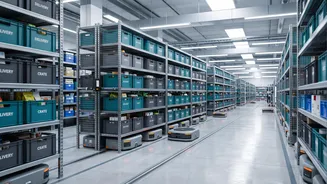
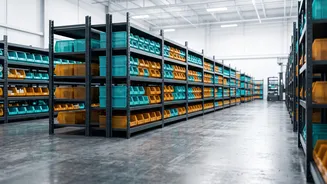
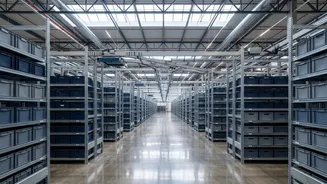
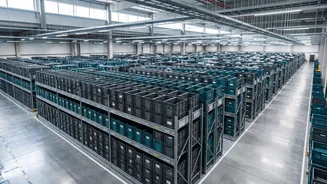
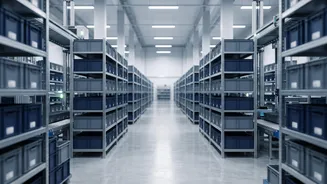
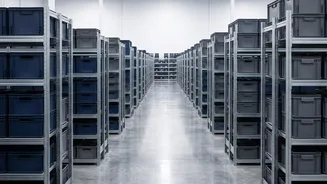
Imagine a supermarket, but with no shoppers, no checkout counters, and no grand entrance. Instead, it's a space purely optimised for speed. That’s a dark store. These are mini-warehouses, typically between 2,500 and 5,000 square feet, strategically placed
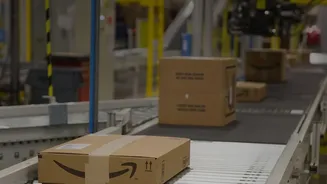
deep inside residential neighbourhoods. Their sole purpose is to serve as hyperlocal fulfilment hubs for online orders. When you tap 'order' on an app like Blinkit, Zepto, or Swiggy Instamart, the request is routed to the nearest dark store. Inside, workers—often called pickers—race against the clock to grab items from shelves organised for efficiency, not for customer browsing. The order is quickly packed and handed to a delivery rider waiting nearby, enabling the entire process to be completed in minutes.
Bengaluru: The Undisputed Dark Store Capital
While the headline's claim is bold, recent data confirms it: Bengaluru has more dark stores than any other city in India. As of July 2026, the city was home to 629 mapped dark stores, significantly ahead of Delhi (474), Hyderabad (406), and Mumbai (278). This accounts for over 11% of the national total in a single city. This isn't an accident. Bengaluru provides the perfect soil for quick commerce to flourish. It has a massive population of tech-savvy young professionals in dual-income households who value time and convenience over price. Already conditioned by the city's pioneering food delivery culture, these consumers have readily adopted 10-minute grocery delivery. Furthermore, the city's notorious traffic makes a quick trip to the store a time-consuming chore, making on-demand delivery an even more attractive proposition.
The Companies Fueling the Expansion
The battle for Bengaluru's neighbourhoods is being fiercely contested by several well-funded players. Blinkit (owned by Zomato/Eternal), Zepto, and Swiggy Instamart are the dominant forces, with Flipkart Minutes and BigBasket's BB Now also carving out significant territory. For these companies, the primary strategy isn't just about offering discounts; it's about network density. The ability to promise a 10-minute delivery is entirely dependent on having a dark store within a two-to-three-kilometre radius of the customer. This has triggered an aggressive real estate race, with companies constantly seeking out small warehouses, defunct retail shops, and ground-floor spaces to convert into fulfilment hubs. Blinkit has been particularly aggressive, with plans to expand its national network to 3,000 stores by March 2027.
The Impact on the Urban Landscape
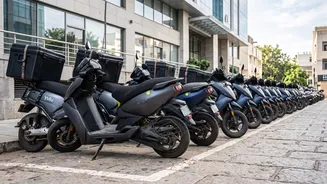
The proliferation of dark stores is subtly but surely changing the face of Bengaluru's localities. Commercial properties that once housed local businesses are being converted into these windowless warehouses. This has raised concerns about the impact on traditional kirana stores, which are now competing with multi-billion-dollar platforms. For residents, the most visible effect is the constant stream of delivery riders navigating their streets, a testament to the thousands of orders being processed daily. These stores are also becoming significant local employers, creating thousands of jobs for pickers, packers, and delivery personnel. In Bengaluru alone, the sector generates an estimated 6,300 to 12,600 dark store jobs.
Is the 10-Minute Promise Sustainable?
Despite its explosive growth, the quick commerce model is built on shaky financial ground. High operational costs for rent, staffing, and last-mile delivery mean that profitability remains elusive for most players. The business model relies on high order volumes and small basket sizes, which puts immense pressure on margins. Companies are burning through cash to acquire customers and expand their footprint, leading many experts to question the long-term viability. The focus is now shifting from pure expansion to improving the economics of each dark store by increasing the number of orders and the value of each basket. The future will likely involve consolidation, as well as an expansion beyond groceries into higher-margin categories like electronics and cosmetics to make the model work.