


Meet Pushpak: India's Space Shuttle
Imagine if every time an airline flew, it had to use a brand-new plane and discard it after one trip. That’s how traditional rocketry has worked for decades, making space access incredibly expensive. The Indian Space Research Organisation (ISRO) is rewriting
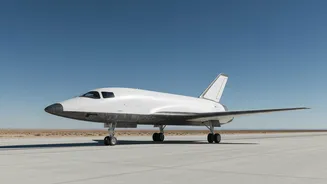
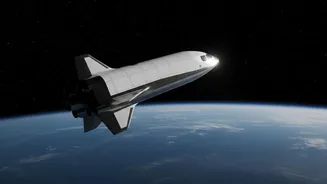
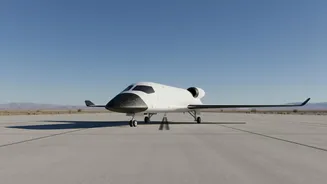
that script with its Reusable Launch Vehicle (RLV) Technology Demonstrator, a winged space plane affectionately named 'Pushpak'. Unlike conventional rockets that are single-use, Pushpak is designed to be launched vertically, deploy a payload in orbit, and then return to Earth, landing horizontally on a runway just like an aircraft. This reusability is the key to making space missions more sustainable and economical. The goal is audacious: to bring down the cost of putting a kilogram of payload into Low Earth Orbit by a factor of ten, from about $20,000 down to $2,000.
The Art of the Autonomous Landing
The most critical and challenging part of reusing a space vehicle is getting it to land safely and precisely. This is where ISRO's recent string of successes with the Landing Experiment (LEX) series has been a monumental achievement. In a series of tests, Pushpak was carried to an altitude of 4.5 kilometers by an Indian Air Force Chinook helicopter and released. From there, it was on its own. Using a sophisticated suite of indigenous technologies—including ISRO's own NavIC navigation system, multi-sensor fusion, and advanced guidance algorithms—the unmanned vehicle had to autonomously navigate its way to a runway, correct its course against winds, and execute a high-speed landing. The vehicle touches down at over 320 kmph, faster than a commercial jetliner, before using a brake parachute and its landing gear brakes to come to a stop.
Why Reusability Slashes Costs
The economics of space launch are straightforward: the rocket itself is the most expensive part of any mission. The first stage of a traditional rocket can account for 60-80% of the total cost. By recovering and reusing this hardware, the cost per launch plummets. This is the model successfully pioneered by companies like SpaceX with their Falcon 9 rocket. ISRO's approach with a winged vehicle is different but aims for the same revolutionary cost reduction. The success of the LEX-03 mission, which reused the exact same winged body from the LEX-02 test without modification, was a powerful demonstration of the program's core principle of reusability. This proves the robustness of the design and hardware, a crucial step towards creating a commercially viable launch system.
India's New Edge in a Crowded Market
The global satellite launch market is a multi-billion dollar industry and is projected to grow significantly. By mastering reusable launch technology, India is positioning itself to be a major competitor. ISRO is already renowned for its cost-effective missions, but the RLV could be a game-changer, making Indian launch services potentially the most affordable in the world. This capability opens the door for India to capture a larger share of commercial satellite launches, from communication and Earth observation constellations to scientific missions. It strengthens India's strategic autonomy in space, ensuring reliable and affordable access for its own national needs, from defense to civilian applications, without depending on other nations.
The Journey from Demonstrator to Orbit
While the autonomous landing tests are a resounding success, Pushpak is still a technology demonstrator. The recent LEX missions were crucial for mastering the final landing phase of a space mission. The next major step for ISRO is the Orbital Re-entry Experiment (ORE). This will involve launching a vehicle into orbit around Earth and having it autonomously re-enter the atmosphere and land. This next phase will test the vehicle's ability to withstand the extreme heat and stresses of re-entry. Success in the ORE mission will pave the way for a fully operational Two-Stage-To-Orbit (TSTO) reusable launch vehicle, turning the promise of low-cost space access into a reality for India.