



First, What Is ‘Textured Snackification’?
Let’s break down the industry jargon. ‘Snackification’ refers to the growing trend of replacing traditional meals with smaller, convenient snacks throughout the day. But consumers are getting bored with one-note crunch. That’s where ‘textured’ comes in.
Textured snackification is the food industry's response to our demand for more interesting, multi-sensory eating experiences. Think about snacks that aren’t just crunchy, but also airy, flaky, layered, crispy, or chewy—often all in the same bite. It’s about creating a more dynamic and satisfying mouthfeel. Food brands have realized that texture is a powerful, often subconscious, driver of enjoyment. A boring cracker is just a vehicle for dip, but a chip that is light, bubbly, and shatters when you bite it becomes an experience in itself. This is the new benchmark for innovation in the snack world.
Enter the Masala Papad Chip
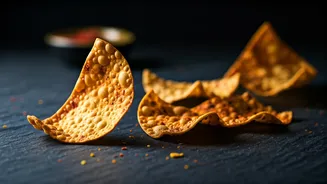
This brings us to the star of the show: the masala papad chip. If you’ve ever been to an Indian restaurant, you’ve likely encountered papadum (or papad), a super-thin, crispy disc made from lentil, chickpea, or rice flour. Traditionally, they’re served as an appetizer, either roasted over an open flame or deep-fried, which makes them puff up into a light, brittle wafer. The gourmet ‘chip’ version takes this concept and packages it for the American snack aisle. These aren't your standard potato chips. They are incredibly light and airy, with a delicate, crackling texture that’s completely different from the dense crunch of a kettle chip. They’re then dusted with a bold ‘masala’—a complex blend of Indian spices like cumin, coriander, turmeric, and a kick of chili. The result is a snack that delivers on every level: a sophisticated texture combined with an adventurous, global flavor profile.
Why This Snack Is Winning
The rise of the masala papad chip isn't a fluke; it perfectly intersects with several major consumer trends. First, the demand for global flavors is at an all-time high. American palates are more adventurous than ever, and the complex, savory notes of masala are a welcome departure from standard sour cream and onion. Second, there's the wellness angle. Because they are often made from lentil or chickpea flour, these chips can be marketed as a higher-protein, gluten-free alternative to their potato- and corn-based cousins. They feel lighter and less indulgent, which aligns with the modern snacker’s desire for ‘better-for-you’ options that don’t sacrifice taste. Finally, it all comes back to that unique texture. The light, shattering crispiness feels novel and premium. It’s a snack that engages more of your senses, making the act of eating it more memorable and satisfying.
The New Face of American Snacking
While masala papad chips are a standout example, they represent a much larger shift. Walk down the snack aisle today and you’ll see the evidence everywhere. Puffed snacks made from quinoa and sorghum, crispy mushroom chips, and layered veggie straws are all part of this movement. The monolithic dominance of the simple potato chip is being challenged by a diverse array of bases, flavors, and, most importantly, textures. Brands are realizing that in a crowded marketplace, a unique textural experience can be the key differentiator that captures a consumer’s loyalty. It’s a move away from uniform, mass-produced bites and toward snacks with character, story, and a distinct sensory signature. The success of snacks like masala papad chips proves that consumers are ready and eager for more complexity in their convenience foods.