


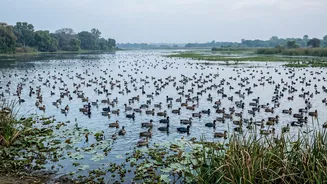

As winter approaches, India’s urban wetlands come alive with the flutter of wings. Thousands of migratory birds arrive, completing epic journeys. But how do we know who they are and where they came from? It's a tale of remarkable collaboration.
The Power of Citizen Science
The first
line of observation comes from a dedicated army of citizen scientists: everyday birdwatchers. Armed with binoculars, field guides, and smartphones, these enthusiasts flock to local wetlands, parks, and even small ponds. Their observations are crucial. Using platforms like eBird, a global online database, birders can upload checklists of species they spot in real-time. This crowdsourced data has become a powerhouse for conservation. In India, which is one of the largest contributors to eBird outside North America, this information helps create detailed maps of bird distribution and abundance. Groups like the Bird Count India partnership and the Bombay Natural History Society (BNHS) help coordinate these efforts, turning a weekend hobby into a large-scale scientific monitoring project. Birders can note the first arrival dates of species like the Green-winged Teal or Grey-headed Lapwing, providing valuable insights into how migration timings might be shifting year after year.
Organised Counts and Formal Surveys
Beyond individual observations, more structured surveys provide a systematic snapshot of bird populations. The Asian Waterbird Census (AWC), coordinated annually by Wetlands International and partners like the BNHS, is a prime example. During this event, volunteers and forest department staff simultaneously count waterbirds across numerous wetlands in January. This synchronised effort helps to estimate population sizes and assess the health of wetland ecosystems. The methodology is often standardised, using techniques like 'line transects', where observers walk a fixed route and record all birds seen or heard. These annual counts not only generate critical data but also raise public awareness about the importance of protecting these vital habitats, which are often threatened by urban encroachment and pollution. Specialised counts, such as for the Sarus Crane, are also conducted to monitor the status of specific vulnerable species.
High-Tech Tracking: Rings and Satellites
To understand the incredible journeys these birds undertake, conservationists employ more advanced technologies. Bird ringing, a method used by organisations like BNHS for decades, involves fitting a small, uniquely coded metal or plastic ring on a bird's leg. If this bird is spotted again, the code reveals information about its origin, age, and travel path. While effective, the recovery rate for rings can be low. To get a more detailed picture, scientists now use sophisticated tracking devices. Tiny, lightweight satellite transmitters or GPS/GSM tags can be fitted onto birds like the Amur Falcon or Bar-headed Goose. These devices transmit real-time location data, allowing researchers to follow a bird's exact migration route, identify critical stopover sites where they rest and refuel, and measure their flight speed and altitude. This technology has provided breathtaking insights, such as tracking a Black-tailed Godwit's non-stop, five-day flight from Siberia back to Mumbai.
Why This Monitoring Matters
Tracking migratory birds is more than just an academic exercise. These birds are vital bioindicators, meaning their presence, absence, or declining numbers can signal the health of an ecosystem. A drop in bird populations at a wetland could indicate rising pollution, habitat degradation, or a dwindling food supply. For instance, many migratory species rely on insects, and a decline in bird numbers could reflect a broader issue of pesticide use and habitat loss. India is a crucial part of the Central Asian Flyway, a major migratory route, and its urban wetlands serve as indispensable stopover sites for over 90% of the bird species using this path. Protecting these birds means protecting the wetlands themselves, which provide cities with essential services like groundwater recharge, flood control, and temperature regulation. The data collected by birdwatchers and scientists provides the evidence needed to advocate for the protection of these fragile urban ecosystems against the pressures of unchecked development.