



What is the 'No Insurance, No Fuel' Proposal?
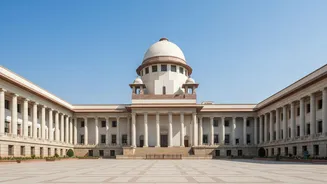
The Supreme Court of India has directed the central government, in consultation with the Insurance Regulatory and Development Authority of India (IRDAI), to develop a pilot project named 'No Insurance, No Fuel'. The core idea is straightforward: petrol
pumps could be empowered to check a vehicle's insurance status before dispensing fuel. If a vehicle is found to be without valid insurance, it could be denied petrol or diesel until a policy is purchased. This isn't a rule yet, but a proposed test to find a workable solution to a massive problem: the huge number of uninsured vehicles on Indian roads. The court highlighted that an estimated 56% of vehicles in the country, amounting to over 16.5 crore, are operating without insurance cover.
The Critical Role of Third-Party Cover
The proposal specifically focuses on the mandatory third-party (TP) insurance. Under the Motor Vehicles Act, 1988, all vehicles operating on public roads in India must have at least a valid TP policy. This type of insurance doesn't cover damage to your own vehicle; instead, its purpose is to cover any legal liability arising from an accident where your vehicle causes injury, death, or property damage to someone else (the 'third party'). By making TP cover mandatory, the law ensures that accident victims have access to financial compensation for medical bills or losses, preventing them from facing ruinous expenses. The premium for this basic cover is fixed by IRDAI based on the vehicle's engine capacity. Since this is the minimum legal requirement, it is the verification of this specific cover that will be central to the 'No Insurance, No Fuel' pilot.
How Would Verification Work at the Pump?
The proposed system would rely on technology to make the check quick and seamless. The most likely method involves scanning a vehicle's number plate at the fuel station. This information would then be instantly cross-referenced with the central government's VAHAN database, which holds comprehensive details for every registered vehicle, including its insurance status. If the database shows no active insurance policy, the system at the pump could block the transaction. This would leverage existing digital infrastructure, such as the VAHAN and Parivahan portals, which many citizens already use to check their vehicle's details online. The aim is to make compliance unavoidable and enforcement automatic, reducing the burden on traffic police for on-the-spot checks.
Why is This Being Considered Now?
The proposal comes from a place of serious concern for road safety and victim compensation. When an uninsured vehicle is involved in an accident, the victims and their families often face a long and arduous battle for compensation, a situation the Supreme Court described as having to run from 'pillar to post'. The court's push for this pilot is a direct response to the failure of the current system to ensure universal insurance compliance. By integrating the check at a routine and unavoidable point of contact—the petrol pump—the authorities hope to create a powerful incentive for vehicle owners to keep their insurance policies active. This is seen as a more effective enforcement mechanism than relying solely on fines, which have not been a sufficient deterrent.
Potential Challenges and the Road Ahead
While the objective is clear, implementation poses several practical challenges. Key concerns include the potential for long queues at already congested fuel stations, issues with network connectivity in rural or remote areas, and the accuracy of the database in real-time. What happens if a policy is renewed but the database hasn't been updated yet? These are the questions the pilot project, which the court has asked IRDAI and the Ministry of Road Transport to design, will need to answer. The court has requested a response on the pilot's roadmap, with further hearings scheduled. For now, the 'No Insurance, No Fuel' rule is not in effect, but it signals a significant shift in how mandatory insurance will be enforced in the future.