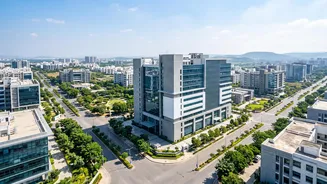







The Great Decentralisation
India’s job market is no longer a story confined to Mumbai, Bengaluru, or Delhi-NCR. A significant and accelerating trend shows companies are expanding their talent search, establishing offices, and creating jobs in Tier-2 and Tier-3 cities. According
to a recent report from Genius HRTech, a stunning 69% of organisations have increased their hiring from these smaller cities by more than 30% in the last two years. This isn't just about remote work; it involves setting up physical Global Capability Centres (GCCs), service hubs, and operational bases in cities that were once considered secondary markets. In fact, non-metro regions now reportedly account for nearly 70% of the formal workforce in India, indicating a fundamental redistribution of economic opportunity.
Why the Shift Is Happening Now
Several powerful forces are driving this migration away from the traditional metros. The most significant is cost. Companies can realise substantial savings, with operational costs like real estate and manpower being 30-40% lower in Tier-2 cities. For example, office space in Indore can be 60% cheaper than in Bengaluru. Beyond economics, there's a strategic push to tap into a wider talent pool. Smaller cities are home to renowned engineering and management colleges, producing a steady stream of skilled graduates who are increasingly choosing to build careers closer to home for a better quality of life. This preference is supported by improved infrastructure, including better digital connectivity, modern airports, and upgraded road networks, making these cities more business-friendly than ever.
Meet the New Employment Hubs
This trend is not happening everywhere at once, but specific cities are emerging as clear frontrunners. Places like Jaipur, Indore, Coimbatore, Lucknow, Bhubaneswar, and Kochi are repeatedly cited as hotspots for hiring growth. These cities are attracting significant investment and are becoming specialised hubs for different industries. For instance, Pune is evolving into a major centre for banking, financial services, and manufacturing, while cities like Kochi and Chandigarh are gaining traction in the IT and SaaS sectors. Even cities like Visakhapatnam, Surat, and Vadodara are being recognised as some of India's fastest-growing job markets. This diversification shows that the growth is broad-based and not limited to a single industry.
Beyond IT and Call Centres
While the IT sector and GCCs are major catalysts, the hiring boom in smaller cities extends across a wide range of industries. Manufacturing and engineering are expected to be the next major drivers of employment demand in these regions. Sectors such as retail, banking, e-commerce, and logistics are also contributing significantly to job creation. In many Tier-3 towns, banking and manufacturing together account for over 45% of the workforce. Even the startup ecosystem is decentralising, with over half of all government-recognised startups now based in Tier-2 and Tier-3 cities, fostering innovation outside of traditional venture capital corridors.
What This Means for Job Seekers
For professionals, this shift opens up a world of possibilities. The opportunity to build a successful career without bearing the high living costs and stressful commutes of a major metro is becoming a reality. Companies are discovering that talent in these cities is not only cost-effective but also tends to be more loyal, leading to lower attrition rates. However, challenges remain. A majority of employers still point to infrastructure and connectivity as hurdles to further expansion. Despite this, the consensus is clear: Tier-2 and Tier-3 cities are no longer just alternatives but are becoming strategic talent markets in their own right.