




A Rainbow in Peril
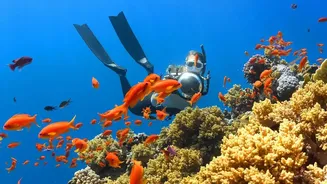
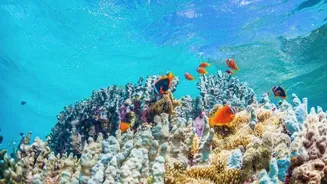
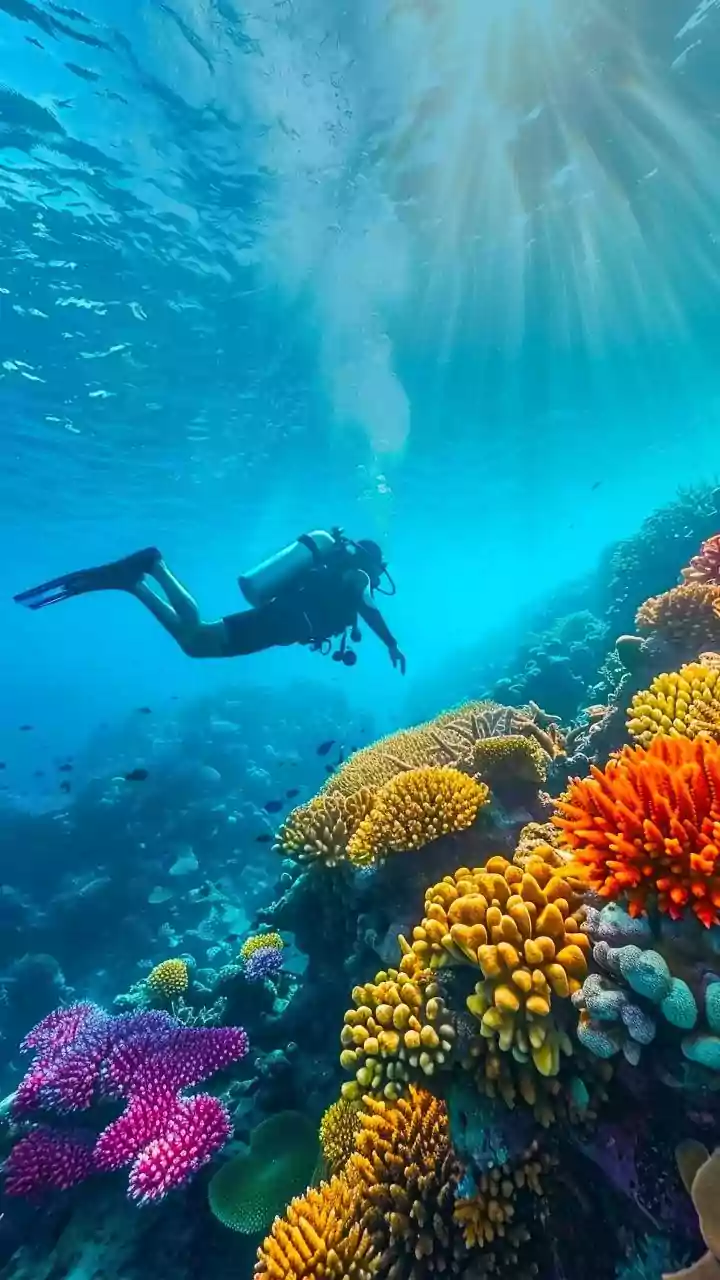
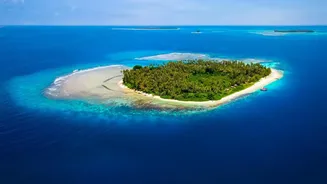
Coral reefs, found along India’s coasts in the Gulf of Kutch, Gulf of Mannar, Lakshadweep, and the Andaman and Nicobar Islands, are one of the nation's most valuable natural assets. These bustling underwater cities support about 25% of all marine life,
protect coastlines from storm surges, and sustain the livelihoods of millions through fishing and tourism. But this critical ecosystem is in peril. Rising ocean temperatures, a direct consequence of climate change, are causing mass coral bleaching events with increasing frequency. When water gets too warm, corals expel the symbiotic algae living in their tissues, turning them stark white. If the heat persists, the bleached corals starve and die. Recent events have shown widespread bleaching across India's reefs, particularly in Lakshadweep and the Andamans, signalling a crisis that demands urgent, innovative action.
The Search for Super Corals
In the face of this threat, Indian scientists are not just watching; they are actively intervening. The new frontier in coral conservation is 'assisted evolution'. The goal is to identify and propagate corals that have a natural, genetic tolerance for warmer waters. Scientists from institutions like the Zoological Survey of India (ZSI) are at the forefront, scouring reefs to find these resilient individuals—the 'super corals' that survive bleaching events while their neighbours perish. These survivors hold the genetic key to future-proofing India’s reefs. The process is painstaking, involving careful observation and genetic analysis to select the best candidates for breeding programs designed to give nature a helping hand.
A Lab for Ocean Hope
Once identified, these resilient corals become part of a groundbreaking breeding program. One key technique is selective breeding, where scientists crossbreed heat-tolerant corals. Studies have shown that offspring from these pairings can have a significantly higher survival rate in heat-stressed conditions. Another method is stress-hardening, where corals in nurseries are gradually exposed to higher temperatures, conditioning them to withstand future marine heatwaves. In some areas, like the Gulf of Kutch, scientists are also using 'biorock' technology. This involves running a low-voltage electrical current through submerged steel frames, which accelerates the limestone accretion process and helps corals grow much faster than they would naturally. These lab and field-based efforts are creating a new generation of corals built to survive a warmer world.
From Nurseries to the Seafloor
Growing corals in a lab is only half the battle. The ultimate goal is to restore degraded reefs in the wild. Teams across the country are engaged in this delicate work, a process known as out-planting. Using techniques developed over two decades, particularly in the Gulf of Mannar, scientists transplant fragments from their nurseries onto artificial structures or directly onto the seabed. Organizations like the Suganthi Devadason Marine Research Institute and ReefWatch Marine Conservation are deploying thousands of lab-grown fragments, attaching them with cement or to specially designed frames. These restoration projects are active in the Gulf of Mannar, Palk Bay, Lakshadweep, and the Andaman Islands, with reported survival rates of 60-80% in some areas.
A National Priority for Coastal Protection
The urgency of this work is underscored by what’s at stake. Healthy coral reefs are India's first line of defence against coastal erosion and the growing threat of extreme weather events. They act as natural breakwaters, absorbing wave energy and protecting coastal communities. Recognizing this, the Indian government is stepping up its commitment. The establishment of the National Coral Reef Research Institute (NCRRI) in the Andaman and Nicobar Islands, with a budget of ₹120 crore, signals a major investment in the nation's marine science and conservation capacity. This institute will serve as a central hub for reef monitoring, restoration research, and coordinating conservation efforts nationwide, ensuring this vital work can scale up to meet the challenge.