





Inji Thayir: The Zingy Yogurt Dip
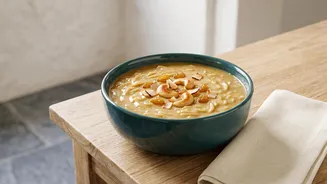
While Puli Inji, the sweet and tangy tamarind-ginger chutney, is a well-known star, its subtler cousin, Inji Thayir, often sits quietly in the background. This refreshing dish is essentially a yogurt dip packed with the sharp, pungent flavour of fresh ginger.
It's incredibly simple to make, combining thick, whisked curd with finely grated ginger, chopped green chillies, and curry leaves. Unlike cooked pachadis, this is often served raw, allowing the fiery ginger to cut through the richness of the other dishes. Functioning as both a palate cleanser and a digestive aid, it offers a cool yet zesty contrast that perfectly balances the heavier components of the feast.
Kootu Curry: The Hearty Vegetable and Legume Medley
Often mistaken for other thick curries, Kootu Curry is a standout dish with a unique texture and flavour profile. Its name literally means 'combination curry', bringing together starchy vegetables like elephant foot yam (chena) and raw plantain with black chickpeas (kadala). What truly sets it apart is the use of a fragrant paste made from roasted coconut, which imparts a nutty aroma and a rich, dark-brown colour to the dish. This thick, semi-dry preparation is more of a substantial side than a runny gravy. While it's a staple in many regions, especially in Malabar, it deserves more recognition for its complex, earthy flavours that beautifully complement the plain rice.
Chena Mezhukkupuratti: The Simple Yam Stir-Fry
Mezhukkupuratti translates to 'smeared in oil', and this humble stir-fry is a testament to the beauty of simple cooking. While many vegetables can be prepared this way, Chena Mezhukkupuratti, made with elephant foot yam, is particularly special. The yam is first cooked until tender and then slow-roasted in coconut oil with minimal spices like turmeric and chilli powder until it develops a slightly crisp, caramelized exterior while remaining soft inside. It's a comforting, savoury dish that offers a wonderful textural contrast to the various gravies on the sadhya leaf. Its preparation is straightforward, yet the resulting flavour is deep and satisfying, showcasing the earthy taste of the yam.
Naranga Curry: The Essential Wild Lemon Pickle
Every sadhya needs a selection of pickles (achars) to provide sharp, tangy notes, and while mango pickle is common, Naranga Curry offers a different kind of kick. Made with a specific variety of wild lemon (vadukapuli), this pickle is intensely sour and spicy. It serves a crucial role on the banana leaf, acting as a powerful flavour accent and digestive aid. Its bright, acidic punch cuts through the coconut-heavy dishes and resets the palate between courses. A tiny portion is all that's needed to liven up a mouthful of rice and curry, making it an indispensable, if sometimes overlooked, part of the feast's complex flavour tapestry.
Pazham Nurukku: The Sweet Steamed Plantain
In a meal ending with rich payasams, Pazham Nurukku stands out for its simplicity. This traditional dessert or sweet side dish consists of ripe Nendran plantains chopped and gently steamed or simmered with jaggery, a dollop of ghee, and a hint of cardamom. The plantains become incredibly soft, absorbing the earthy sweetness of the jaggery syrup. It's a comforting, homely dish that is often served as an evening snack in Kerala homes but can be a delightful and light addition to the sadhya. It celebrates the natural sweetness of the fruit without the complexity of a Pradhaman, offering a nostalgic taste of tradition.