


Seeing the Unseen in Infrared
Imagine trying to watch a drama unfold inside a smoke-filled room. That’s the challenge astronomers faced for decades. Stellar nurseries, the vast, cold clouds of gas and dust where stars are born, are opaque to visible-light telescopes like Hubble. The
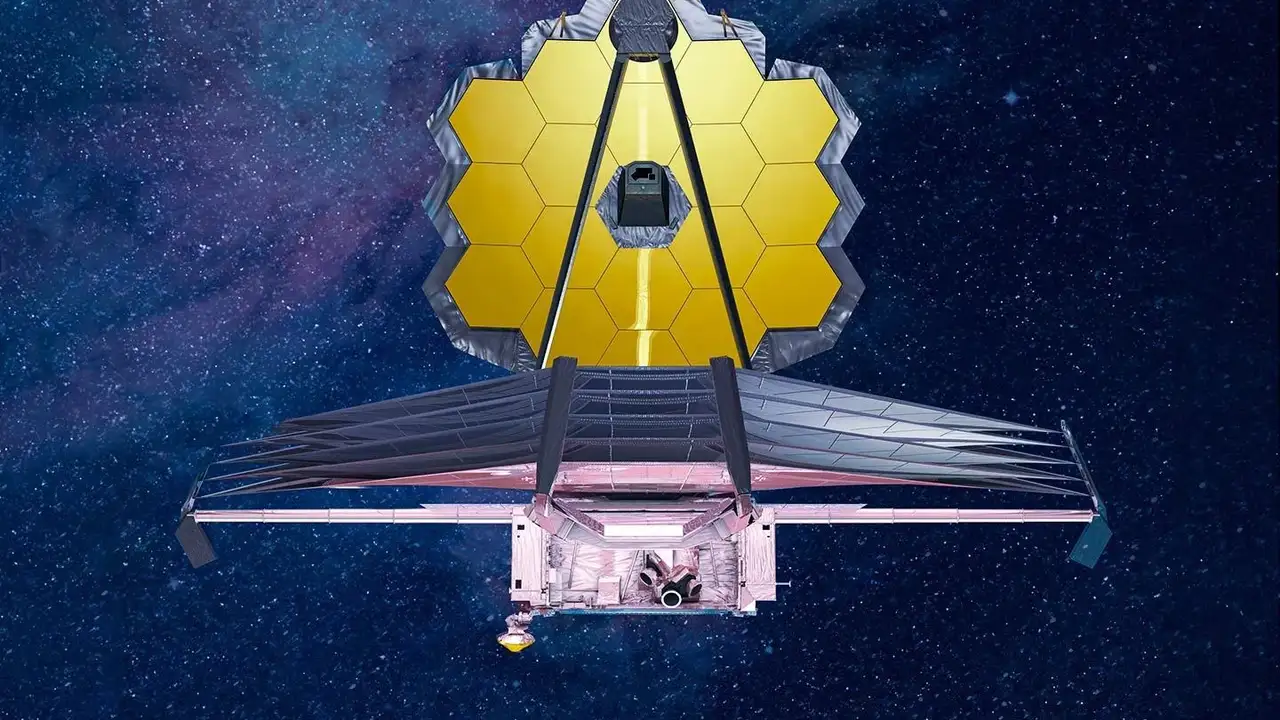
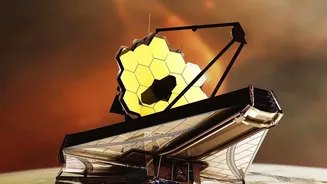
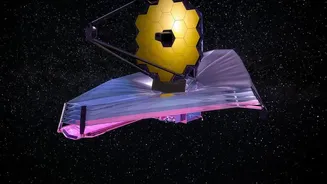
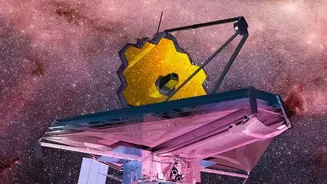
very ingredients that build stars also block our view. This is where the JWST changes the game. By detecting infrared light, which has longer wavelengths, the telescope can peer through the obscuring dust clouds, much like an infrared camera can see through smoke. This allows scientists to witness the earliest, most chaotic stages of star formation in stunning, unprecedented detail, revealing the processes that were once only theoretical.
Inside a Cosmic Delivery Room
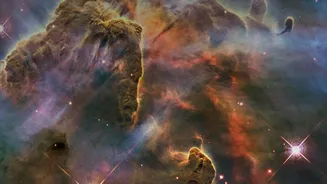
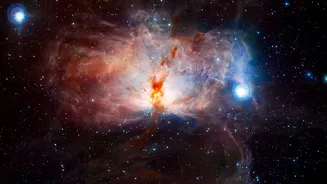
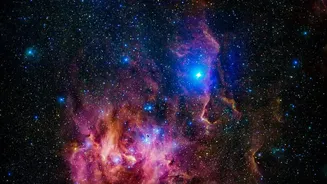
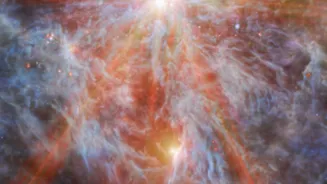
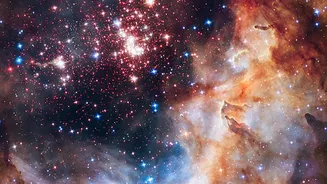
Stellar nurseries are the universe's delivery rooms. Regions like the iconic Pillars of Creation or the Carina Nebula are vast reservoirs of molecular hydrogen gas and dust. Within these clouds, gravity pulls denser clumps of material together. Over millions of years, these clumps collapse under their own weight, heating up to form a protostar—the glowing core of a future star. JWST’s observations have provided a new look at these nurseries, such as Sagittarius B2, the most active star-forming region in our Milky Way galaxy. Its infrared view reveals not just the bright, emerging stars but also the complex structure of the gas and dust that feeds their growth.
Jets, Disks, and the First Steps
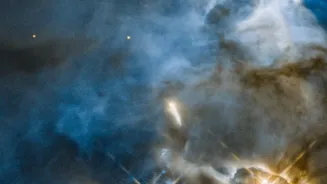
The latest images from JWST are not just static portraits; they are snapshots of dynamic, violent processes. As a protostar pulls in more gas and dust, it doesn't just grow—it also pushes back. Powerful jets of gas are often blasted out from the star's poles at incredible speeds. Webb has captured these jets with remarkable clarity, showing how they slam into the surrounding cloud, creating beautiful, glowing structures known as bow shocks. At the same time, the remaining material flattens into a swirling protoplanetary disk around the star’s equator. It is within these disks—vast, spinning platters of gas and pebbles—that planets will eventually begin to form.
From Icy Pebbles to New Worlds
One of JWST's most significant contributions is confirming how the building blocks of planets are delivered. Scientists have long theorized that icy pebbles from the cold, outer regions of a protoplanetary disk drift inward toward the star. Webb's observations have provided definitive proof of this process. The telescope has detected cold water vapor in the inner regions of these disks, evidence that these icy pebbles are arriving and warming up, releasing their water. This confirms a crucial step in creating a water-rich environment where Earth-like planets might one day form. By tracing the journey of water from interstellar ice to vapor around a young star, Webb is helping us understand the origins of one of life's most essential ingredients.
Rewriting Cosmic History
The insights from JWST extend beyond just individual stars. The telescope is also challenging our understanding of the early universe. Recent observations of ancient galaxies have revealed a much larger population of small, faint stars than previously expected. This hidden population means that the first galaxies may have been three to four times more massive than we thought, making it even more challenging to explain how they grew so large so quickly after the Big Bang. By studying stellar nurseries in our own galaxy, which resemble conditions in the early universe, scientists can gain crucial insights into how the first generations of stars and galaxies took shape, ultimately leading to the cosmos we see today.