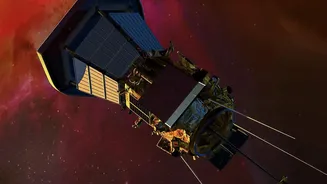


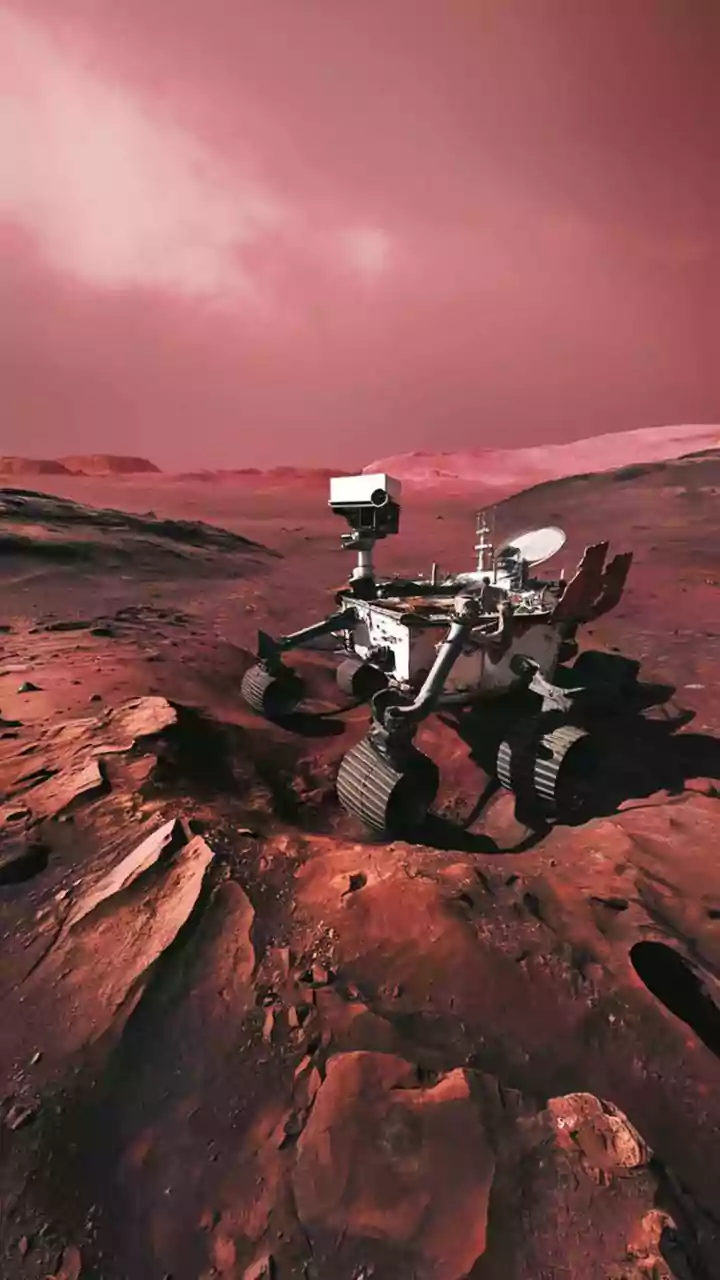


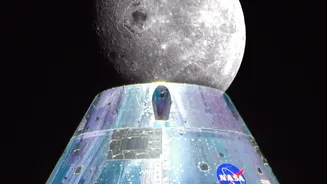

In one of the most ambitious space missions ever attempted, Japan's MMX probe is on its way to the Martian system. Its goal is not to land on Mars itself, but to perform a cosmic heist: stealing a piece of its moon, Phobos, and bringing it home.
What is the MMX Mission?
MMX, which
stands for Martian Moons eXploration, is a flagship mission from the Japan Aerospace Exploration Agency (JAXA). Launched in October 2026, its primary objective is to travel to Mars, enter orbit around its larger moon Phobos, collect at least 10 grams of surface material, and return that precious cargo to Earth. The journey is a long one; after arriving in the Martian system around August 2027, the spacecraft will spend about three years studying both of Mars's moons, Phobos and Deimos, before beginning its return trip. The final prize—a capsule containing the first-ever sample from the Martian system—is scheduled to land in Australia in 2031. This mission builds on the success of JAXA's previous Hayabusa missions, which brought back samples from asteroids.
The Target: A Cosmic Riddle Named Phobos
So, why Phobos? Mars's two small, potato-shaped moons have long been an enigma for planetary scientists. There are two main theories about their origin, and the evidence is conflicting. One theory suggests they are captured asteroids, snared by Mars's gravity long ago. The other posits that they are remnants from a giant impact, created from debris that was blasted off the surface of Mars itself. If they are captured asteroids, their composition could tell us about the early building blocks of the solar system. If they are pieces of Mars, they could hold a geological record of the Red Planet's ancient past, including a time when it may have been more habitable. By analyzing a physical sample in labs on Earth, scientists hope to finally solve this fundamental question.
A Multi-Stage Heist in Deep Space
Collecting the sample is a complex, multi-year operation. After extensive remote observation to map the surface, JAXA will select a landing site. The mission includes two different sampling mechanisms: a coring tool to drill a few centimetres into the surface and a pneumatic system that uses a puff of nitrogen gas to blow material into a collection chamber. But before the main spacecraft touches down, it will deploy a small, 25-kilogram rover named IDEFIX, jointly developed by the French (CNES) and German (DLR) space agencies. This rover will spend about 100 days exploring the surface, testing the soil, and helping to scout the perfect spot for the parent craft to perform its brief landing and sample collection in 2029 or 2030. The spacecraft will also perform several flybys of Mars's smaller moon, Deimos, to gather comparative data.
An International Effort for a Universal Prize
While JAXA is leading the MMX mission, it is a significant international collaboration. NASA has contributed key scientific instruments, including a gamma_ray and neutron spectrometer called MEGANE that will map the moon's elemental composition, and also helped develop the pneumatic sampler. In return for its contributions, NASA will receive at least 15% of the returned sample for analysis and long_term curation at Johnson Space Center, a practice modeled on the handling of Apollo moon rocks. The European Space Agency (ESA) provided crucial communications hardware for the long journey through deep space. This global partnership highlights the mission's importance to the entire scientific community, as it seeks answers to fundamental questions about planetary formation and the history of our solar system.