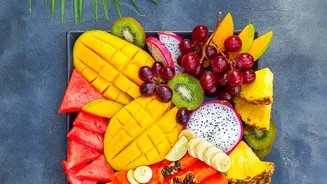


There's nothing more disappointing than a bland mango or a mealy papaya. If your tropical fruits are losing their magic, the culprit might be your refrigerator. The secret to vibrant, sweet, and aromatic fruit is simpler than you think.
The Counterintuitive Cold War
It feels natural
to refrigerate produce to extend its life, but for many tropical and subtropical fruits, this instinct backfires. Fruits like bananas, mangoes, and papayas evolved in warm climates, and their biological clocks are set to thrive at room temperature. Chilling them doesn't just pause their ripening; it actively damages them on a cellular level in a process known as 'chilling injury'. This physiological disorder occurs at temperatures that are cold but still above freezing, leading to a host of undesirable symptoms, from discolored skin to a complete failure to ripen. The damage is often invisible while the fruit is in the fridge, only revealing itself as mushy spots and off-flavors after you bring it back to room temperature.
The Science of Sweetness and Scent
A fruit's journey to deliciousness is a complex chemical process. Ripening involves two key transformations: the conversion of starches into sugars, and the production of volatile organic compounds that create its signature aroma. Both of these processes are driven by enzymes. At warm room temperatures, enzymes like amylase work efficiently to break down complex starches, dramatically increasing the fruit's sugar content and sweetness. At the same time, other enzymatic activities produce the fragrant esters that give a mango its perfume or a banana its distinct scent. Cold temperatures bring this entire flavor factory to a screeching halt. A study on mangoes showed that the activities of key ripening enzymes were significantly higher at 30°C (86°F) compared to those stored at 4°C (39°F), where the enzymes became largely dormant. Chilling an unripe tropical fruit effectively traps it in a starchy, scentless state.
Recognizing Chilling Injury
Chilling injury isn't just a lack of flavor; it manifests in physical ways that ruin the eating experience. The most common signs include a mealy, dry, or stringy texture, especially in stone fruits like mangoes and peaches. You might also see surface pitting, where small, sunken brown spots appear on the skin. For bananas, the most obvious sign is a peel that turns grey or black as the cold damages its cell walls. Internally, the fruit's flesh might develop brown or black patches and fail to soften evenly. A chilled fruit may also develop off-flavors, tasting strangely vegetal or bitter instead of sweet. Essentially, by trying to preserve the fruit, you inadvertently prevent it from ever reaching its peak quality.
Your Countertop Ripening Guide
The rule is simple: let tropical fruits ripen fully at room temperature before you even consider refrigeration. Keep them out of direct sunlight in a single layer to prevent bruising. For many fruits, like mangoes and papayas, you can tell they're ripe when they yield slightly to gentle pressure and have a fragrant smell at the stem end. A few common examples:
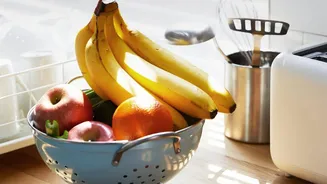
Bananas: Keep them on the counter. The skin may blacken in the fridge, but the cold halts the starch-to-sugar conversion, leaving the fruit inside bland.
Mangoes: They need warmth to develop their rich sweetness. Once fully ripe, you can store them in the fridge for a few days to extend their life.
Papayas: Let them ripen on the counter until the skin is mostly yellow-orange and the fruit is soft to the touch. Then, it can be refrigerated for up to a week.
Pineapples: Cold temperatures can make the flesh sour and lock away its aroma. Keep pineapples on the counter until they are fragrant and then consume them.
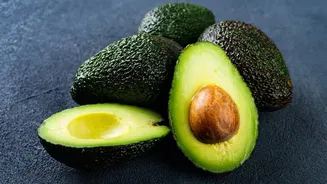
* Avocados: A classic example. An unripe avocado will never properly soften in the fridge; it will just turn dark and hard. Let it ripen on the counter first.
To speed up ripening, you can place an unripe fruit in a paper bag with a banana or an apple, whose ethylene gas will accelerate the process.