






An Ancient Climate Partnership
The relationship between Antarctica and the Indian monsoon isn't new; it's millions of years old. Recent studies by Indian scientists have unearthed a fascinating origin story. By analysing 34-million-year-old fossilised leaves from Nagaland, researchers
discovered that the very formation of the Antarctic ice sheet helped kickstart the powerful monsoon system we know today. As massive sheets of ice grew at the South Pole, it fundamentally altered global atmospheric circulation. This shift pushed the planet's primary rain belt, the Intertropical Convergence Zone (ITCZ), northwards, dramatically intensifying rainfall over the Indian subcontinent. In essence, the birth of a frozen continent at one end of the Earth helped create the lush, life-giving rains at the other.
The Long-Distance Call We Must Answer
This ancient link is not just a history lesson; it's an active and critical component of our modern climate. Scientists refer to these long-distance climate relationships as “teleconnections.” Think of them as the planet’s invisible network, where a change in one region can trigger a cascade of effects far away. What happens in the Southern Ocean doesn’t stay in the Southern Ocean; it sends signals that travel across the globe, directly influencing the strength and timing of our monsoon. For decades, our forecasting has focused on the Pacific (El Niño) and the local Indian Ocean. But growing evidence shows we have been ignoring a major driver to our south.
How Sea Ice Fuels the Monsoon Engine
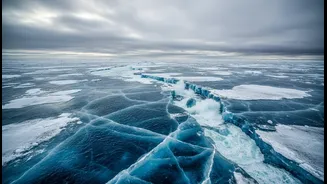
The most direct modern link comes down to sea ice. Multiple studies show a strong positive correlation: the extent of sea ice in the Indian Ocean sector of the Southern Ocean during the pre-monsoon months of April to June can predict the strength of the subsequent rainfall in India. The mechanism involves a crucial weather system known as the Mascarene High, a high-pressure zone off the coast of Madagascar that acts like the engine of the monsoon. More Antarctic sea ice in the autumn and winter leads to a stronger and better-positioned Mascarene High. This, in turn, drives more powerful moisture-laden southwesterly winds toward India, resulting in a healthier monsoon. Less sea ice can mean a weaker engine and, potentially, deficient rains.
A Predictable System Under Threat
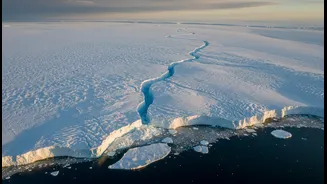
This established relationship is now being thrown into turmoil by climate change. As the world warms, Antarctica is changing at an alarming rate. The very connection that helped form our monsoon now warns of its potential disruption. The historical precedent is clear: a major change in Antarctic ice can shift global rain belts. As modern ice melt accelerates, the fear is that the ITCZ could shift again, making our monsoon more erratic and unpredictable. Some models suggest increased freshwater from melting ice could even alter ocean temperature patterns in the Pacific, further complicating the system and impacting Indian rainfall. The stable patterns we have relied on for millennia are becoming less reliable, posing a direct threat to India’s agriculture, water security, and economy.
The New Frontier for Indian Forecasting
This is not just an academic exercise. For India, it’s a matter of urgent national interest. Recognising this, Indian scientists and institutions are at the forefront of studying these polar-tropical links. The message from their research is unequivocal: our monsoon prediction models must start looking south. By integrating data on Antarctic sea ice and Southern Ocean temperatures, we can develop more accurate and longer-range forecasts. Understanding these teleconnections gives us a powerful new tool to better prepare for droughts and floods. It moves our understanding from a regional focus to a more holistic, global view that reflects the deeply interconnected nature of our planet's climate system.