





Inception (2010)
Christopher Nolan's masterpiece is the definition of a cinematic puzzle. The film's core concept—a corporate heist that takes place within multiple layers of dreams—is a complex intellectual challenge for both the characters and the audience. The rules
of this layered reality are intricate, demanding your full attention as you try to distinguish dreams from reality. Visually, "Inception" is iconic for its practical effects that bend the laws of physics, from a Parisian street folding in on itself to a zero-gravity hallway fight. These sequences are not just for show; they are a tangible representation of a world unbound by normal rules. Complementing this is Hans Zimmer's groundbreaking score. The thunderous, blaring horns became a cultural phenomenon, but the entire soundtrack is a masterclass in tension, using time-dilated melodies to mirror the film's distortion of time.
Arrival (2016)
Instead of an invasion, "Arrival" presents an intellectual puzzle rooted in language. The film centers on linguist Louise Banks as she attempts to communicate with extraterrestrial visitors. The central mystery isn't about their intentions, but about understanding their nonlinear language, which is depicted as beautiful, inky circles. This linguistic puzzle is the engine of the plot, challenging viewers with concepts from the Sapir-Whorf hypothesis, which suggests language can shape our perception of reality. Visually, the film is minimalist and haunting, focusing on the ethereal quality of the aliens and their ships rather than explosive action. The moody, atmospheric visuals are perfectly matched by Jóhann Jóhannsson's score. His soundtrack is unconventional and deeply emotional, using vocal loops and strange textures to create a sense of wonder and otherworldliness, reflecting the process of learning an alien form of communication.
Blade Runner 2049 (2017)
Denis Villeneuve's sequel to the 1982 classic is a neo-noir mystery that expands on the philosophical questions of the original. The intellectual puzzle revolves around Officer K, a replicant blade runner who uncovers a secret that could shatter the fragile peace between humans and replicants. The film explores deep themes of memory, identity, and what it means to be human. This slow-burn detective story is set against some of the most stunning visuals in modern cinema. Cinematographer Roger Deakins won an Oscar for his work, creating a world of smog-choked neon cities, vast orange-hued deserts, and rain-slicked dystopias. Every frame is a work of art. The soundtrack, by Hans Zimmer and Benjamin Wallfisch, honors Vangelis's original score while creating its own identity. It uses a combination of roaring, distorted synths and vast, atmospheric soundscapes to create a tone that is both brutal and beautiful, perfectly capturing the film's somber and contemplative mood.
Interstellar (2014)
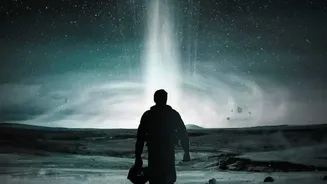
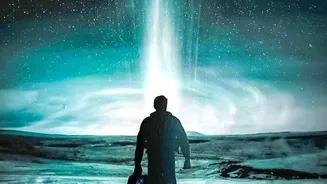
Another Nolan epic, "Interstellar" grounds its mind-bending concepts in theoretical physics. The film's puzzles are scientific: How does time dilation near a black hole work? What would traveling through a wormhole look like? It's a story that respects its audience's intelligence, weaving complex ideas about gravity, relativity, and dimensional travel into an emotional human story. The visuals are breathtaking and were created in collaboration with physicist Kip Thorne to be scientifically accurate. From the towering tidal waves on a distant planet to the first-ever realistic depiction of a black hole, Gargantua, the film makes the cosmos feel both terrifying and awe-inspiring. Hans Zimmer's score is the soul of the film. Moving away from typical sci-fi sounds, he used a massive church organ to evoke a sense of the sacred, the vastness of space, and the enduring human spirit. The ticking clock motif in tracks like "Mountains" masterfully builds tension, audibly representing the warping of time.