
A Sweet Discovery in the Stars
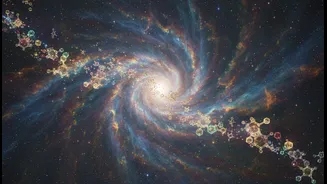
An international team of researchers has announced the first-ever detection of a true sugar molecule in interstellar space. The molecule, erythrulose, was found in a massive and chemically rich cloud of gas and dust named G+0.693-0.027, located about
27,000 light-years away near the center of the Milky Way. This isn't just any sugar; on Earth, erythrulose is a four-carbon sugar found in small amounts in red raspberries. Its discovery in a place where stars and planets are born is a landmark moment in our quest to understand where the raw materials for life come from. Previous studies had found simpler molecules and even detected sugars like ribose in meteorites, but finding a complex sugar floating freely in a stellar nursery pushes the origins of prebiotic chemistry back to a much earlier stage.
Listening for a Molecular Fingerprint
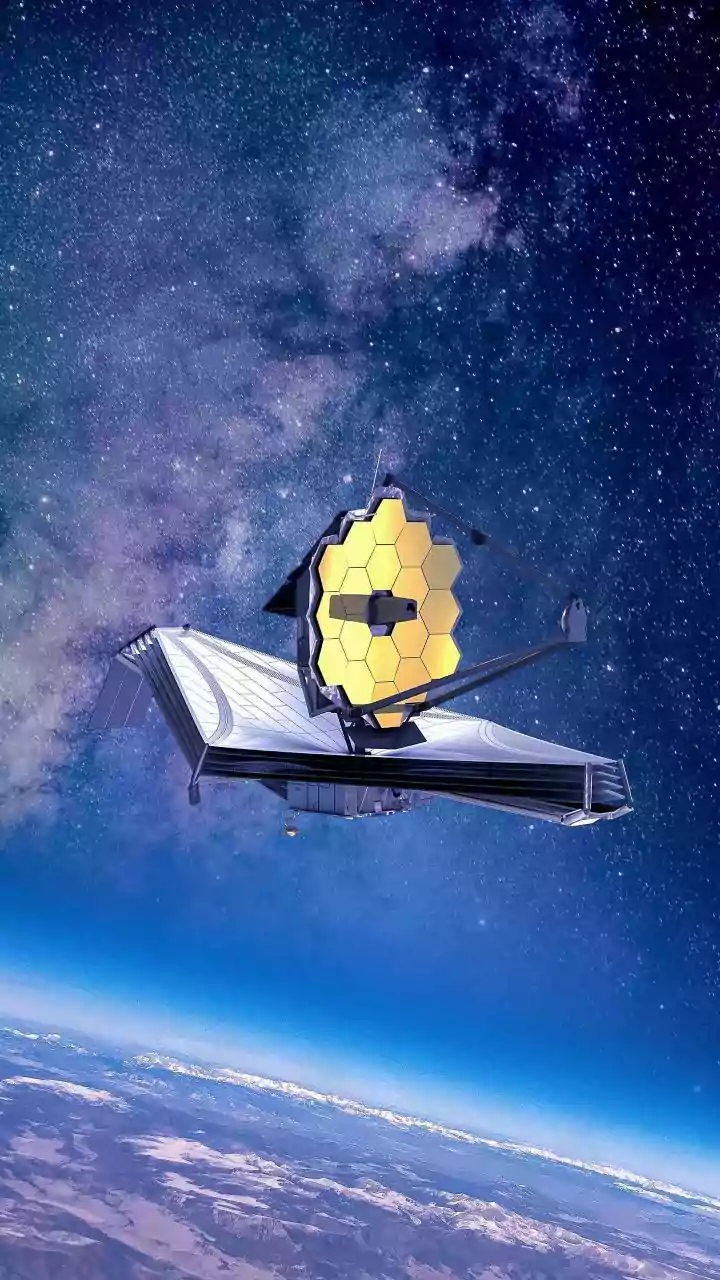
Finding a specific molecule across thousands of light-years is a monumental task. Astronomers can't see the molecules directly. Instead, they use powerful radio telescopes to listen for their unique 'fingerprints'. Using the Yebes 40-m and IRAM 30-m radio telescopes in Spain, scientists scanned the molecular cloud, searching for specific radio frequencies. As molecules like erythrulose tumble and rotate in the cold, sparse environment of space, they emit faint radio waves at very precise frequencies. The team identified 12 distinct spectral lines that perfectly matched the signature of erythrulose measured in a laboratory. This painstaking process allows scientists to identify the chemical inventory of these distant cosmic clouds, revealing the building blocks available for new solar systems.
More Than Just a Sugar
The discovery of erythrulose is significant not just because it's a sugar, but because of its complexity. It has a structure with 14 atoms, making it one of the larger molecules found in the interstellar medium. Scientists had long wondered how complex sugars, essential for life, could have formed on early Earth, as lab experiments simulating those conditions don't produce them in large enough quantities. This finding suggests an alternative path: these crucial molecules could form on icy dust grains in interstellar clouds. These grains act as tiny cosmic laboratories, where simpler chemicals combine to form more complex structures like erythrulose, even at frigid temperatures around -250°C. This process could seed new planets with the ingredients for life before they even fully form.
Building Blocks of Life
Sugars are fundamental to biology as we know it. They are a source of energy and, most importantly, form the structural backbone of RNA and DNA, the molecules that carry genetic information. While erythrulose itself is not a direct component of DNA, it belongs to the same chemical family and is considered a key step on the ladder of chemical complexity. Its presence suggests that the formation of even more vital sugars, like the five-carbon ribose found in RNA, might also be possible in these interstellar environments. In essence, the discovery confirms that the universe is capable of making the complex organic molecules necessary for life long before planets are formed. These molecules then get incorporated into comets and asteroids, which can later deliver them to young, rocky worlds—potentially providing the spark that ignites life.