



The Alluring Promise of a Digital Truth Test
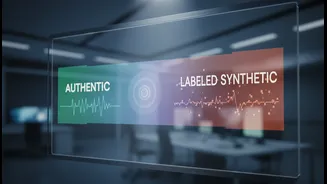
The proposition is simple and seductive: an automated system that can definitively tell us if an image is real or generated by artificial intelligence. In a world where deepfakes and synthetic media can sway public opinion or fuel fraud, AI image detectors
seem like the perfect solution. These tools work by having their own AI models analyze images for the subtle, almost invisible statistical fingerprints left behind during the generation process. In controlled lab environments, developers often report high accuracy rates, sometimes exceeding 90 percent, giving a sense of technological certainty. This has led to their adoption as a potential line of defense against the rising tide of digital misinformation, promising a quick, scalable way to sort fact from fiction.
Where the Technology Falls Short
Unfortunately, the real world is messy, and the performance of these detectors often collapses outside the lab. Simple actions like cropping an image, compressing it for social media, or even taking a screenshot can strip away the very artifacts the AI is trained to find. A recent Reuters analysis found that Meta's detection tool failed to identify over half of its own AI-generated images after they were cropped. This fragility creates two dangerous failure modes: false negatives, where a fake image is passed as real, and false positives, where a genuine photo is flagged as AI-generated. This unreliability is not a temporary bug; it is a fundamental arms race. As AI image generators get more sophisticated, detectors must constantly be retrained, and they often struggle to identify content from newer models they haven't seen before. Human detection accuracy for deepfakes is already statistically near a coin flip, and our technological saviours are proving to be just as fallible under real-world conditions.
The Need for Transparent Methods
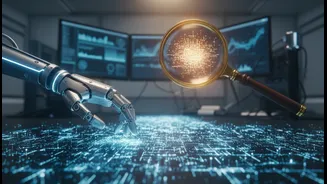
This is where the headline's call for 'transparent methods' becomes critical. A detector's output is not a verdict; it's a probability score, a piece of evidence that is often weak on its own. True verification requires a layered approach, much like a detective investigating a scene. Transparent methods involve more than just running an image through a black-box tool. It means conducting a reverse image search to find the photo's origin and history. It involves analysing metadata when available and understanding how it can be easily stripped. It means using forensic tools that look at patterns like error levels and inconsistent lighting. More advanced approaches include embedding provenance information directly into images at the time of creation, such as through C2PA content credentials or Google's SynthID watermark, which act like a verifiable digital birth certificate. Transparency isn't about finding a single tool that gives a perfect answer; it's about building a defensible process for establishing trust.
Why Accountable Editors Are Irreplaceable
Even with better methods, technology is not a substitute for human judgment. This brings us to the final, most important element: accountable editors. An AI detector cannot understand context, nuance, or intent. A human editor, however, brings critical thinking and ethical oversight. They are responsible for asking the crucial questions: Does this image make sense in the context of the story? Could it be used to mislead, even if it’s “real”? Is the source credible? This editorial judgment is the firewall against not just fakes, but also the misuse of authentic media. In fields like journalism, medicine, and law, accountability is paramount. An AI cannot be held responsible for errors, but a newsroom and its editors can. Research shows that media outlets requiring human review of all AI content are perceived as more credible. This accountability is the foundation of public trust, which, once eroded by repeated errors, is incredibly difficult to rebuild.