
The Two Main Suspects
When a fiery object enters our atmosphere, it's almost always one of two things: a natural meteoroid or artificial space debris. A meteoroid is a small rock or piece of debris from an asteroid or comet, traveling through the solar system. When it burns
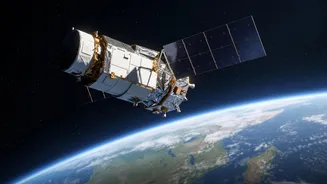
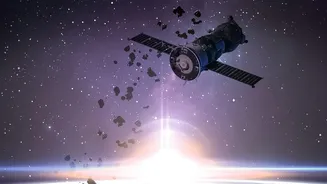
up in our atmosphere, the streak of light it creates is called a meteor, or shooting star. Space debris, often called space junk, is anything human-made left in orbit: defunct satellites, spent rocket stages, or fragments from past collisions. With thousands of tonnes of material circling the planet, re-entries are becoming more common.
Speed and Duration: The Telltale Signs
One of the most immediate clues is speed. Natural meteoroids are exceptionally fast. As Earth orbits the sun at 30 km/s, it runs into these objects, which can hit our atmosphere at speeds from 11 to 72 km/s. This incredible velocity causes them to burn up intensely and quickly, often in just a few seconds. Human-made debris, however, starts from a low-Earth orbit, travelling at a relatively slower 7-8 km/s. Its re-entry is a much more leisurely affair, creating a slower-moving fireball that can remain visible for 30 seconds to several minutes as it breaks apart. If you have enough time to pull out your phone and record it, it's almost certainly space junk.
The Angle of Entry
The path an object takes across the sky is another critical piece of the puzzle. Objects from deep space, like meteoroids, can approach Earth from any direction and often enter the atmosphere at a steep angle. This causes a rapid descent through increasingly dense air, contributing to their quick burnout. In contrast, space debris is already in orbit, essentially moving parallel to Earth's surface. Its re-entry path is typically much shallower, appearing to travel almost horizontally across the sky for a long distance before disappearing. This shallow angle keeps it in the upper atmosphere for longer, prolonging the fiery display.
Decoding the Light: A Chemical Fingerprint
The colours produced as an object burns up can reveal its composition. Scientists use a technique called spectroscopy, which breaks light down into its component wavelengths to identify the elements involved. Meteors, being made of rock and metal, often produce distinct colours based on their makeup; for example, magnesium burns bright green. Their spectra show signatures of elements common in asteroids, like iron, magnesium, and calcium. Human-made debris, on the other hand, is built from materials like aluminium and titanium alloys, along with paints and other synthetic compounds. The light from its re-entry will show the chemical signatures of these manufactured materials, which are distinct from the elemental profile of a space rock.
Keeping a Catalogue of Debris
For many re-entry events, the mystery is solved before the object even begins to fall. Global space surveillance networks, like the one operated by the U.S. Space Force, track tens of thousands of debris objects larger than 10 centimetres. The orbital paths of these objects are catalogued and continuously updated. When a satellite or rocket booster is predicted to re-enter, experts can forecast the time and general location of its descent. If a fiery event in the sky matches the predicted path of a known piece of junk, it’s a positive identification, solving the case with orbital mechanics rather than just observation.