





The Foundation of Your Posture
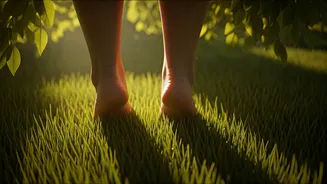
Before we get to the running, let's talk about your feet. We often think of posture as an issue of the back and shoulders, but your entire body is a 'kinetic chain.' Your feet are the foundation of this chain. When they are weak, misaligned, or unable
to properly sense the ground, the dysfunction travels upwards, affecting your ankles, knees, hips, and ultimately, your spine. Modern shoes, with their thick cushioning and rigid support, can act like a cast, preventing the hundreds of muscles, ligaments, and nerves in your feet from doing their job. Over time, this can lead to weak arches and poor proprioception—your body's ability to sense its position in space—which are key contributors to a slouching posture.
How Barefoot Movement Awakens Your Feet
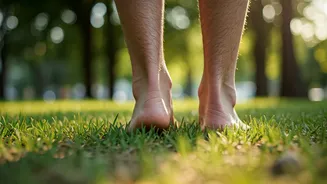
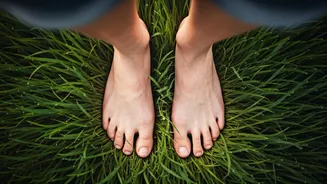
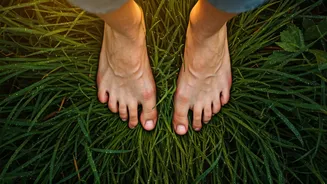
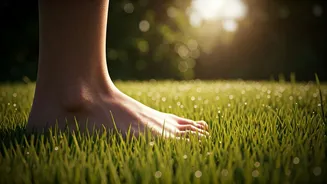
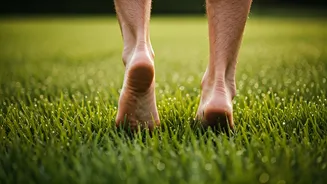
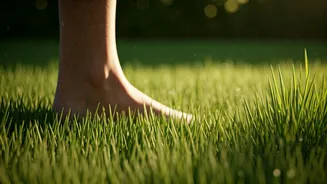
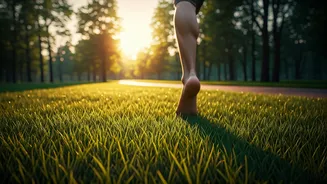
Running barefoot, especially on a natural surface like grass, forces your feet to wake up. Without a cushioned heel, you're encouraged to adopt a more midfoot or forefoot strike. This gait pattern is less jarring on your joints and engages the muscles in your feet and lower legs more effectively. The constant, minute adjustments your feet make to the uneven terrain of a grassy field act like a targeted workout for small, intrinsic muscles that are often dormant in shoes. Strengthening this foundation provides a more stable base for your entire body. As your feet become stronger and more responsive, your body learns to stack itself more efficiently over its centre of gravity, naturally encouraging a more upright posture without you even having to think about it.
Why Grass Is The Ideal Training Ground
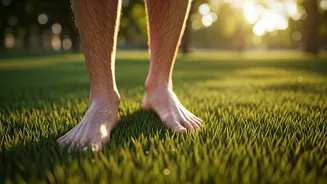
You can't just kick off your shoes and start pounding the pavement. Hard, flat surfaces can be too much, too soon for newly liberated feet. Grass, however, is the perfect medium. It's soft, which provides natural cushioning and reduces impact forces. More importantly, it's uneven. Every step on a grassy lawn presents a slightly different challenge, forcing your feet and ankles to constantly adapt. This sensory-rich environment is a feast for your nervous system, dramatically improving your proprioception. This enhanced ground-feel travels up the kinetic chain, giving your brain better information to align your hips and spine correctly. It turns a simple run into a full-body alignment session.
How to Start Safely: A Beginner's Guide
Transitioning to barefoot running requires patience. Your feet have been coddled for years and need time to adapt. Rushing into it is a recipe for injury. 1. **Start with Walking:** Begin by simply walking barefoot on grass for 10-15 minutes a day. Pay attention to how the ground feels. 2. **Short, Slow Jogs:** After a week or two, incorporate very short running intervals. Try jogging for 1 minute, then walking for 2 minutes, repeating for a total of 15-20 minutes. 3. **Listen to Your Body:** Your primary guide is discomfort. If you feel any sharp pain (not to be confused with general muscle soreness), stop immediately. Your calves and arches will likely feel sore at first; this is normal as they get stronger. 4. **Increase Gradually:** Do not increase your duration or intensity by more than 10% per week. It can take months, even a year, to build up the strength for longer barefoot runs. 5. **Inspect Your Feet:** After each session, check the soles of your feet for any cuts, scrapes, or blisters.
Risks and Important Considerations
Barefoot running is not for everyone. The most obvious risk is cuts and punctures from sharp objects, so always scan your running path. The more serious risk is overuse injuries like stress fractures if you do too much, too soon. Your bones need time to adapt to the new loads. Individuals with certain conditions, such as diabetes-related neuropathy (which reduces sensation in the feet) or significant pre-existing foot deformities, should consult a doctor or physiotherapist before attempting to run barefoot. This is about re-engaging with your body's natural mechanics, not forcing a change that could cause harm.