







More Than Just Watching
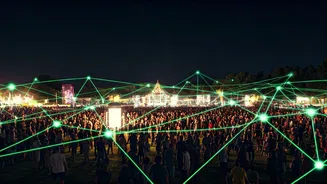
The familiar sight of a CCTV camera at a public gathering is undergoing a significant transformation. Modern surveillance systems being deployed at major Indian festivals are now powered by artificial intelligence (AI), making them active participants
in security management rather than passive observers. These are not simply recording devices. The new generation of festival security involves a network of hundreds, sometimes thousands, of cameras integrated with sophisticated software. This technology can perform real-time analysis of video feeds, a capability that fundamentally changes crowd management. Authorities can now receive automated alerts for a range of scenarios, including dangerous levels of crowd density, fires, security breaches, or even people crossing into restricted areas. This shift from reactive monitoring to proactive intervention is at the heart of the latest updates in festival security planning across the country.
The Push for Smarter Crowd Control
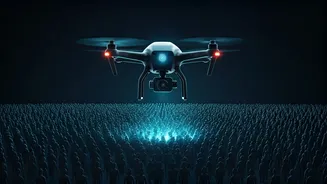
The primary driver for adopting these high-tech solutions is the grim history of tragedies at large-scale gatherings in India. Stampedes have been a notorious and devastating feature of many religious festivals, with incidents like the one at the Kumbh Mela in 2013 resulting in dozens of fatalities. Organisers and police forces are turning to AI to prevent history from repeating itself. At massive events like the Maha Kumbh Mela, which can attract hundreds of millions of people, AI algorithms are used to estimate crowd sizes and densities. By analysing footage from cameras and drones, the system can predict when a particular area is becoming dangerously congested and trigger an alert, allowing authorities to divert crowds or take other preventative measures before a critical point is reached. The goal is to move beyond manual crowd control, which is often impossible at such scales, to a data-driven approach that can anticipate and mitigate risks.
Facial Recognition and Finding the Lost
Beyond general crowd analytics, facial recognition technology (FRT) is another key component of these updated security measures. Its use is twofold. Firstly, law enforcement agencies are using it to scan crowds and compare faces against databases of known criminals or suspects. For instance, during the 2025 Ganesh Chaturthi in Pune, police reported that hundreds of individuals were flagged for past criminal records or suspicious activities based on AI-driven CCTV analysis. Secondly, the technology is being used for humanitarian purposes, such as reuniting families. At the Kumbh Mela, police have successfully used FRT to find individuals, including children, who were separated from their families in the massive crowds. By running a photograph through the system, cameras can spot the missing person, turning a potentially long and frantic search into a matter of hours.
The Unsettling Questions of Mass Surveillance
While the benefits for safety are clear, the deployment of such powerful surveillance tools in public spaces raises significant privacy concerns. Critics argue that the use of AI-powered CCTV and facial recognition at festivals, protests, and rallies constitutes a form of mass surveillance. Groups like the Internet Freedom Foundation have pointed out that this technology is often rolled out without a strong legal framework or parliamentary oversight to protect citizens' rights. The Indian Supreme Court declared privacy a fundamental right in 2017, but activists argue that indiscriminate surveillance fails the tests of necessity and proportionality laid out in that landmark judgment. There are fears that this technology could stifle democratic freedoms like the right to peaceful assembly and free expression, as people may self-censor for fear of being tracked. Furthermore, the accuracy of facial recognition systems has been questioned, with risks of misidentification potentially leading to false arrests, disproportionately affecting minority communities.
The Future of Public Gatherings
The integration of AI surveillance is not limited to a few isolated events. The technology has been successfully trialled at the Kumbh Mela and subsequently deployed at other major festivals, such as the Karthigai Deepam in Tamil Nadu, indicating a wider trend. This is part of a broader push under initiatives like the Smart Cities Mission, which aims to create integrated command and control centres that use technology to manage urban life, from traffic to public safety. For the average festival-goer, the presence of this technology is largely invisible, yet it is constantly processing their location and appearance. While authorities promote it as a tool for safety and convenience, its expansion means that citizens are increasingly being monitored in public spaces without their explicit consent. The lack of a robust data protection law governing the use of such data remains a central point of contention for privacy advocates.