

The Closed-Loop Challenge
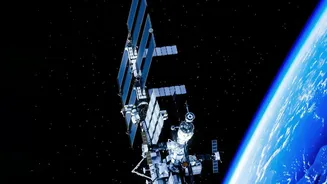
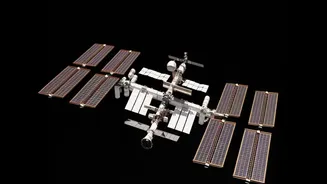
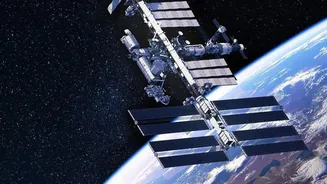
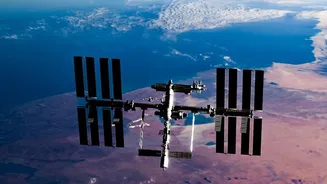
Aboard the International Space Station (ISS), the Environmental Control and Life Support System, or ECLSS, is the unsung hero. Its primary job is to manage everything necessary for life, but its most critical task is air revitalization. In a sealed environment,
every breath an astronaut exhales releases carbon dioxide (CO2). Without intervention, CO2 levels would become toxic. At the same time, the human body and onboard equipment release a cocktail of other trace contaminants, from ammonia in sweat to volatile organic compounds (VOCs) off-gassing from electronics. The ECLSS is designed as a sophisticated, closed-loop system that tackles these challenges, continuously scrubbing the air to keep it safe and breathable.
Making Oxygen from Water
The ISS doesn't rely solely on bulky, pressurised oxygen tanks from Earth, though it does keep them for backup. The primary source of breathable oxygen is manufactured on-site through a process called electrolysis. The station’s Oxygen Generation System (OGS) takes water—much of which is recycled from sources like cabin humidity and even astronauts' urine—and splits it using electricity from the station’s large solar arrays. In this process, water (H2O) is separated into its constituent parts: breathable oxygen (O2) and hydrogen gas (H2). The oxygen is then released into the cabin atmosphere, replenishing what the crew consumes.
Scrubbing Out Carbon Dioxide
While generating oxygen is half the battle, removing the CO2 produced by the crew is equally vital. The American segment of the ISS uses a system called the Carbon Dioxide Removal Assembly (CDRA). This regenerative system works by pulling cabin air through a series of beds containing a porous, crystalline material called zeolite. These beds act like a molecular sieve; one type of zeolite absorbs water vapour from the air, and another then traps the CO2 molecules. The clean, CO2-free air is then circulated back into the cabin. The system is regenerative because while one set of beds is actively scrubbing the air, another set is being heated and exposed to the vacuum of space to vent the captured CO2, preparing it for the next cycle.
Recycling Waste into Water
For even greater efficiency, the ECLSS includes the Sabatier system, which further closes the life-support loop. This system takes the hydrogen produced as a byproduct of oxygen generation and combines it with the carbon dioxide captured by the CDRA. Through a catalytic reaction, these two waste products are converted into water and methane. The water can be recycled back into the station’s water supply to be purified for drinking or used again in the Oxygen Generation System. The methane is considered a waste product and is vented into space. This process is a crucial step in reducing the amount of water that needs to be launched from Earth, a key challenge for future long-duration missions to Mars and beyond.
Filtering the Invisible Threats
Beyond CO2, the air inside the ISS can contain hundreds of different trace chemical contaminants. To handle these, the Trace Contaminant Control System (TCCS) runs continuously, acting as the station’s ultimate air purifier. It uses a combination of activated charcoal beds and a catalytic oxidizer. The charcoal bed adsorbs a wide range of volatile organic compounds and other gases. The catalytic oxidizer then heats the air to high temperatures, breaking down any remaining harmful compounds like ammonia and methane into harmless substances. This multi-stage process ensures that the air quality remains pristine and free from the slow build-up of toxic substances that could otherwise pose a long-term risk to astronaut health.