




In the autumn of 1604, a brilliant new star suddenly appeared in the heavens. For over a year, it shone brighter than any other star, challenging a worldview that had stood for centuries and setting the stage for a scientific revolution.
A New Star Appears
In early October
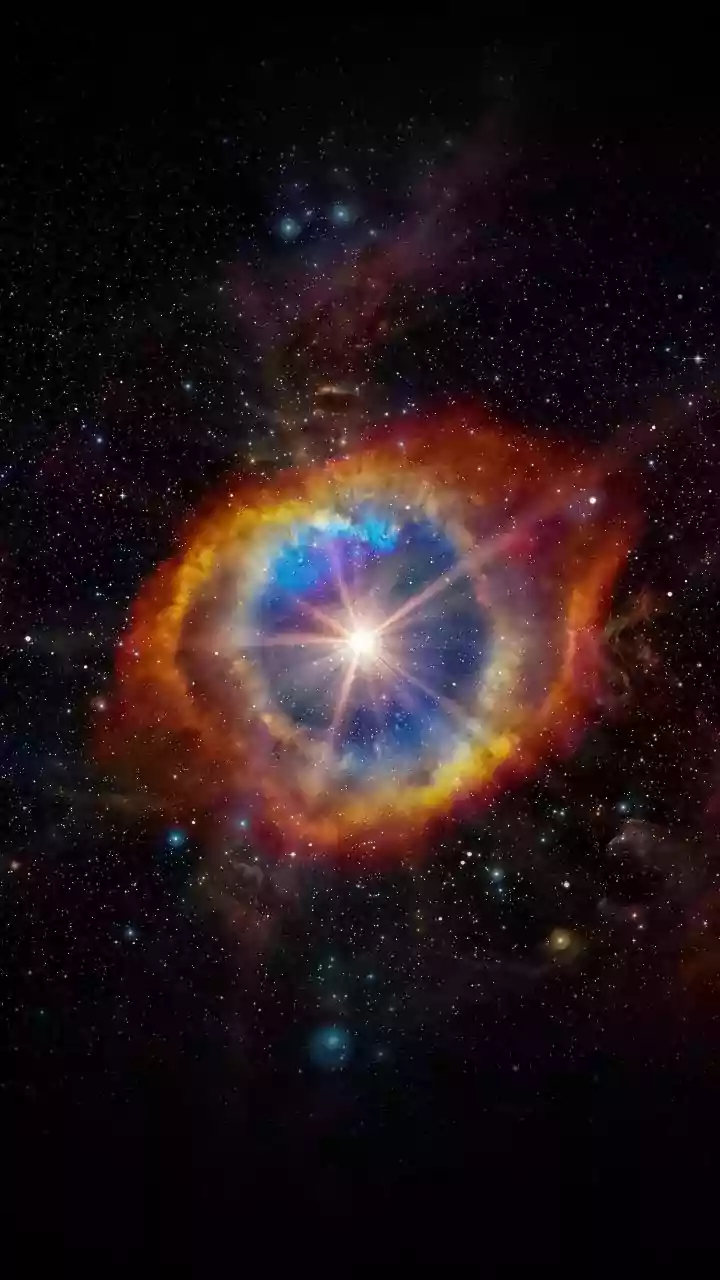
1604, observers across Europe and Asia noticed a startling addition to the night sky. A 'new star' had appeared in the constellation Ophiuchus, the Serpent Bearer, eventually becoming so bright it was visible during the day for over three weeks. It outshone every star and even the planet Jupiter. At a time when the heavens were believed to be perfect and unchangeable, the appearance of this temporary star, or 'stella nova', was a profound and unsettling event that sparked intense debate among scholars and the public alike.
Kepler's Meticulous Watch
Though he wasn't the first to see it, the new star became inextricably linked with the German astronomer Johannes Kepler. As the Imperial Mathematician in Prague, Kepler began his meticulous observations on October 17, 1604, and tracked the object for more than a year until it faded from view. He recorded its brightness, colour, and, most importantly, its position with remarkable precision for the era. His comprehensive work, 'De Stella Nova in Pede Serpentarii' ('On the New Star in the Foot of the Serpent Bearer'), published in 1606, became the definitive account of the event and is why the celestial object is now famously known as Kepler's Supernova.
Challenging an Ancient Worldview
The supernova posed a direct and powerful challenge to the established cosmology of the time, which was based on the teachings of the ancient Greek philosopher Aristotle. The Aristotelian model held that the universe was divided into two realms: the imperfect, changeable Earth and the perfect, eternally unchanging heavens beyond the Moon. A new star appearing in this celestial sphere was, according to this view, impossible. By carefully measuring the star and observing its lack of parallax—an apparent shift in position when viewed from different locations—Kepler and others, including Galileo Galilei, demonstrated that the star was not a nearby atmospheric phenomenon but was located far away in the realm of the 'fixed' stars. This was another significant piece of evidence, following Tycho Brahe's supernova of 1572, that the heavens were not immutable.
The Final Flourish of Pre-Telescopic Astronomy
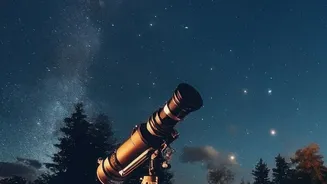
The headline's reference to the 'telescope-era' is a fascinating point of context. The supernova of 1604 is in fact the last one in our Milky Way galaxy to be observed and recorded with the naked eye. The first patent for a telescope appeared in the Netherlands in 1608, and Galileo famously turned his own, improved version to the skies in 1609—four years after Kepler's star had faded from view. As such, the observations made by Kepler and his contemporaries represent the pinnacle of pre-telescopic astronomical measurement. Their ability to chart the star's position and brightness so precisely without optical aid was a final, brilliant flourish of an astronomical era that was about to be completely transformed.
The Legacy of Kepler's Star
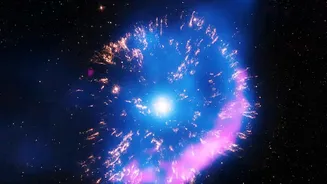
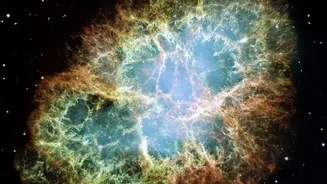
Today, we know that Kepler and his contemporaries witnessed a Type Ia supernova, the violent death of a white dwarf star some 20,000 light-years from Earth. The event was not the birth of a star, but a cataclysmic explosion. The remnant of this explosion is still studied by modern astronomers using powerful instruments like the Chandra X-ray Observatory to understand how these events distribute heavy elements throughout the universe. The supernova of 1604 served as a crucial catalyst, eroding belief in ancient cosmological models and preparing the scientific community for the revolutionary discoveries that Galileo's telescope would soon reveal. It was a singular point of light that helped illuminate a new path for human understanding of the cosmos.