
A Tradition Steeped in Monsoon Rains
For generations, the arrival of the monsoon season, or 'Sawan,' has heralded the beginning of Ghewar season in Rajasthan and across North India. This honeycomb-like cake, made from a batter of refined flour and ghee, is deep-fried and then soaked in sugar
syrup. Its porous texture is perfectly designed to absorb the syrup, resulting in a dessert that is both crisp and succulent. Traditionally, Ghewar is associated with the festivals of Teej and Raksha Bandhan, which fall during the rainy months. On Teej, married women receive it as a gift from their paternal homes, a custom known as 'Sindhara'. It symbolises the sweetness and strength of familial bonds, making its appearance on the festive platter a non-negotiable part of the celebrations.
The Artistry of the Halwai
Making Ghewar is not just cooking; it's a performance of skill and patience. The process is a craft passed down through generations of 'halwais' (confectioners). It begins with preparing a thin, flowing batter. The real magic happens during frying. The batter is poured in a steady, thin stream from a height into a 'kadhai' of hot ghee. As the batter hits the oil, it sizzles and splatters, forming a delicate, porous web. The halwai expertly shapes it into a disc, creating the iconic lattice structure. This step requires immense precision, as the temperature of the ghee and the flow of the batter must be perfect. Once fried to a golden crisp, the Ghewar is carefully lifted, drained, and dunked in a fragrant sugar syrup, often infused with cardamom, saffron, or rose water.
A Canvas for Culinary Innovation
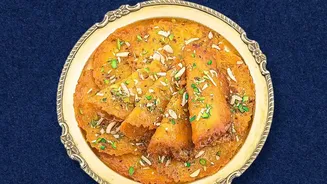
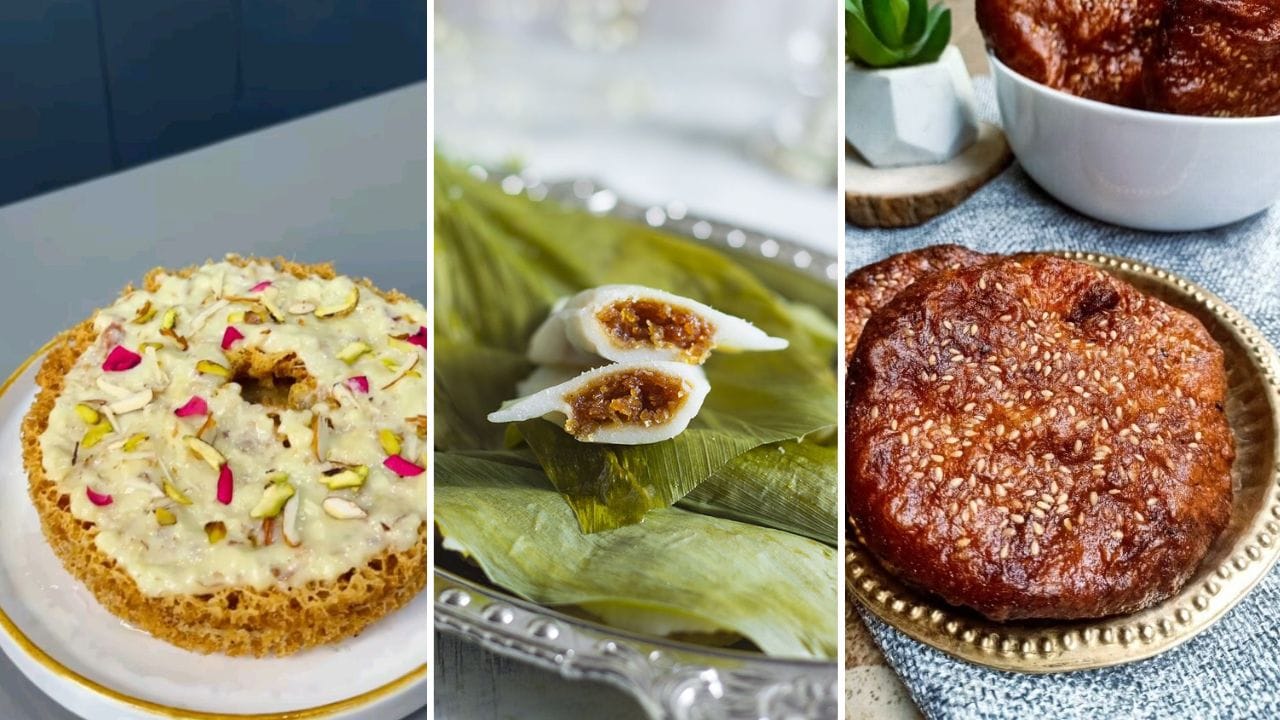
While the classic Malai Ghewar, topped with thickened milk, pistachios, and almonds, remains an undisputed favourite, a new wave of culinary creativity is sweeping through sweet shops and boutique bakeries. Chefs and confectioners are now using the traditional Ghewar as a base for exciting and often unexpected flavour combinations. The innovations range from simple tweaks to complete dessert makeovers. Chocolate Ghewar, drizzled with rich ganache, and Biscoff Ghewar, layered with the popular caramelised biscuit spread, have become instant hits with younger audiences. Fruit-forward versions, topped with fresh mangoes, berries, or sitaphal (custard apple), offer a refreshing contrast to the rich base.
Beyond Flavours: New Forms and Fusions
The innovation isn't just limited to toppings. The very form and concept of Ghewar are being reimagined. Today, you can find Ghewar Tarts with lemon curd fillings, bite-sized Ghewar pieces served as a topping for cheesecakes, and even deconstructed Ghewar platters in high-end restaurants. These modern interpretations are making the sweet accessible and appealing to a global palate. By presenting it in new formats, chefs are breaking its traditional mould and positioning it as a versatile dessert that can hold its own against international pastries. This fusion of Indian tradition with contemporary dessert trends ensures that Ghewar is not just preserved but is also an active, evolving part of India's culinary conversation.