





What is a Food Puzzle?
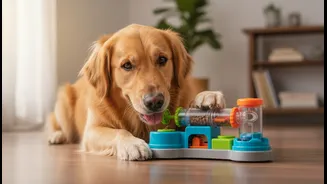
A food puzzle is any object that holds food and requires your pet to solve a problem to get it out. This can be a commercially made toy with sliders and compartments or a simple do-it-yourself (DIY) creation from household items. The core idea is to move
beyond the food bowl and reintroduce the element of work and foraging into your pet’s feeding routine. This concept taps into a behaviour known as “contra-freeloading,” where many animals, including dogs, actually prefer to work for their food rather than eat it from a freely available source. This satisfies a deep-seated instinct to hunt and forage, which often goes unfulfilled in a domestic environment.
The Mental and Emotional Benefits
The primary benefit of a food puzzle is mental stimulation. For pets left alone for hours, boredom can lead to undesirable behaviours like destructive chewing or excessive barking. Food puzzles provide a constructive outlet, channelling your pet’s energy into a rewarding task. The act of sniffing, pawing, and manipulating a toy to get food engages their brain, building confidence as they successfully solve the puzzle. This focused activity can also have a calming effect, reducing stress and anxiety by shifting the brain from a reactive state to a problem-solving one. For both dogs and cats, this form of enrichment can lead to a happier, more behaviourally balanced companion.
Physical Health Advantages
Beyond brain games, food puzzles offer significant physical health advantages. One of the most immediate benefits is slowing down pets that eat too quickly. Gulping down food can lead to vomiting, digestive upset, and even a dangerous condition called bloat in dogs. By forcing your pet to eat one piece of kibble at a time, puzzles promote better digestion and nutrient absorption. This slower pace also helps with weight management. The pet feels fuller on the correct portion of food, and the small amount of physical exertion required to work the puzzle contributes to their daily activity, helping to prevent obesity.
How to Choose and Introduce a Puzzle
Choosing the right food puzzle depends on your pet. For beginners, it is crucial to start with something very easy to prevent frustration. A simple treat-dispensing ball or a basic snuffle mat is an excellent starting point. As your pet gets the hang of it, you can gradually increase the difficulty with more complex puzzles that involve sliding parts or multiple steps. It's also important to have a variety of puzzles and rotate them to keep things interesting. You don’t need to spend a lot of money, either. DIY options like placing treats in a muffin tin and covering them with tennis balls, or using empty cardboard rolls with the ends folded in, can be just as effective. When first introducing a puzzle, use high-value, smelly treats to capture their interest and show them how it works if needed.