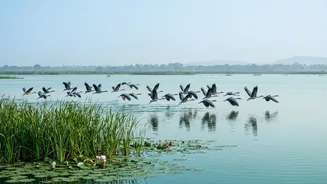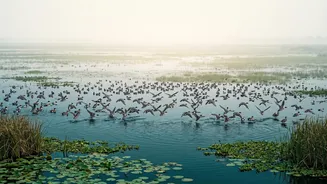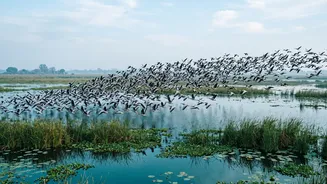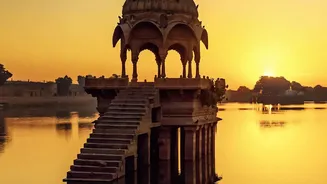






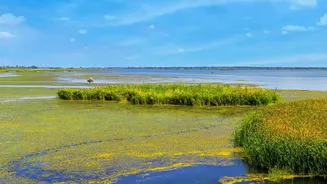
As the air turns crisp, a timeless spectacle unfolds across India’s skies. Lakhs of winged travellers, having journeyed thousands of kilometres, are descending upon two of the country's most vital ecosystems: Chilika Lake and Keoladeo National Park.
An Epic Journey Across Continents
Every
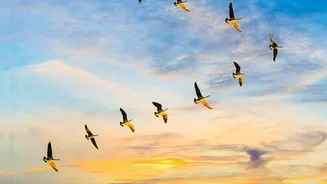
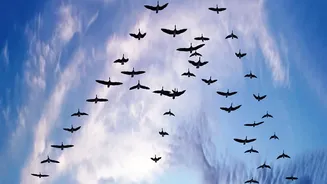
year, as the harsh winters of the northern hemisphere set in, millions of birds embark on an arduous journey south. They leave their breeding grounds in Siberia, Central Asia, Russia, and even parts of Europe, flying across the Himalayas to find warmth and food. This incredible migration follows ancient routes known as flyways, and two of the most critical pit stops along the Central Asian Flyway are in India. The arrival of these birds, which typically begins in October and peaks from November to January, transforms these wetlands into a vibrant, noisy, and breathtaking celebration of nature's resilience.
Chilika: A Brackish Water Haven in Odisha
In Odisha, the vast expanse of Chilika, Asia's largest brackish water lagoon, becomes a winter home for over a million birds. Spanning over 1,100 square kilometres, the lagoon's rich ecosystem, teeming with fish and other aquatic life, provides a perfect feasting ground. The first flocks, including species like the Northern Pintail, Eurasian Wigeon, and Gadwall, have already been spotted. In fact, flamingos made an early appearance this year, arriving in October instead of their usual November or December, raising hopes for a season of high numbers. The heart of the action is the Nalabana Bird Sanctuary, a core area within the lake that hosts staggering concentrations of waterfowl. The January 2026 bird census recorded over 1.13 million birds of 196 species in Chilika, with the Northern Pintail being the most numerous. To protect these guests, the forest department has set up over 20 protection camps to prevent poaching.
Keoladeo: Rajasthan's Avian Paradise
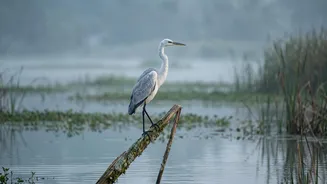
Meanwhile, in Bharatpur, Rajasthan, Keoladeo National Park tells a similar story. Formerly a duck-hunting reserve for maharajas, this 29-square-kilometre man-made wetland is now a UNESCO World Heritage Site. It is celebrated for its dense gathering of over 370 bird species. From October, the skies here fill with birds like the Bar-headed Goose, famous for its high-altitude flight over the Himalayas, along with various ducks, geese, and waders. While the park was once the only wintering ground in India for the critically endangered Siberian Crane, it continues to host a spectacular diversity of other species. Resident birds like Painted Storks and the vulnerable Sarus Crane are joined by thousands of migratory visitors, creating a unique birding experience that is accessible on foot, by bicycle, or on cycle rickshaws.
Sanctuaries of Global Importance
Both Chilika Lake and Keoladeo National Park were designated as India's first Ramsar Sites in 1981, recognising them as wetlands of international importance. This designation underscores their critical role not just as bird habitats, but as ecosystems that support local livelihoods, recharge groundwater, and protect biodiversity. Chilika, for instance, supports the livelihood of more than 1,50,000 fisherfolk. Keoladeo's unique status as a managed wetland makes it a global case study in conservation. These sites are more than just beautiful landscapes; they are vital ecological engines and irreplaceable parts of our natural heritage.
A Fragile Spectacle Facing Modern Threats
While conservation efforts have been successful—Chilika was removed from the threatened list in 2002 after a major restoration—challenges remain. Climate change is altering migration patterns, with some birds arriving earlier and others leaving sooner as temperatures rise. Pollution, changes in water levels, and encroachment on wetland areas are persistent threats that require constant vigilance. Poaching, though reduced, continues to be a concern in the areas surrounding these protected parks. The annual arrival of these birds is not just a spectacle to be enjoyed, but a sensitive ecological indicator. Their continued return depends entirely on the health of these wetland ecosystems and our commitment to protecting them.