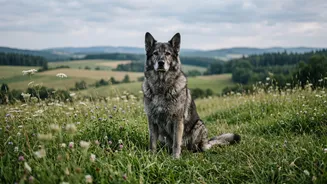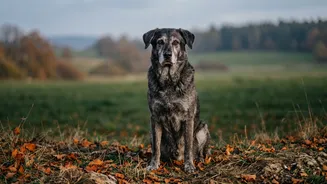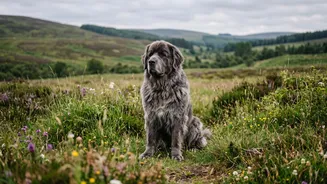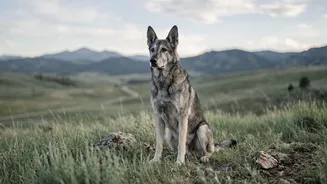






It's a bittersweet truth for dog lovers: the larger the breed, the shorter their time with us seems to be. While owners have long observed this paradox, science is now providing a clearer answer, and it lies deep within their DNA.
The Age-Old Paradox of Dog Years
Anyone who has shared
their life with both a Great Dane and a Chihuahua knows the stark difference in their lifespans. While many mammals follow the rule of 'bigger means longer life'—think of a mouse versus a whale—domestic dogs are a curious exception. On average, giant breeds weighing over 50 kg may only live for 6 to 8 years, while small breeds under 10 kg can enjoy lifespans of 14 years or more. This isn't just a coincidence; it's a profound biological pattern. For years, the leading theory was simply that rapid growth puts a strain on the body. But new research suggests the story is more complex, written not just in the genes themselves, but in how they are controlled.
It's Not the Genes, It's How They're Used
The answer, according to a major study from the Dog Aging Project, lies in the field of epigenetics. Think of a dog's DNA as a massive library of instruction manuals. Epigenetics is like the librarian who decides which books are read and which stay on the shelf. It doesn't change the text in the books, but it controls access to the information. This process uses chemical tags, called methyl groups, that attach to DNA and regulate gene activity. As an animal ages, the pattern of these tags changes, creating what scientists call an 'epigenetic clock'. By studying the methylomes—the complete map of these tags—across nearly 900 dogs, researchers discovered that large dogs show signs of accelerated molecular aging.
The Problem with 'Jumping Genes'
A key finding centres on something called 'jumping genes' or transposable elements. These are ancient, rogue stretches of DNA that can copy themselves and 'jump' to new locations in the genome, potentially causing damage and instability. Normally, the body keeps these genes locked down with methylation tags. However, the study revealed that as dogs age, these chemical locks begin to fade. This loss of regulation happens much faster in larger dogs. Specifically, a class of jumping genes known as LINE-1 was found to be a major factor. Researchers found that giant breeds lost about 35% more of the methylation tags controlling their LINE-1 genes each year compared to small breeds. When these jumping genes are unleashed, they can contribute to genomic instability, inflammation, and DNA damage—all hallmarks of aging and cancer.
The High Price of Rapid Growth
This leads to the central trade-off for large dogs: their impressive size comes at a high biological cost. To grow from a small puppy to a giant adult in a short time, their bodies must heavily activate growth-promoting genes. Some studies suggest hormones like insulin-like growth factor 1 (IGF-1), which are essential for achieving large size, are also linked to an increased risk of cancer. The accelerated loss of epigenetic control in large dogs appears to be a downstream consequence of this 'live fast, die young' developmental strategy. Their bodies invest heavily in rapid growth early in life, but this seems to compromise the systems that maintain genetic stability later on, leading to a higher incidence of age-related diseases like cancer. In essence, the very processes that make them big also make them more vulnerable.
What This Means for Our Canine Companions
This discovery doesn't mean that large dogs are 'flawed', but rather that their biology involves a delicate and ultimately costly balance. Understanding this molecular mechanism is a huge step forward. It helps explain why larger breeds are more susceptible to certain cancers and provides a clearer picture of their aging process. The research from the Dog Aging Project and other institutions could eventually lead to new ways to monitor and support the health of our pets. Since dogs share our environment and receive similar medical care, studying their aging process can also provide invaluable insights into human aging. For now, the findings confirm what owners of big dogs have always known: their time with us is precious, and it’s a biological reality rooted deep in their genetic code.