



First Stop: Bishnupur’s Terracotta Treasures
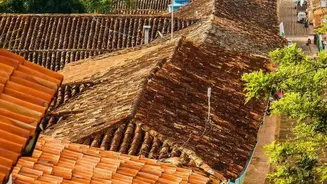
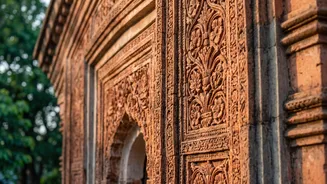
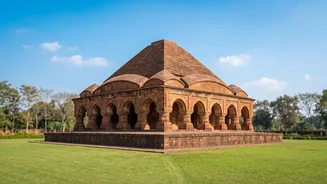
The adventure begins in Bishnupur, the historic capital of the Malla kings, located in West Bengal's Bankura district. This town is a living museum, renowned for its stunning terracotta temples built from the 17th century onwards. As you step into this
world of baked earth, the first sight that often greets you is the Rasmancha, a unique pyramidal structure from 1600 AD, designed not for a deity but for displaying idols during the annual Ras festival. From there, a short ride on a local rickshaw takes you through lanes dotted with architectural marvels. The Jor Bangla Temple, resembling two thatched huts joined together, and the five-pinnacled Shyam Rai Temple showcase intricate panels depicting scenes from the Ramayana and Mahabharata, telling epic stories in fired clay.
The Living Arts of the Malla Kingdom
Bishnupur's heritage isn't confined to its temples. The town is equally famous for its living crafts. This is the home of the Baluchari saree, a silk masterpiece known for its elaborate pallu that weaves narratives from mythology and local life. While the craft originated in Murshidabad, it found a new home and thrived in Bishnupur under the patronage of the Malla kings. Visitors can often see weavers at work, their jacquard looms clacking away to create these wearable stories. Beyond textiles, the iconic terracotta Bankura horse, with its distinct, elegant form, is a must-buy souvenir. Local markets and artisan homes are filled with these clay figures, wind chimes, and pottery, offering a chance to take a piece of Bishnupur’s artistic soul home with you.
Journey to Murshidabad, the City of Nawabs
From the rustic charm of Bishnupur, the journey continues to Murshidabad, the last capital of independent Bengal before British rule. The approximately six-hour drive transports you from a kingdom of Hindu kings to a city of Islamic Nawabi splendour. Situated on the banks of the Bhagirathi river, Murshidabad was once a prosperous 18th-century metropolis, a hub of trade and power. The change in architecture is immediate and striking. The dusty red of terracotta gives way to grand Indo-European palaces, imposing mosques, and serene riverside gardens, each echoing tales of immense wealth, political intrigue, and the fateful Battle of Plassey that changed India's destiny.
The Grandeur of Hazarduari Palace
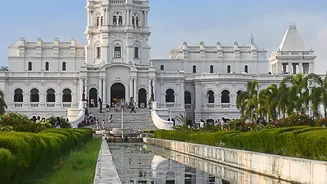
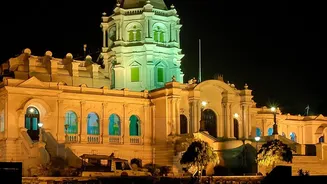
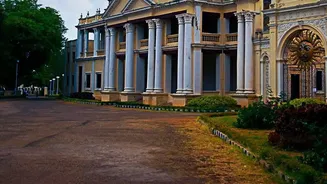
The centerpiece of Murshidabad is the magnificent Hazarduari Palace, or the 'Palace of a Thousand Doors'. Built in the 1830s for Nawab Nazim Humayun Jah, this imposing structure designed by a European architect features a thousand doors, though a hundred of them are famously fake, intended to confuse intruders. Today, the palace is a museum managed by the Archaeological Survey of India. Walking through its 114 rooms and numerous galleries feels like stepping back in time. The collection includes the Nawabs' personal belongings, exquisite furniture, vintage cars, and an impressive armoury filled with swords and cannons from a bygone era of conflict and ceremony.
Beyond the Palace: Mosques and Cemeteries
Murshidabad's history extends far beyond the palace walls. A short distance away lies the Katra Masjid, the tomb of Nawab Murshid Quli Khan, the city's founder. This sprawling brick mosque, built in the early 1720s, stands as a powerful symbol of the city's origins. Opposite Hazarduari is the Nizamat Imambara, India's largest, a congregational hall for Shia mourning ceremonies that replaced an earlier wooden structure built by Siraj-ud-Daulah. For those intrigued by the dramatic history of the era, a visit to the Jafarganj Cemetery, the final resting place of Mir Jafar and his descendants, offers a somber reminder of the conspiracies that led to the downfall of the Nawabs.