






More Than a Splashdown
The successful return of the Artemis II crew on April 10, 2026, marked a monumental achievement in human spaceflight. For the first time in over 50 years, astronauts traveled beyond low-Earth orbit, pushing the boundaries of exploration. However, the mission's
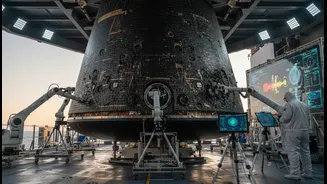
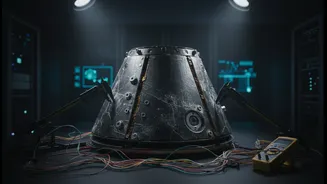
end was the beginning of another critical phase. Once the Orion capsule, named Integrity by its crew, was safely aboard the USS John P. Murtha, teams from NASA began a meticulous, months-long process of post-flight analysis. This deep dive into the spacecraft's performance isn't just a routine check-up; it's a treasure hunt for data that will directly inform the design, safety, and success of Artemis III and all future lunar missions. Every sensor reading and scorch mark tells a story that engineers are eager to read.
The Heat Shield's Fiery Test
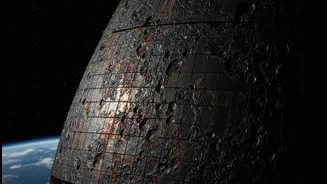
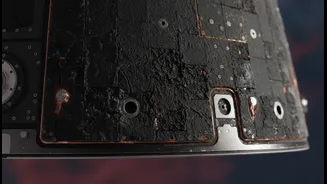
The star of the post-flight show is undoubtedly the 16.5-foot-wide heat shield. On the uncrewed Artemis I mission, the shield experienced unexpected erosion, with larger-than-expected pieces of its protective material charring off during reentry. This was a primary concern heading into the crewed Artemis II flight. To mitigate this, NASA engineers modified the reentry trajectory for a slightly steeper, faster descent to reduce thermal stress. The gamble paid off. Initial inspections right after splashdown revealed that the char loss was significantly reduced compared to Artemis I, with performance matching the predictions from extensive ground-based testing. Commander Reid Wiseman even remarked that from the crew's perspective, the shield looked "wonderful." The heat shield will now be sent for more detailed analysis, but this early success is a massive confidence boost for the systems protecting astronauts from reentry temperatures of nearly 2,800 degrees Celsius.
For the Engineering Student: Data in Action
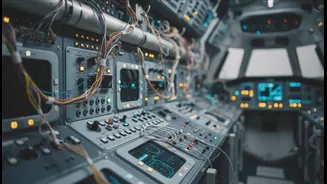
Artemis II was a flying laboratory, and its data is a goldmine for engineering students and professionals. The Space Launch System (SLS) rocket alone transmitted data from thousands of sources during its flawless launch. The Orion capsule was instrumented to test its handling, navigation, and propulsion in deep space. Astronauts manually piloted the craft to test its responsiveness, providing crucial feedback that bridges the gap between design models and real-world performance. Engineers are now comparing terabytes of real-world data on structural loads, avionics, and power systems against their computer simulations. This process validates their models, highlights any discrepancies, and allows them to refine the systems for future spacecraft, ensuring they are not just theoretically sound but operationally robust for the long journey to the Moon and Mars.
The Human Element: Life in Deep Space
Beyond the hardware, Artemis II was a critical test of the life support systems with a human crew. For 10 days, four astronauts relied on Orion's systems for air, water, and thermal control. Post-flight, every component is being checked, from reusable avionics and seats to the crew's survival suit umbilicals. NASA is also assessing an issue with the urine vent line that occurred during the flight to identify the root cause and implement a fix for Artemis III. Furthermore, the mission gathered invaluable data on human health. Through blood and saliva samples, MRIs, and performance tests, scientists are building a comprehensive picture of how deep space travel affects the human body, from immune function to balance. This research is fundamental for planning longer-duration missions and ensuring crews can perform critical tasks safely after landing on the Moon.
Paving the Way for Artemis III
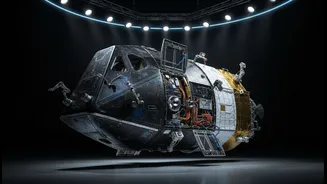
Ultimately, every piece of data from Artemis II's post-flight analysis feeds directly into the next phase of lunar exploration. The confirmed success of the heat shield's modified reentry profile clears a major hurdle for future missions. Understanding the performance of the life support and other crew systems provides the confidence needed to prepare for Artemis III, which will involve docking with a lunar lander in Earth orbit as a precursor to a landing on Artemis IV. Lessons learned from the rocket's performance and the spacecraft's handling will refine operational procedures. The detailed disassembly and inspection of the Orion capsule at Kennedy Space Center will continue over the summer, ensuring every component that can be reused or improved is identified. The work happening now is the essential, methodical engineering that turns the triumph of one mission into the foundation for the next giant leap.