


That familiar ache in your lower back and the stiffness in your legs after hours at a desk is your body's cry for help. Prolonged sitting keeps your hamstrings in a shortened, tight position, leading to discomfort and poor posture.
Why Your Desk Job Hurts Your Hamstrings
When you sit for extended
periods, your body adapts to the posture. Your hip flexor muscles at the front of your hips shorten, while your hamstrings—the large muscles at the back of your thighs—also become tight. Though they are in a lengthened state while you sit, they are inactive, which leads to reduced blood flow, stiffness, and a decrease in overall flexibility. This tightness doesn't just stay in your legs; it pulls on your pelvis, which can alter your posture and contribute significantly to lower back pain. Over time, this daily strain can lead to chronic discomfort, muscle imbalances, and a greater risk of injury when you do get active. Taking short, regular breaks to stretch is one of the most effective ways to counteract these effects.
The Basic Seated Hamstring Stretch
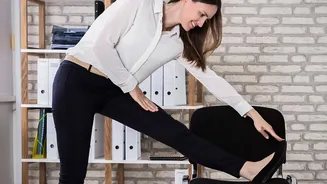
This is the foundational stretch and the easiest one to incorporate into your day. To begin, sit on the edge of your chair, ensuring it's stable and won't roll. Extend one leg straight out in front of you, with your heel on the floor and your toes pointing towards the ceiling. Place your other foot flat on the floor. Keeping your back straight, slowly hinge forward from your hips, not your waist, until you feel a gentle pull in the back of your extended leg. It's crucial to maintain a long spine and avoid rounding your back. Hold the stretch for 20-30 seconds, breathing deeply throughout. You should feel a stretch, not sharp pain. Slowly return to the starting position and repeat on the other leg. Aim for three repetitions on each side.
Elevated Leg Hamstring Stretch
To deepen the stretch, you can use a small, sturdy object to elevate your leg. A low stool, a stack of books, or even the base of a non-rolling office chair can work. While sitting, extend one leg and rest your heel on the elevated surface. As with the basic stretch, keep your leg as straight as possible without locking the knee, and ensure your toes are pointing upward. With a straight back, gently lean forward from your hips. The added height will increase the intensity of the stretch, so move slowly and listen to your body. Hold for 20-30 seconds, release, and then switch to the other side. This variation provides a more significant lengthening of the entire hamstring muscle group.
Seated Stretch with a Strap or Band
Using a resistance band, a belt, or even a long scarf can help you control and deepen the stretch, especially if you have limited flexibility. Sit tall at the edge of your chair and extend one leg, heel on the floor. Loop the band around the ball of your foot and hold both ends. Keeping your back straight, gently pull on the strap, drawing your toes towards you. You will feel an intense stretch along your hamstring and even into your calf muscle. At the same time, hinge forward slightly at the hips to increase the stretch. Be careful not to pull too hard; the goal is a sustained, gentle tension. Hold for 20-30 seconds before switching legs.
Tips for Safe and Effective Stretching
To get the most out of these exercises without risking injury, always follow a few simple rules. First, never bounce while stretching. This can cause microstears in the muscle. Instead, ease into the stretch and hold it steady. Second, listen to your body. You should feel tension, but never sharp pain. If you do, ease off immediately. Remember to breathe. Deep, slow breaths help relax the muscle, allowing for a better stretch. Finally, consistency is more important than intensity. Performing these stretches for a few minutes every day will yield far better results than one long, aggressive session per week. Try to get up and move around for a few minutes every hour to break the cycle of sitting.