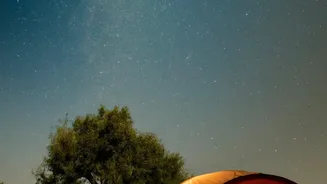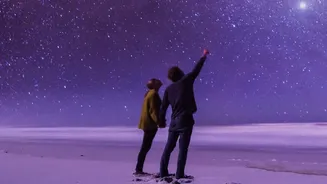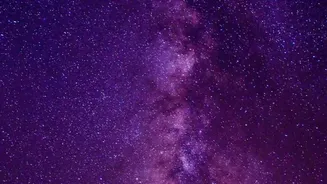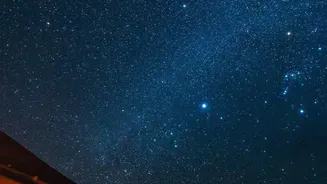





In a world where city lights have erased the cosmos from our nightly view, the Thar Desert near Jaisalmer, India, offers a profound retreat. Here, the universe unfolds in breathtaking detail, turning a simple camping trip into a celestial event.
A Canvas of Pristine Darkness
The number
one reason Jaisalmer is a haven for stargazers is its profound darkness. Located deep in the Thar Desert, remote desert camps are situated far from the light pollution that plagues most cities. Astronomers rate sky darkness on the Bortle Scale, where Class 1 is a pristine, untouched sky. While major cities rate as high as Class 8 or 9, parts of the desert near Jaisalmer are rated Class 1 or 2. This near-total absence of artificial light means the sky isn't just dark; it's a black velvet canvas that allows thousands of stars, normally invisible to the naked eye, to blaze brightly.
Dry Air and Flawless Transparency
It's not just about the lack of light; it's also about the quality of the air. The desert climate of Jaisalmer is exceptionally dry, especially during the peak stargazing season from October to March. This low humidity means there is very little water vapor in the atmosphere to scatter and distort starlight. The result is a crisp, stable atmosphere that astronomers call 'good seeing'. This atmospheric clarity allows for incredibly sharp views, where stars appear as tight pinpoints of light rather than hazy blurs, and the intricate dust lanes of the Milky Way become visible in stunning detail.
What You Can Actually See
Under these ideal conditions, the celestial show is spectacular. On a clear, moonless night, the Milky Way galaxy is not a faint, milky band but a brilliant, textured arc that stretches from horizon to horizon. In fact, in the darkest areas, it can be bright enough to cast a soft shadow on the sand dunes. Throughout the year, different constellations and deep-sky objects take center stage. The winter months offer dazzling views of the Orion Nebula, the Pleiades star cluster, and the constellations of Taurus and Orion. During other parts of the year, it's possible to spot the Andromeda Galaxy with the naked eye. Planets like Jupiter and Saturn also make brilliant appearances.
The Desert Camping Experience
The astronomical wonder is inseparable from the unique cultural experience of desert camping. Tour operators in areas like Sam and Khuri Sand Dunes, about 40 kilometers from Jaisalmer city, offer a range of camping options from basic tents to luxurious Swiss-style accommodations with modern amenities. A typical excursion includes a camel or jeep safari to the dunes for sunset, followed by an evening around a bonfire with live Rajasthani folk music and dance. After a traditional dinner, the entertainment subsides, and the profound silence of the desert takes over. It's in this quiet that you can lie back on the cool sand and fully immerse yourself in the cosmic spectacle overhead, an experience that connects you with both nature and ancient traditions.
Planning Your Celestial Getaway
To make the most of a stargazing trip to Jaisalmer, timing is everything. The best season is between October and March, when the weather is cooler and the skies are clearest. For the darkest skies, plan your visit to coincide with the new moon, as a full moon can be so bright it washes out fainter stars. The prime viewing hours are typically between 10 p.m. and 2 a own., once your eyes have fully adjusted to the dark. While many camps offer guided stargazing, no special equipment is needed to appreciate the view, though a pair of binoculars can enhance the sight of planets and star clusters.