





The Protein Tracking Paradox
For active adults, especially those on a plant-based diet, protein is a constant focus. You diligently log every gram from your dal, chickpeas, and tofu, aiming for that magic number to support muscle repair and growth. Yet, for many, the gains in strength
or recovery remain elusive. This frustrating gap between effort and results often leads to a simple, misleading conclusion: that plant-based diets are inadequate for serious fitness. The real issue, however, isn't the diet itself but a fundamental misunderstanding of what the protein numbers on a label actually mean for your body.
More Than Just Grams
The core of the problem is that not all protein is created equal. A food might contain 20 grams of protein, but your body can't absorb all of it. This concept is known as protein quality, which depends on two key factors: its amino acid profile and its digestibility. Animal proteins are often called 'complete' because they contain all nine essential amino acids our bodies can't make. Many plant proteins are 'incomplete,' meaning they are low in one or more of these essential amino acids. More importantly, plant-based proteins are generally less digestible than animal-based ones due to factors like their fibrous structure and the presence of 'anti-nutritional' compounds. This means that simply counting total grams of protein is a significant tracking error—you're logging the number on the package, not the amount available to your muscles.
Meet the New Gold Standard: DIAAS
To get a more accurate picture, scientists use protein quality scores. For years, the standard was the Protein Digestibility Corrected Amino Acid Score (PDCAAS). However, it had flaws, especially for plant proteins. In 2013, the UN's Food and Agriculture Organization (FAO) recommended a superior method: the Digestible Indispensable Amino Acid Score (DIAAS). Unlike its predecessor, DIAAS measures the digestibility of each individual amino acid at the point in the small intestine where they are actually absorbed. This provides a much more realistic measure of a protein's value to the body. A high DIAAS score (100 or above is excellent) means the protein is highly digestible and provides a good balance of essential amino acids. Scores below 75 are considered low quality.
How DIAAS Prevents Tracking Errors
Understanding DIAAS protects you from the critical error of assuming a gram is a gram. For example, lentils and chickpeas are staples of an Indian plant-based diet, but their protein digestibility can be as low as 60-70%. This means if you eat a portion containing 20 grams of protein, your body might only absorb 12-14 grams. In contrast, dairy products, eggs, and soy protein isolate have very high DIAAS scores, meaning nearly all the protein is available. By being aware of this, you can adjust your intake. An active individual might need to consume a larger quantity of lower-DIAAS plant proteins to achieve the same muscle-building effect as a smaller amount of a high-DIAAS protein. This knowledge transforms your tracking from a simple tally of grams to a smarter assessment of usable nutrients.
Smarter Plant-Protein Choices
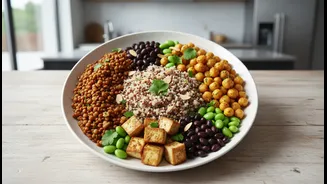
So, how do you apply this? First, you don't need to memorise DIAAS scores for every food. The key is to build your diet around high-quality plant proteins and smart combinations. Soy products like tofu and tempeh, along with quinoa, are excellent as they have more complete amino acid profiles and better digestibility. The timeless Indian tradition of combining legumes with grains, like dal with rice or roti, is a practical application of this science. This pairing creates a 'complete' protein by ensuring you get all essential amino acids in one meal, compensating for what might be lacking in each individual food. For those with high protein needs, like athletes, incorporating a high-quality plant-based protein powder (many use a blend of pea and rice protein to achieve a high DIAAS) can be an effective way to meet targets without consuming excessive food volume.