




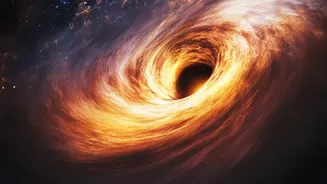
The Universe's Elusive Middle Child
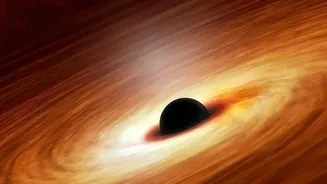
Imagine black holes come in three sizes: small, large, and extra-large. Astronomers have long had proof of the small ones, called stellar-mass black holes, which form when massive stars die and typically weigh a few dozen times more than our Sun. They
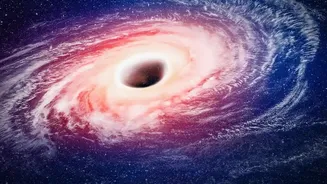
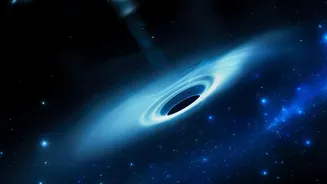
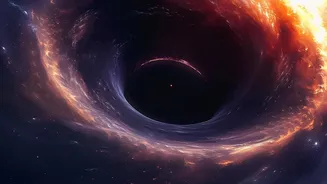
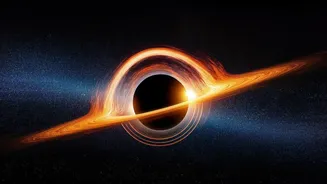
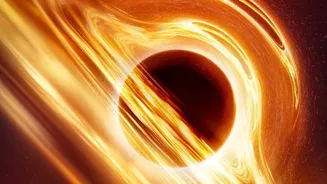
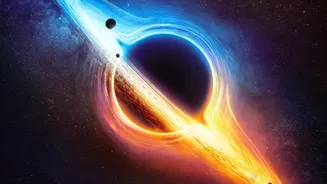
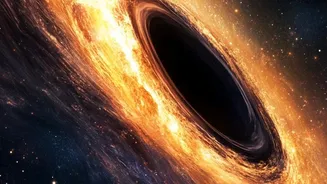
also have overwhelming evidence for the extra-large variety, known as supermassive black holes, which are millions or even billions of times our Sun's mass and sit at the heart of nearly every galaxy, including our own Milky Way. But what about the ones in between? These intermediate-mass black holes (IMBHs), ranging from a few hundred to a few hundred thousand solar masses, have been notoriously difficult to find. Their existence was a crucial but unproven theory, the missing link needed to explain how supermassive black holes could possibly grow so enormous. Without them, our understanding of cosmic evolution had a giant, black-hole-sized gap.
Hearing the Whispers of Spacetime
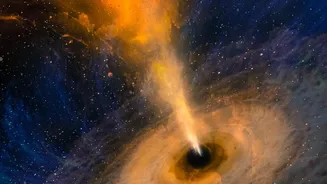
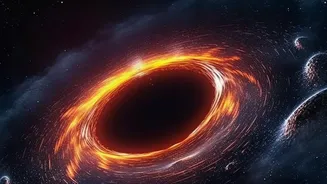
Finding these objects required a revolutionary tool: gravitational wave observatories. Facilities like the Laser Interferometer Gravitational-Wave Observatory (LIGO) in the United States, Virgo in Italy, and KAGRA in Japan don't look at the sky; they listen to the fabric of spacetime itself. When massive objects like black holes collide, they create ripples, or gravitational waves, that travel across the universe at the speed of light. By the time these waves reach Earth, they are incredibly faint. The observatories use hyper-sensitive lasers to detect minuscule distortions caused by these waves. Recently, these detectors have captured the distinct 'chirp' of two IMBHs spiraling into each other and merging. One landmark event involved the collision of two black holes to create a new one about 142 times the mass of the Sun, placing it squarely in the intermediate category and providing the first definitive proof of their existence.
Solving the Supermassive Puzzle
The detection of IMBH collisions provides powerful insights. The most significant is a viable explanation for the origin of supermassive black holes. The leading theory is called hierarchical merging, where smaller black holes merge over billions of years, gradually building up to supermassive status. The detected collisions are direct evidence of this process in action. By studying the mass and spin of the colliding objects, scientists can deduce whether they are 'first-generation' black holes from dead stars or 'second-generation' ones that are themselves products of previous mergers. Some of the most recently detected collisions involve parent black holes that are too massive to have formed from a single star's collapse, suggesting they must have been created in prior collisions, confirming that this cosmic food chain is real.
What These Discoveries Mean for Us
These findings do more than just fill a gap in a textbook. They help us understand the very architecture of the universe and how galaxies, including our own, came to be. IMBHs are thought to be the original 'seeds' from which the galactic giants grew, shaping the evolution of their host galaxies along the way. Furthermore, each collision is a real-world test of Einstein's theory of general relativity under the most extreme conditions imaginable, and so far, his theories are holding up perfectly. As detectors become even more sensitive, astronomers anticipate finding many more of these events. Future space-based observatories like the Laser Interferometer Space Antenna (LISA) will be able to detect the gravitational waves from IMBHs at even greater distances, peering back into the 'dark ages' of the universe to witness the very first black hole seeds being planted.