
Venus Reaches Peak Brilliance
Often called the 'Evening Star', Venus will be a scene-stealer this month, reaching its greatest brightness on September 22. For observers in India, this means the planet will be an unmissable, radiant beacon in the western sky shortly after sunset. You
won’t need any special equipment to spot it; its sheer brilliance makes it stand out even in city skies with moderate light pollution. Following this peak, Venus will continue to be a prominent evening object, though it will slowly start to dim as it moves through its orbital path. Its dazzling appearance makes it a perfect target for beginners and a beautiful sight for all.
A Parade of Planets and the Moon
September offers a fantastic opportunity to watch the Moon dance with several planets. Throughout the month, our natural satellite will make a series of close approaches to Mars, Jupiter, Mercury, and Venus, creating beautiful pairings in the night sky. One of the most picturesque moments will be on September 14, when a lovely crescent Moon sidles up to the brilliant Venus. These conjunctions are easily visible to the naked eye and provide a wonderful chance to appreciate the scale and movement of our solar system from your own backyard. Just look for the Moon and the bright, star-like points of light nearby.
The Autumnal Equinox Arrives
On September 23, the Northern Hemisphere will officially welcome autumn with the arrival of the autumnal equinox. For India, this moment occurs at 5:35 AM IST, when the Sun shines directly over the Earth's equator. On the equinox, day and night are of nearly equal length across the globe. This astronomical event is more than just a date on the calendar; it signifies a celestial balance and marks the beginning of longer nights. For stargazers, this is welcome news, as the extended darkness provides more time for observation before the Sun rises.
The Harvest Moon Lights Up the Night
This year's Harvest Moon, the full moon closest to the autumnal equinox, will grace the skies on September 26. It gets its name from the bright, early-evening moonlight it traditionally provided farmers, allowing them to continue harvesting their crops after sunset. One unique feature of the Harvest Moon in the Northern Hemisphere is that the Moon rises at nearly the same time for several consecutive evenings. This means you'll have multiple opportunities to catch the sight of a large, golden moon rising near the horizon. The full moon will be in the constellation Pisces and will appear full and bright for the nights of September 25, 26, and 27.
Saturn and Neptune Near Their Best
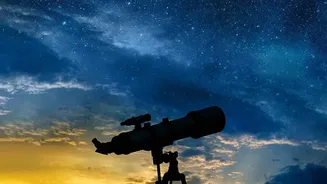
While Saturn officially reaches opposition—its closest and brightest point for the year—on October 4, September is an excellent time for viewing the ringed planet. It will be visible for most of the night, rising in the east around sunset, and will be a great target for those with a small telescope. Even modest magnification can reveal its famous rings. On September 26, the same night as the Harvest Moon, the distant planet Neptune also reaches opposition. However, due to its extreme distance, Neptune is too faint to be seen with the naked eye and will require a good telescope and a dark sky to be spotted.