


A Rainbow Against the Ice
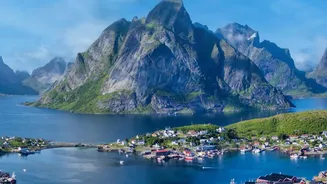
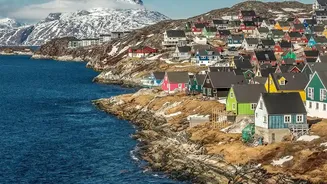
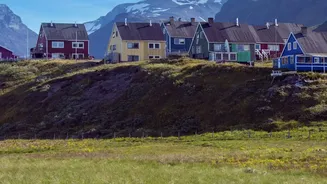
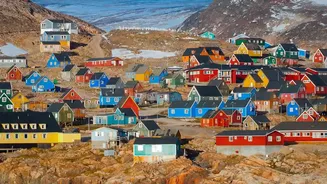
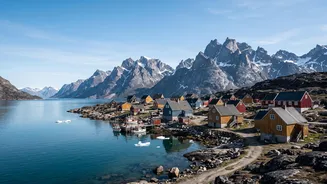
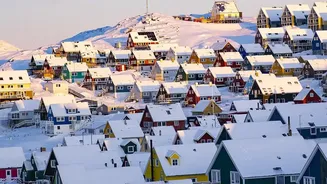
From the capital city of Nuuk to smaller settlements like Qaqortoq and Ilulissat, the coastlines of Greenland are dotted with homes painted in bold, saturated colors. These wooden houses, often perched on rocky hillsides, create a stunning visual contrast
against the muted tones of the Arctic environment. For much of the year, the landscape is dominated by ice and snow, making these splashes of color a welcome and defining feature of Greenlandic towns. This vibrant tradition provides a sense of warmth and cheerfulness in a place known for its long, white winters, becoming a powerful part of the nation's visual identity.
A Practical Color-Coded Past
The tradition of colorful houses is not just for aesthetics; it has practical roots in the Danish colonial period, beginning around the 18th century. During this time, prefabricated wooden house kits were shipped from Scandinavia. Since there were no street names or numbers, and literacy in Danish was not widespread, a color-coding system was introduced to make navigating the settlements easier. Each color signified the function of the building, a crucial system in a land of frequent fog and snowstorms.
The Meaning of the Hues
The color-coding system was simple and effective. Red was the most common color and was used for churches, schools, and commercial buildings like trading posts, as well as the homes of ministers and teachers. Yellow was reserved for the health sector, identifying hospitals and the homes of doctors and nurses. Blue buildings were connected to the fishing industry, marking fish factories. Green was assigned to telecommunications and infrastructure, while black was used for police stations. If you needed a doctor upon arriving in a new town, you simply had to look for a yellow building.
From Function to Free Expression
Today, this strict color-coding system is no longer in use. With the introduction of street addresses and a changing society, Greenlanders are now free to paint their homes in any color they choose. You can now find houses in shades of purple, pink, and various pastels alongside the traditional primary colors. This has transformed the practice from a purely functional system into a form of personal and creative expression. However, some traditions linger as a nod to the past; many hospitals in Greenland are still painted yellow, and churches often remain red. This evolution reflects a modern Greenland that values both its unique history and individual identity.
Built for the Arctic
Before the arrival of these wooden kit homes, traditional Inuit dwellings were built from materials sourced from the immediate environment, such as turf, stone, and driftwood. The shift to Scandinavian-style wooden houses, often built on pillars to cope with the permafrost, was a significant architectural change. These compact, well-insulated structures were better suited for the harsh climate. The simple, durable design, combined with the functional and later expressive use of color, created the distinct and charming architectural style that defines Greenland's villages today.