



Sailing on Beams of Light
The concept behind a solar sail is both elegant and simple. Light, though it has no mass, is made up of particles called photons, which carry momentum. When these photons strike a vast, reflective sail, they transfer that momentum, giving the spacecraft
a tiny but continuous push. Unlike chemical rockets that provide a powerful but short-lived burst of thrust, photon pressure offers a gentle, unending acceleration. Over time, in the frictionless environment of space, this constant push can build up to incredible speeds, potentially faster than what conventional rockets can achieve. The technology eliminates the need for heavy, expensive propellant, meaning spacecraft can be lighter and operate for much longer.
Old Hurdles and New Solutions
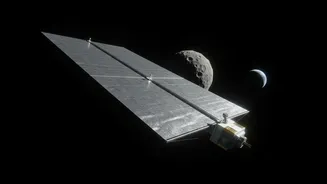
If the principle is so straightforward, why are we not already sailing across the cosmos? The engineering challenges have historically been immense. The force from sunlight is incredibly weak, requiring sails that are enormous yet gossamer-thin and extremely lightweight. Key problems have included how to manufacture and package these huge, delicate structures into a small rocket for launch, and then reliably unfold them in space without tearing or tangling. Furthermore, traditional materials like Mylar could degrade or even melt under intense solar radiation, especially for missions venturing close to the Sun. The breakthrough hasn't been one single discovery, but a convergence of advancements. Missions like Japan's IKAROS and The Planetary Society's LightSail 2 proved the concept was viable. Building on that, NASA’s Advanced Composite Solar Sail System (ACS3) mission has been testing new composite booms. These booms, made of a flexible polymer reinforced with carbon fiber, are 75% lighter than previous metallic versions and far more resistant to warping from temperature changes, solving a major deployment and stability issue.
The Materials Revolution
The real game changer lies in the materials themselves. Researchers are moving beyond simple reflective films to engineered 'metamaterials'. Scientists at Penn Engineering and Caltech have been developing ultra-thin sails designed to be not just reflective but also strong and lightweight. One promising direction is the creation of nano-engineered sails. Researchers at Tuskegee University, for instance, have designed a material with a nanoscale structure that is highly reflective to specific wavelengths of light but transparent to others. This means most of the sun's energy passes right through, preventing the sail from overheating while still capturing the momentum needed for propulsion. This design drastically reduces weight and solves the heating problem that plagued earlier concepts.
A New Era for Asteroid Probes
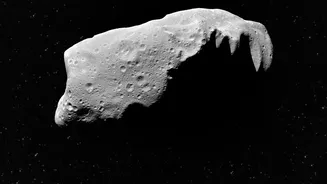
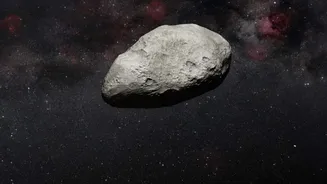
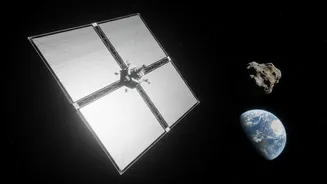
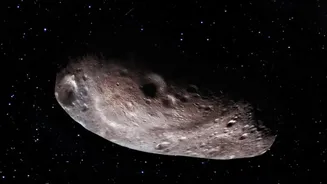
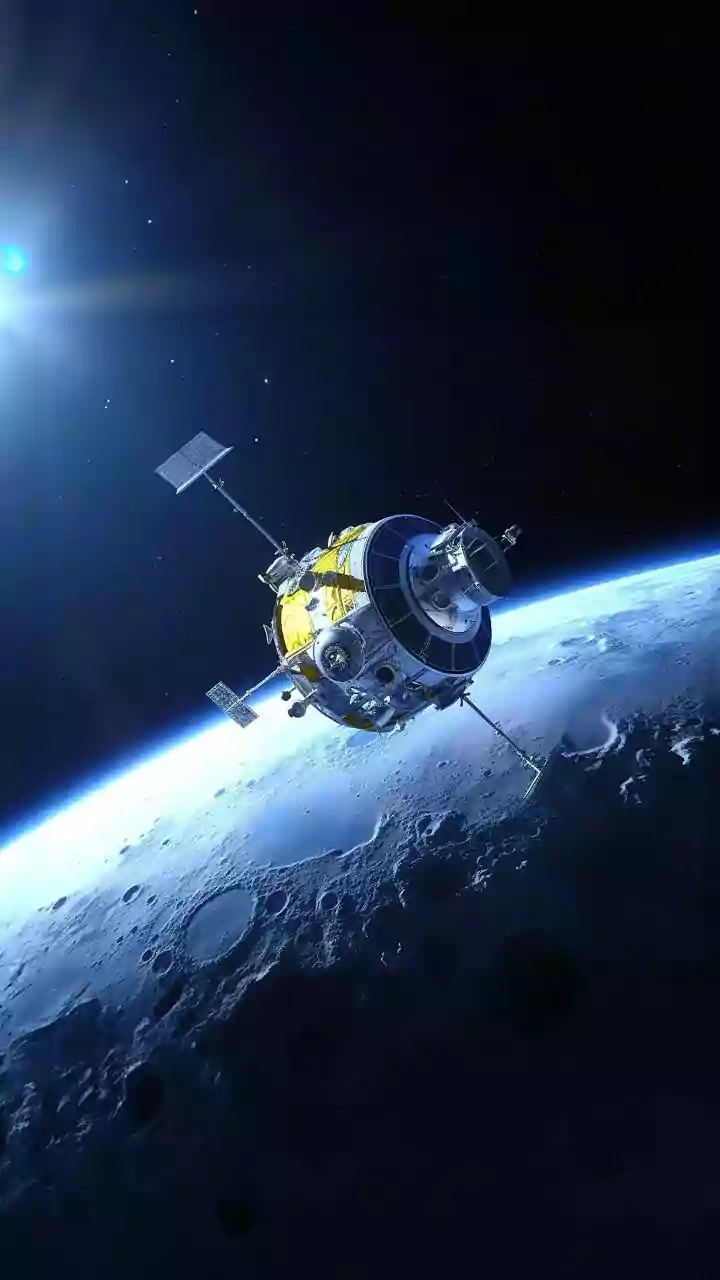
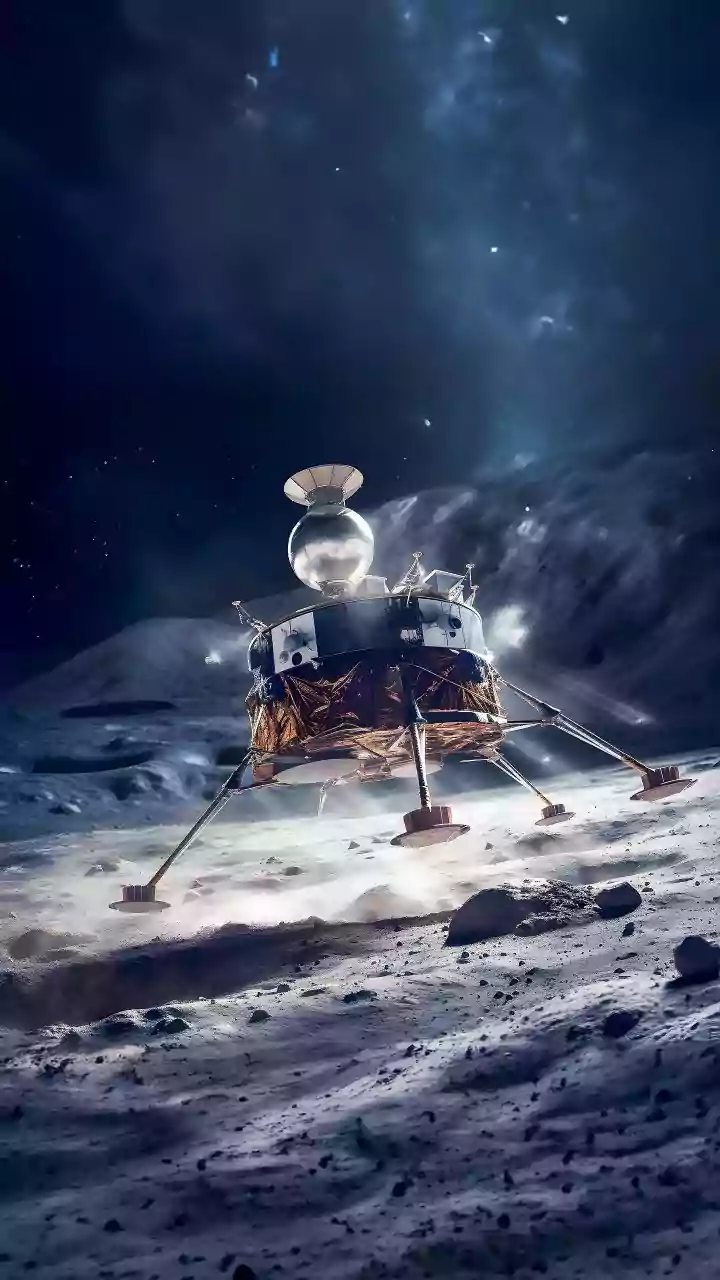
These advancements are particularly transformative for missions to near-Earth asteroids. Currently, getting to an asteroid requires a huge amount of propellant for a heavy spacecraft. Solar sails enable a new class of probe: small, lightweight, and cheap. Because they don't carry fuel, these probes can be launched as secondary payloads on other missions, dramatically cutting costs. NASA's NEA Scout mission was designed as a prime example of this, using a solar sail to visit a near-Earth asteroid. The continuous thrust allows these probes to perform complex maneuvers, change their orbit, and potentially visit multiple asteroids in a single mission—something prohibitively expensive for a fuel-based craft. This opens the door to widespread asteroid reconnaissance, which is vital for planetary defense, scientific research, and future resource mining.
The Voyage Ahead
The future of photon pressure propulsion is not limited to sunlight. Ambitious concepts like Breakthrough Starshot envision using powerful, Earth-based lasers to push tiny, gram-scale probes to a significant fraction of the speed of light. Recent experiments have shown that lasers can indeed be used to lift and steer micro-scale devices, proving the principle of 'beamed' propulsion. While interstellar travel is a long-term goal, the immediate impact will be felt closer to home. Missions like NASA's Solar Cruiser, with a sail larger than a basketball court, will further test the technology for deep-space navigation. These developments promise a future where swarms of nimble, lightweight probes can continuously monitor our solar system, from providing earlier warnings of solar storms to cataloging the asteroids that share our orbit.