






What Exactly Is Zone 2?
In the world of fitness, training is often broken down into five heart rate zones. Zone 2 represents a low-to-moderate intensity effort, typically landing between 60% and 70% of your maximum heart rate. A simple way to know you're in this zone is the 'talk
test': you should be able to hold a conversation without gasping for air. If you can sing, you're likely in Zone 1; if you can only get out a few words at a time, you've pushed into higher zones. This sustainable level of effort is often called 'base training' because it builds a strong aerobic foundation. Athletes and fitness enthusiasts use it to improve endurance and metabolic efficiency over long periods without overtaxing the body.
The Engine Room of Your Health
The magic of Zone 2 training happens at a cellular level. Working out at this intensity primarily encourages your body to use fat as its main fuel source. More importantly, it stimulates the growth and efficiency of your mitochondria—the tiny 'powerhouses' inside your cells that produce energy. Consistent Zone 2 exercise increases both the number and the function of these mitochondria, particularly in your slow-twitch muscle fibers, which are crucial for endurance. This process, known as mitochondrial biogenesis, allows your body to become much better at producing energy aerobically. It also improves capillary density, meaning your body builds more small blood vessels to deliver oxygen to your muscles more effectively. The result is a stronger, more efficient cardiovascular system, a lower resting heart rate, and improved overall stamina.
Why Rowing Is the Perfect Partner
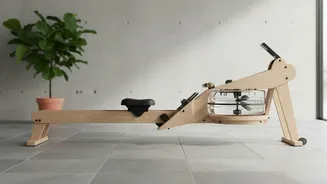
While many activities like brisk walking or cycling can be done in Zone 2, rowing is uniquely suited for it, especially for those concerned about joint health. Rowing is a low-impact exercise, which means it avoids the jarring forces associated with activities like running. Since you are seated, your body weight is supported, taking significant pressure off your knees, hips, and ankles. The smooth, gliding motion promotes blood circulation and increases the production of synovial fluid, which lubricates your joints. This makes it an excellent choice not just for preventing injury, but also for individuals managing existing joint sensitivity or arthritis. While being gentle on the joints, rowing delivers a comprehensive, full-body workout, engaging major muscle groups in the legs, core, and upper body simultaneously.
Crafting Your Zone 2 Rowing Workout
To start, you need to estimate your Zone 2 heart rate. A common formula is to subtract your age from 220 to get your estimated maximum heart rate, then calculate 60-70% of that number. For a 40-year-old, this would be a target range of 108-126 beats per minute. The goal in a Zone 2 workout is not speed, but consistency. Aim for longer, sustained sessions. Experts often recommend starting with two to three sessions per week, each lasting 30 to 60 minutes. As your fitness improves, you can extend the duration. Focus on maintaining proper form and keeping your heart rate steadily within your target zone. The key is to find a pace that feels 'comfortably challenging'—an effort you could maintain for a long time. This steady-state approach is what allows your body to make those crucial aerobic adaptations without the strain of high-intensity intervals.