



A Mission of Discovery
Since landing in Gale Crater in 2012, NASA's Curiosity rover has been diligently analysing Martian rocks and soil. Its primary mission is to determine if Mars ever had the right environmental conditions to support microbial life. At the heart of this
mission is a sophisticated suite of instruments called Sample Analysis at Mars, or SAM. SAM acts like a miniature laboratory; it heats up soil and rock samples to study the gases they release, searching for the chemical building blocks of life, particularly organic compounds—those containing carbon.
The Sulphur Clue
Sulphur is a key element in this planetary detective story. It is essential for life as we know it and is abundant on Mars. Scientists expected to find simple sulphur compounds, like sulfates, which had been detected before. However, when Curiosity drilled into ancient lakebed sediments in a region called Glen Torridon, the SAM instrument detected something far more complex and intriguing. Instead of simple inorganic sulphur, the rover found hints of organosulfur compounds—specifically, molecules called thiophenes.
What Are Thiophenes?
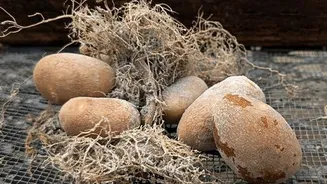
Thiophenes are organic molecules where a sulphur atom is incorporated into a ring of four carbon atoms. On Earth, they are commonly found in substances derived from life, such as coal, crude oil, and even in certain types of fungi like white truffles. Their discovery in 3-billion-year-old Martian sediments is tantalizing because they could be a potential biosignature—a sign of past biological activity. But this is where the story gets complicated, as there are ways to create these molecules without any involvement from life.
Life or Geology?
The discovery of thiophenes on Mars presents two major possibilities, and scientists are carefully weighing the evidence for both. The first is a biological origin. Ancient Martian bacteria, existing when the planet was warmer and wetter, could have produced these compounds as part of their metabolic processes. On Earth, this is a common source. The second possibility is purely geological. Processes such as meteorite impacts or high-temperature volcanic activity could have created the conditions needed to form thiophenes from simpler chemicals in the Martian soil. This is known as an abiotic origin. The challenge for scientists is that the data from Curiosity isn't definitive enough to rule out either scenario.
The Next Steps in the Search
Distinguishing between a biological and geological origin for these molecules is a huge challenge. Curiosity's SAM instrument analyses samples by heating them to very high temperatures, which can break down larger molecules into smaller fragments like thiophenes. This means the thiophenes might be remnants of even larger, more complex organic molecules that were originally in the rock. While this doesn't solve the mystery, it proves that complex organic matter can be preserved in the Martian environment for billions of years, which is a hopeful sign for future missions. Scientists are particularly looking forward to results from the European Space Agency's Rosalind Franklin rover, which is equipped with instruments that can analyse samples using less destructive methods and might provide clearer answers.