






The Science of the Lean
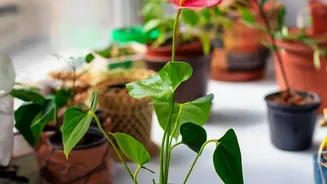
The tendency for a plant to grow towards its light source has a scientific name: phototropism. This isn't just a quirky habit; it’s a survival mechanism. Plants contain a growth hormone called auxin that directs their development. When light primarily
comes from one direction, like a window, auxin concentrates on the shaded side of the stem. This accumulation causes the cells on the darker side to grow longer and faster than the cells on the sunny side, causing the entire plant to bend and stretch towards the light to maximize its ability to photosynthesize. It’s a brilliant evolutionary strategy for finding sunlight in a crowded forest, but it can create an unbalanced plant in your living room.
Why a Lopsided Plant Is a Problem
A plant leaning heavily in one direction is more than just a cosmetic issue. Over time, this uneven growth can lead to several problems. The side of the plant facing away from the light can become sparse, with fewer and smaller leaves, creating a bare-looking back. The stems on the leaning side may become weak and spindly as they stretch for light, a process known as etiolation. This can make the plant structurally unsound and potentially top-heavy, increasing the risk of it toppling over. Furthermore, the dense foliage on the light-facing side can reduce air circulation, potentially creating a stagnant environment that is more welcoming to pests and mould.
The Simple Art of the Turn
The solution to preventing phototropic imbalance is wonderfully simple: rotate your plant. By regularly turning your potted plant, you ensure that all sides receive a more even distribution of light over time. This encourages the plant to grow more symmetrically, resulting in a stronger, fuller, and more aesthetically pleasing shape. The most common and effective method is to give your plant a quarter-turn in the same direction each time. This gentle and consistent adjustment prevents the plant from experiencing a sudden, drastic change in its light source, which can cause stress. Making rotation a regular part of your care routine also gives you the perfect opportunity to inspect your plant for pests, dust the leaves, and check for any signs of distress.
How Often Should You Rotate?
There isn't one strict rule for how often to rotate your plants, but a popular and easy-to remember guideline is to give it a quarter turn every time you water it. For many common houseplants, this might mean a weekly or biweekly rotation. However, the ideal frequency can depend on your specific plant and its environment. A plant in a very bright spot might not need to be turned as often as one in a lower light situation that is more prone to stretching. The key is consistency. Observe your plant's growth; if you start to notice a definite lean, it's time for a turn. Integrating this small step into your watering schedule makes it a simple habit to maintain.
Are There Any Exceptions?
While most plants benefit from rotation, there are a few exceptions and considerations. Plants situated directly under an overhead grow light that provides even, downward facing light generally do not need to be rotated. Some sources also suggest that it's best to avoid rotating certain flowering plants, like orchids or Christmas cacti, once they have set their buds. A sudden change in light orientation can sometimes cause them to drop their buds before they bloom. And what about plants that are already severely lopsided? You can correct this by turning the bare side to face the light, but do it gradually with a series of quarter turns over a few weeks rather than one dramatic 180 degree spin to avoid stressing the plant. While some argue that plants in nature don't rotate, the goal indoors is often a balance of health and aesthetics, which a simple turn can help achieve.