






The Triple Threat: Water's Effect on Roads
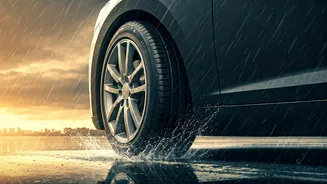
Heavy rain is dangerous for three main reasons: it reduces visibility, decreases tyre traction, and can cause hydroplaning. When it first starts to rain, the water mixes with oil and dirt on the road, creating an exceptionally slick surface. [18] This
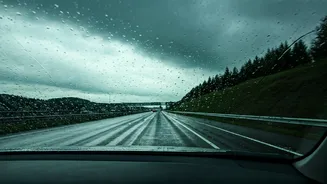
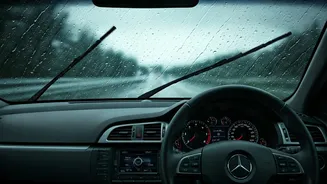
significantly increases your car's stopping distance. Even with as little as a twelfth of an inch of water, tyres have to work incredibly hard to maintain contact with the road. [10] Visibility is not just about what you can see, but also about being seen. Heavy downpours can overwhelm wipers and cause headlight glare on wet surfaces, making it difficult for you to spot hazards and for other drivers to see you. [2, 4]
Understanding Hydroplaning
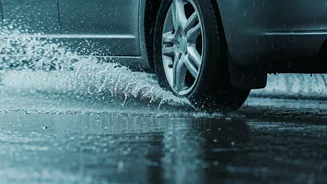
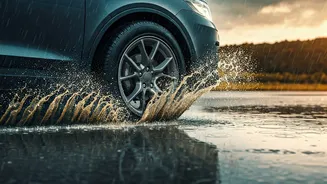
Hydroplaning is one of the most frightening experiences a driver can face. It happens when a layer of water builds up between your tyres and the road surface, causing you to lose all traction and control. [11, 13] At speeds as low as 55-60 km/h, your tyres can start to lose some contact with the road. [10, 20] If you feel the car start to skid or slide, the most important thing is not to panic. Do not slam on the brakes or jerk the steering wheel. [13] Instead, ease your foot off the accelerator and steer gently in the direction you want to go. This allows the car to slow down naturally and helps the tyres regain their grip. [10, 21]
Before You Start the Engine: A Monsoon Checklist
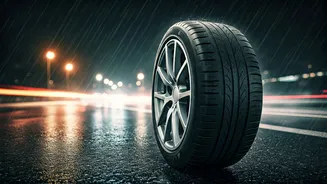
Preparation is your best defence against rainy conditions. Before heading out, conduct a thorough check of your vehicle. - **Tyres:** Your tyres are the single most important safety feature in the rain. Ensure they have adequate tread depth (at least 1.6mm) and are inflated to the correct pressure. Worn tyres cannot channel water away effectively, drastically increasing the risk of hydroplaning. [8, 19] - **Wipers:** The rubber on wiper blades can crack and dry out over time. Test them and replace them if they leave streaks or don't clear the windscreen effectively. [10, 5] - **Lights:** Clean your headlights, taillights, and indicators. Ensure they are all working correctly so you can see the road and be seen by others. [7, 9] - **Brakes:** Have your brake pads and fluid levels checked. Wet conditions demand peak brake performance. [7, 8]
Safe Driving Techniques for Wet Roads
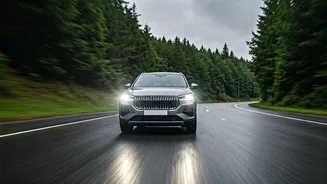
Once you're on the road, adapting your driving style is crucial. - **Slow Down:** This is the most critical adjustment. Reducing your speed gives you more time to react and decreases the chance of hydroplaning. [9, 12] - **Increase Following Distance:** In dry conditions, a three-second gap is standard. In the rain, increase this to four seconds or more to compensate for longer braking distances. [3, 9] - **Use Low-Beam Headlights:** Turn on your headlights to improve your visibility to others, even during the day. Avoid using high beams, as they can reflect off the rain and cause glare. [9, 12] - **Drive Smoothly:** Avoid sudden acceleration, hard braking, or sharp turns. [14, 15] These abrupt movements can easily cause you to lose traction. [15] - **Avoid Standing Water:** Puddles can hide deep potholes or other hazards. Driving through deep water can also stall your engine or cause you to be swept away. [2, 21] Just 12 inches of moving water can carry away a small car. [14]
Navigating India's Unique Challenges
While the principles of safe driving in rain are universal, Indian roads present unique challenges. Waterlogged streets can conceal massive potholes that can damage your vehicle or cause an accident. [4] During the monsoon, be extra vigilant for two-wheelers, pedestrians, and animals that may behave unpredictably in the rain. Given that India accounts for a high percentage of global road fatalities, with young people being particularly vulnerable, defensive driving is not just a recommendation—it's a necessity for survival. [25, 26]