







Start with a Strong Foundation: Your Bag
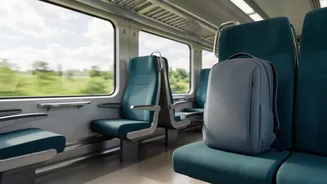
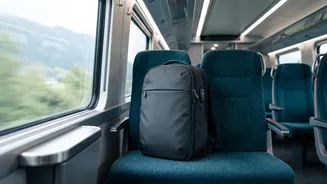
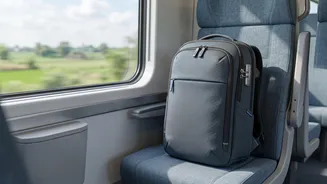
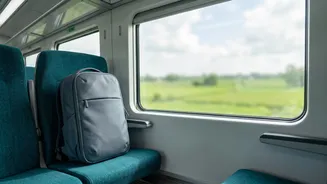
Your first line of defence is the bag itself. For carrying valuable electronics like laptops and cameras, consider investing in an anti-theft backpack. These are specifically designed with security in mind, often featuring slash-resistant fabric that
contains a layer of steel mesh to prevent thieves from cutting it open. Look for models with lockable zippers and hidden compartments, especially pockets that sit against your back, making them inaccessible to pickpockets in a crowd. While a hard-shell suitcase offers good protection against slashing, a high-quality, durable bag that is hard to rip open is a practical necessity.
The Classic Chain-and-Lock System
There's a reason you see luggage chained under berths on Indian trains—it works. It's a simple, effective deterrent against grab-and-run theft, especially during brief station stops. Invest in a sturdy metal chain, preferably coated in plastic to avoid scratching, and a good-quality padlock. Most sleeper and AC coaches have rings or hooks under the lower berths specifically for this purpose. Loop the chain through your luggage handle and secure it tightly to the frame. This makes it impossible for someone to simply walk away with your entire bag while you're asleep or in the washroom.
Embrace Smart Tracking Technology
For an added layer of modern security, place a GPS or Bluetooth tracker inside your luggage. These small devices allow you to monitor your bag's real-time location using a smartphone app. If your bag goes missing, you can see its last known location, which is invaluable information to provide to railway authorities. Some smart trackers also offer 'geofencing' capabilities, sending an alert to your phone if your bag moves outside a designated area, like your immediate vicinity. While a tracker won't prevent the initial theft, it dramatically increases the chances of recovery.
Master the Art of Strategic Placement
Where you keep your bags overnight matters. For large suitcases, the space under the lower berth, securely chained, is the standard. For your smaller backpack containing electronics, keeping it close is key. If you have an upper berth, you have the advantage of being able to keep your bag beside you, away from the aisle. On a lower or middle berth, you can use your backpack as a makeshift pillow or place it securely near your head. The goal is to make your luggage as difficult and inconvenient to reach as possible for anyone passing through the corridor.
Layer Your Valuables and Don't Advertise
Think of your luggage security in three layers. The 'body layer' includes your absolute essentials—phone, wallet, and tickets—kept on your person in a secure pouch. The 'berth layer' is your daypack with your laptop and chargers, which stays with you. The 'storage layer' is your main suitcase with clothes, which is locked and chained. Avoid placing expensive items in easy-to-reach outer pockets of your backpack. Furthermore, try not to advertise your valuables. Using a plain-looking laptop bag instead of a flashy branded one can make you a less attractive target.
Remember Your Digital Security
Protecting your physical devices is only half the battle. Public Wi-Fi networks, including those at stations, can be insecure. Cybercriminals can create fake networks to steal your data. Before connecting, always confirm the official network name with staff. For sensitive tasks like banking, it's safer to use your mobile data. If you must use public Wi-Fi, use a Virtual Private Network (VPN) to encrypt your connection. Also, ensure your devices are password-protected and that you have features like 'find my device' enabled, allowing you to remotely locate or wipe your data if the device is stolen.