

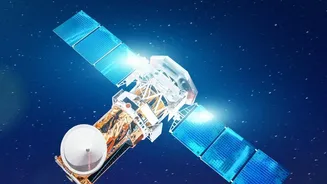
1. Gaganyaan: India's Human Spaceflight Debut
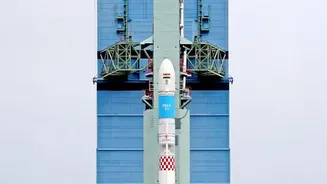
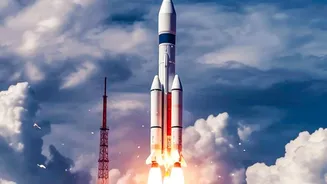
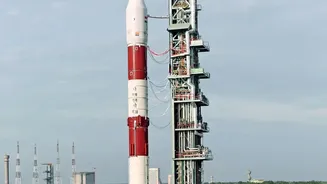
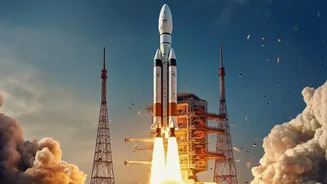
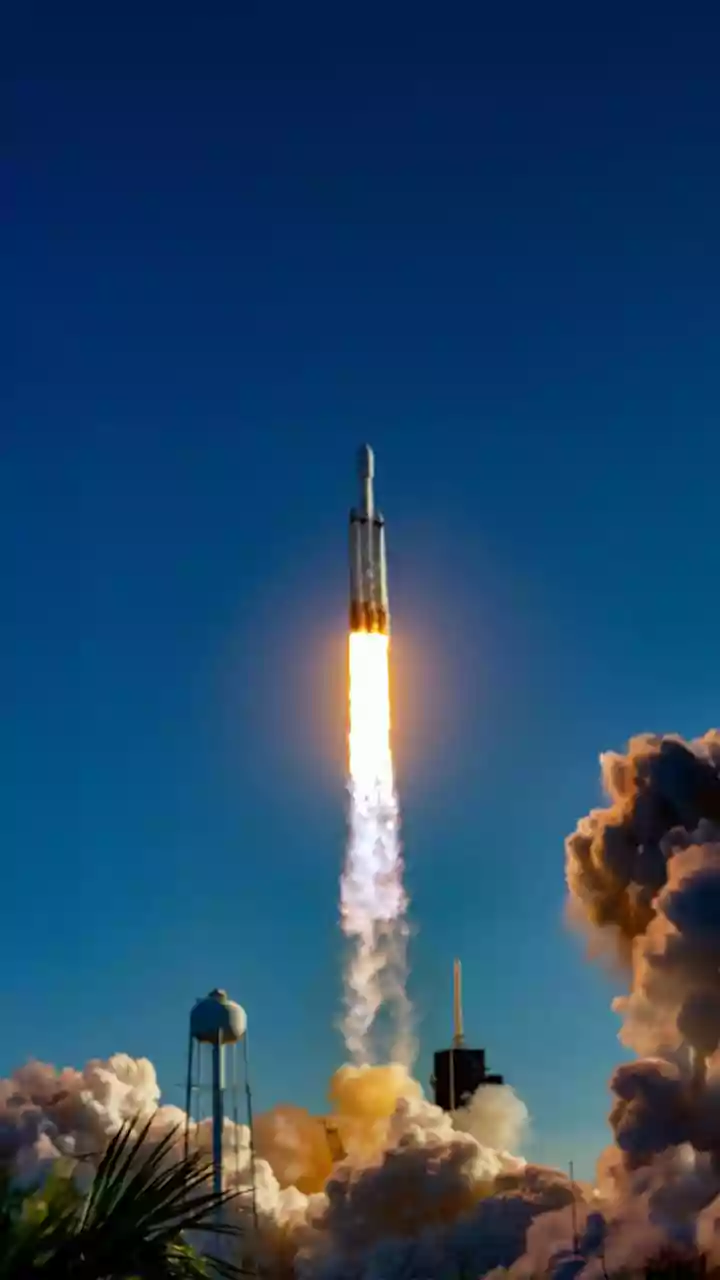
The most anticipated mission, Gaganyaan, aims to send Indian astronauts, or 'Vyomanauts', into a low Earth orbit of 400 km for a three-day mission before safely returning them. This is India's first-ever human spaceflight program. The first uncrewed flight,
G1, is a critical test scheduled for 2026, which will carry a humanoid robot named Vyommitra to validate all systems before the first crewed launch, planned for 2027. Successfully launching its own crewed mission will make India only the fourth country in the world to achieve this feat, after the US, Russia, and China, marking a monumental leap in its technological capabilities and national prestige.
2. Mangalyaan-2: A Bold Return to Mars
Building on the incredible success of the Mars Orbiter Mission (MOM), Mangalyaan-2 represents a major step up in interplanetary exploration. Unlike its predecessor, this mission is expected to include a lander, a rover, and even a helicopter to study the Martian surface directly. The objectives are far more complex, focusing on studying Mars' surface composition, thin atmosphere, and environmental conditions to better understand its history. With a potential launch no earlier than 2026, a successful landing would place India in the elite club of nations that have successfully operated rovers on the Red Planet.
3. Shukrayaan-1: Unveiling the Secrets of Venus
Often called Earth's 'twin' due to its similar size and mass, Venus is a world of extreme heat and a toxic atmosphere. Shukrayaan-1 will be India's first mission to this mysterious planet. The orbiter is designed to study Venus's dense atmosphere, its surface, and the interaction with the solar wind. By understanding the runaway greenhouse effect that made Venus so hostile, scientists hope to gain valuable insights into planetary evolution and climate change on Earth. The launch is planned for the late 2020s, with 2028 being a likely window.
4. LUPEX: Exploring the Moon's South Pole with Japan
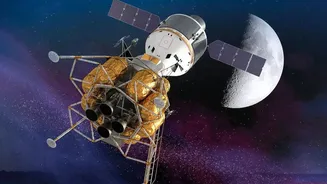
The Lunar Polar Exploration Mission (LUPEX) is a joint venture between ISRO and the Japan Aerospace Exploration Agency (JAXA). Scheduled for no earlier than 2028, this mission will send a lander and rover to the Moon's south pole to search for water ice in permanently shadowed regions. ISRO is responsible for the lander, while JAXA will provide the H3 launch vehicle and the rover. LUPEX aims to quantify the amount of water available, which is a critical resource for future sustainable space activities, including potential human settlements.
5. NISAR: A High-Tech Eye on Planet Earth
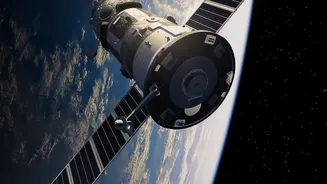
The NASA-ISRO Synthetic Aperture Radar (NISAR) is a groundbreaking Earth observation satellite and one of the most expensive imaging satellites ever built. Launched in 2025, its advanced radar systems are designed to monitor changes in Earth's land and ice surfaces with unprecedented detail, measuring shifts as small as a centimeter. NISAR will provide crucial data for understanding climate change, managing natural disasters like earthquakes and tsunamis, and monitoring agricultural resources, making it a vital tool for the planet's health.
6. SPADEX: Mastering the Art of Docking in Space
The Space Docking Experiment (SPADEX) is a foundational mission designed to demonstrate the technologies required for two spacecraft to rendezvous and connect in orbit. ISRO successfully demonstrated this capability in early 2025, when it docked two small satellites, making India the fourth country to achieve this feat. This technology is a critical prerequisite for more complex operations, such as transferring fuel, servicing satellites, and, most importantly, building India's own space station.
7. Bharatiya Antariksh Station: India's Own Address in Orbit
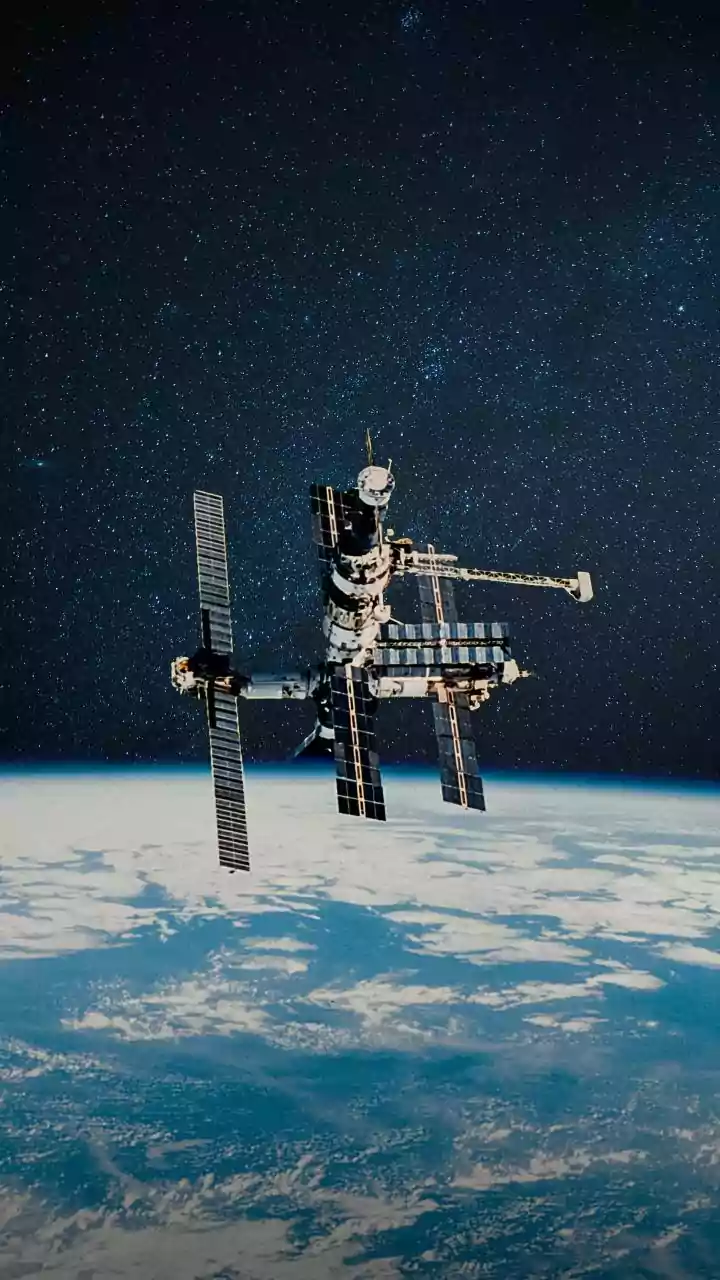
The culmination of missions like Gaganyaan and SPADEX is the Bharatiya Antariksh Station (BAS), India's planned modular space station. Targeted for construction by 2035, the station will orbit at an altitude of about 400 km and serve as a microgravity laboratory for scientific research. The first module is planned for launch by 2028. Building and operating its own space station will cement India's status as a major space power, enabling long-duration human spaceflights and paving the way for future crewed missions to the Moon and beyond.