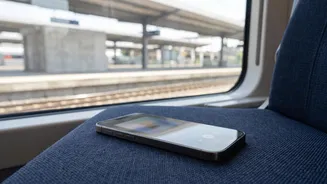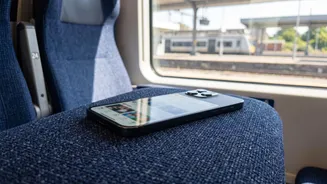





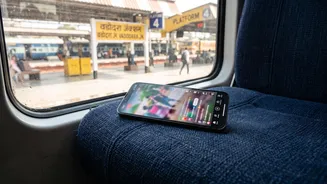
The End of an Unwanted Soundtrack
Many regular train travellers in India are all too familiar with the scenario: someone nearby decides to share their taste in music, movies, or viral videos with the entire compartment, using their phone's loudspeaker. In a move welcomed by countless
passengers, railway authorities are now taking firm action against this behaviour. Citing an increase in complaints, zones like the Southern Railway have begun a concerted effort to sensitise passengers and enforce rules that have long existed but were seldom applied. This isn't just about new rules, but a renewed focus on implementing existing ones to ensure a more peaceful journey for everyone. The advisory covers not just loud videos and reels, but also lengthy, loud phone conversations and intrusive ringtones, particularly in enclosed AC coaches.
What Are the Penalties?
The crackdown is backed by significant penalties under the Railways Act, 1989. Under Section 145 of the Act, creating a 'nuisance' on railway premises is a punishable offence. For a first-time offender, this could mean a fine of up to ₹1,000, and they may even be removed from the train and have their ticket forfeited. The consequences become much more severe for those who ignore a warning from authorised railway personnel, such as a Travelling Ticket Examiner (TTE). A repeat violator who continues to cause a disturbance could face imprisonment for up to six months, a fine of up to ₹5,000, or both.
Why is This Happening Now?
While rules against causing a nuisance have been on the books for years, the recent push for enforcement seems driven by a perfect storm of factors. The ubiquity of smartphones and cheap data has led to an explosion of content consumption in public spaces. The rise of short-form video apps has created a culture where watching and sharing content on the go is constant. This, combined with a general lack of etiquette regarding the use of earphones, has turned many train compartments into noisy, chaotic environments. The recent amendments to the law under the Jan Vishwas Act, 2026, have also empowered railway authorities to enforce these provisions more stringently. Officials have noted that the problem is especially acute in AC coaches, where the enclosed space amplifies the sound and causes greater disturbance to fellow travellers.
Beyond Reels: A Code of Conduct
The focus extends beyond just loud media consumption. Indian Railways is promoting a broader code of conduct to enhance the travel experience. This includes advising passengers to keep their mobile phones on silent or vibration mode and to avoid engaging in loud or lengthy phone calls, especially during night hours (10 pm to 6 am). The goal is to foster a sense of mutual respect among passengers sharing a common space. To spread awareness, railways are using public address systems at stations, posting notices, and directing on-board staff like TTEs and Railway Protection Force (RPF) personnel to educate and, if necessary, penalise offenders.
What to Do if You Are Disturbed
If you find your journey disrupted by a noisy co-passenger, you have several options. The first step can be a polite request to the individual to lower the volume or use headphones. If that doesn't work or you are uncomfortable confronting them, you should not hesitate to seek help. You can report the issue to the on-duty TTE, coach attendant, or any RPF personnel available on the train. For a more formal complaint, passengers can use the 'Rail Madad' portal or app, or call the railway helpline number 139. When lodging a complaint, be sure to provide your PNR and coach number for a swift response.