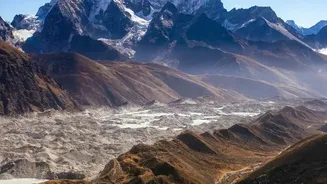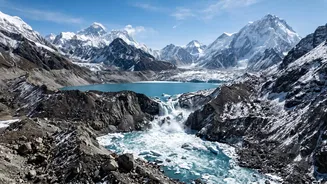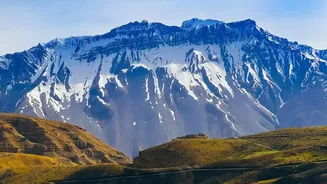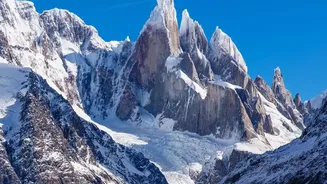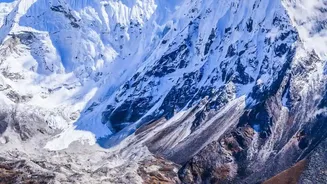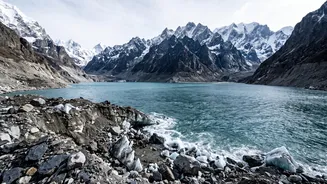





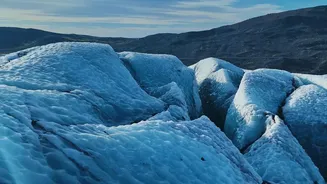
The majestic Himalayas, a source of life-giving water for billions, hold a growing threat within their icy peaks. United Nations-backed reports are sounding the alarm on 'ticking time bombs': rapidly growing glacial lakes at risk of bursting.
Understanding a GLOF
A Glacial
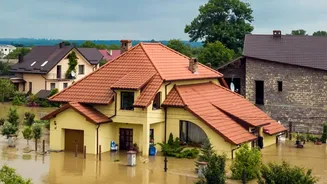
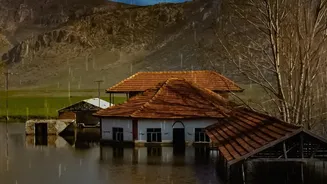
Lake Outburst Flood, or GLOF, is a sudden and often catastrophic release of water from a lake formed by a melting glacier. As glaciers retreat due to rising temperatures, they leave behind vast amounts of meltwater. This water gets trapped behind natural dams made of rock, soil, and ice, known as moraines. These moraine dams are inherently unstable. Triggers like heavy rainfall, earthquakes, or large chunks of ice or rock falling into the lake can cause them to fail without warning. When they breach, they unleash a devastating flash flood downstream, carrying a powerful torrent of water, mud, boulders, and debris capable of destroying entire villages, roads, bridges, and critical infrastructure like hydropower plants.
The UN's Grave Warning
Multiple UN agencies and partner organisations have highlighted the escalating danger. Reports from bodies like the World Meteorological Organisation (WMO) and the UN Development Programme (UNDP) point to an accelerated pace of glacier melt in the High-Mountain Asia region. One recent UN-linked study highlighted that GLOF events have become nearly five times more frequent since 1950. Another report released just ahead of the COP31 climate conference warns that the world's frozen regions are warming faster than the global average, increasing the risk of such catastrophic floods. According to Kanni Wignaraja, a UN Assistant Secretary-General, the population at risk from these events 'goes into the millions'.
India's Himalayan Hotspots
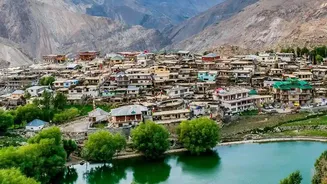
For India, this is not a distant threat. The Indian Himalayan region is home to thousands of glacial lakes, with many identified as potentially dangerous. A UN-led study found that between 1835 and 2025, India recorded the highest number of deaths (6,119) from GLOFs among eight Himalayan countries, despite having fewer events than China or Pakistan. States like Jammu & Kashmir, Arunachal Pradesh, Sikkim, Himachal Pradesh, and Uttarakhand are particularly vulnerable. The devastating 2013 Kedarnath flood, triggered by the Chorabari glacial lake, and the 2023 disaster in Sikkim from the South Lhonak Lake are stark reminders of the human and economic cost. The Sikkim flood destroyed the Teesta-III hydropower dam and claimed dozens of lives, underscoring the threat to both communities and crucial infrastructure.
A Cross-Border Challenge
The danger often transcends national borders. A GLOF originating in one country can have devastating consequences downstream in another. A recent incident in late October 2026 saw an outburst from Bhutan's Shintaphu Lake, which triggered flood alerts and evacuations in parts of West Bengal and Assam. This highlights the critical need for transboundary cooperation in monitoring and data sharing. Organisations like the International Centre for Integrated Mountain Development (ICIMOD) are working to foster this collaboration, but experts stress that much more is needed. With over 200 potentially dangerous glacial lakes identified across the Hindu Kush-Himalayan region, coordinated action is essential for effective risk management.
Beyond Early Warnings
While early warning systems are crucial, they are only one part of the solution. Efforts are underway in some regions to install automated weather stations and water level monitors at high-risk lakes, such as South Lhonak Lake in Sikkim before its collapse. However, the scale of the problem requires a more comprehensive approach. This includes structural solutions like controlled draining to lower lake levels, which has been successfully done at Imja Lake in Nepal. It also involves better infrastructure planning to avoid construction in high-risk flood paths, robust community preparedness drills, and international funding and technical collaboration. India's National Disaster Management Authority (NDMA) has a programme focused on GLOF risk mitigation, but the challenge is immense and growing.