



1. Curate a Considered Gallery Wall
A gallery wall of botanical prints is a classic for a reason, but the modern approach favours a collected feel over a perfectly matched set. To achieve this, think like a curator. Mix vintage scientific illustrations with modern minimalist line drawings
or abstract interpretations of plant life. The secret to unity isn't matching subjects, but rather a consistent element that ties them together. Use frames from the same colour family—like all thin black or natural oak—to create a visual bridge between different eras and styles. Vary the scale, placing a larger anchor piece off-centre and building around it with smaller prints. This intentional mix of size, style, and subject matter results in a dynamic display that feels personal and assembled over time, not bought in a single click.
2. Go Big With a Single Statement Piece
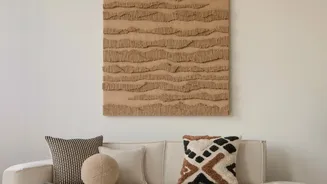
Sometimes, more is not more. Instead of a busy gallery, a single, oversized botanical print can create a powerful and sophisticated focal point. This works especially well in living rooms above a sofa or in a bedroom above the headboard, where a smaller print would get lost. The key is scale: the artwork should span roughly two-thirds of the furniture's width to feel balanced and intentional. Modern botanical art, which often features bold, abstract, or moody florals, is perfect for this application. Look for a high-impact photographic print of a single leaf, a dramatic close-up of a flower, or a painterly abstract piece. This minimalist approach allows the beauty of the single plant form to command attention and define the room's atmosphere.
3. Bridge Eras by Mixing Vintage and Modern
Pairing antique and contemporary prints creates a visual dialogue that adds warmth, history, and depth to a room. The fear is creating chaos, but a few simple rules ensure harmony. First, establish a colour bridge; find a modern print that picks up a subtle hue from a vintage illustration, like a sepia tone or a faded green. Second, use frames to unify the collection. Identical frames can make disparate eras feel connected instantly. Finally, play with contrast in style. The detailed precision of a 19th-century scientific drawing looks stunning next to a loose, contemporary watercolour or a bold, graphic print. This tension between old and new is what keeps the arrangement feeling dynamic and prevents your home from looking like a period-specific museum.
4. Decorate Unexpected Spaces
Botanical art is no longer confined to the living room or hallway. Bringing these prints into functional spaces like kitchens and bathrooms can add a much-needed layer of personality and warmth. In the kitchen, consider prints of culinary herbs, citrus, or olive branches, leaning them on an open shelf or hanging a pair above a breakfast bar. In the bathroom, prints of ferns or tropical leaves can enhance a spa-like feel. With proper ventilation, a framed print can handle the humidity, but using acrylic glazing instead of glass is a smart move. These small touches make utilitarian rooms feel as decorated and intentional as the rest of your home.
5. Pair Prints With Living Plants
Create a seamless connection between your art and your home by styling botanical prints alongside real plants. This layering technique creates a vibrant, three-dimensional vignette that truly celebrates nature indoors. You can place a large potted plant, like a fiddle leaf fig, next to a gallery wall to anchor the arrangement. Alternatively, position a trailing ivy on a shelf so its leaves cascade down beside a framed print. The key is to create a dialogue between the two. The subject of the print doesn't need to be an exact match to the plant; a shared colour, shape, or feeling is enough to create a cohesive link. This approach makes the artwork feel less like a static object and more like part of a living, breathing ecosystem within your home.