
What is the September Equinox?
The September equinox is the precise moment when the Sun crosses the celestial equator—an imaginary line in the sky directly above Earth's Equator—moving from north to south. This event occurs annually on September 22, 23, or 24. In 2026, it will happen
on September 23. For the Northern Hemisphere, this celestial marker signals the start of autumn, earning it the name 'autumnal equinox'. Simultaneously, for everyone in the Southern Hemisphere, it marks the beginning of spring, where it is known as the 'vernal equinox'. The word 'equinox' itself comes from Latin, meaning 'equal night', referencing the fact that day and night are nearly equal in length everywhere on this day.
It's All About Earth's Tilt
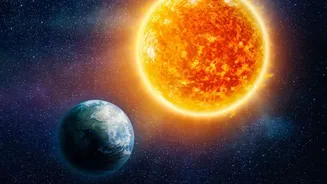
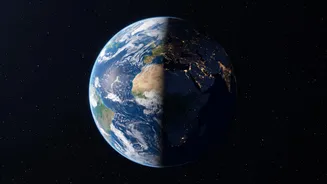
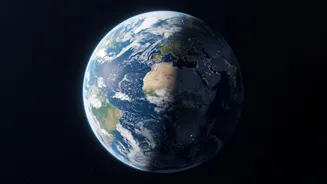
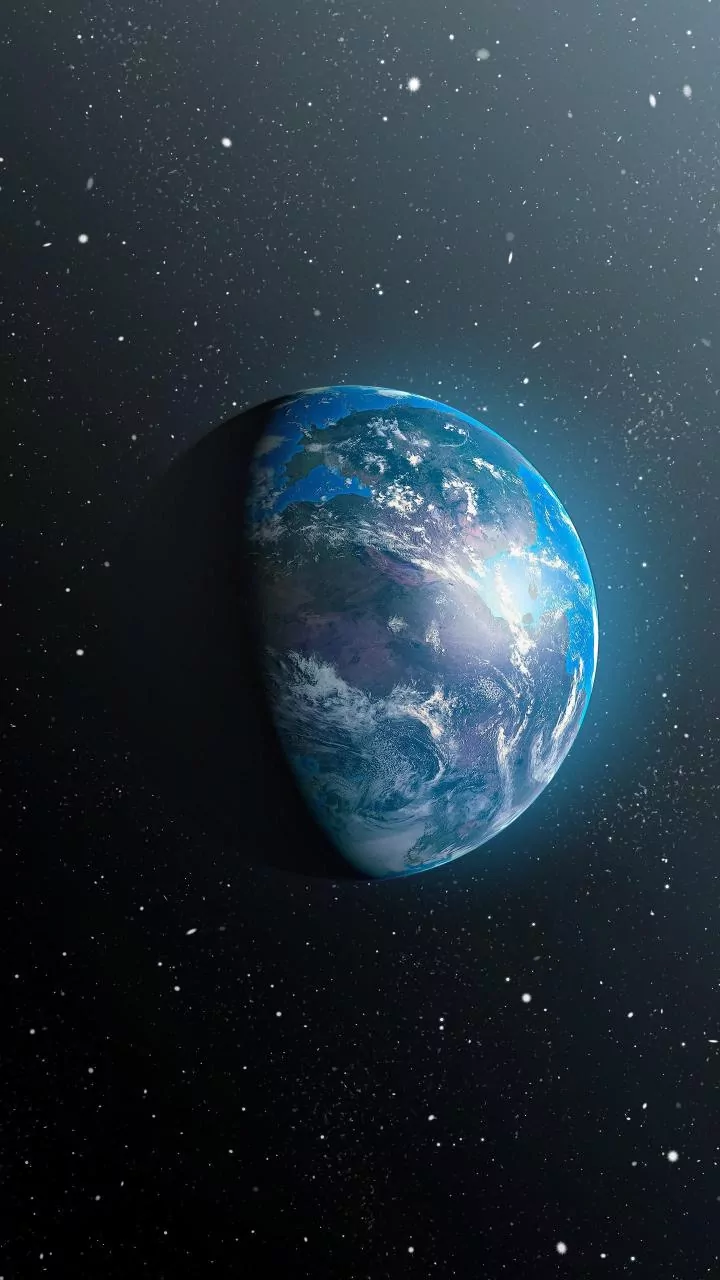
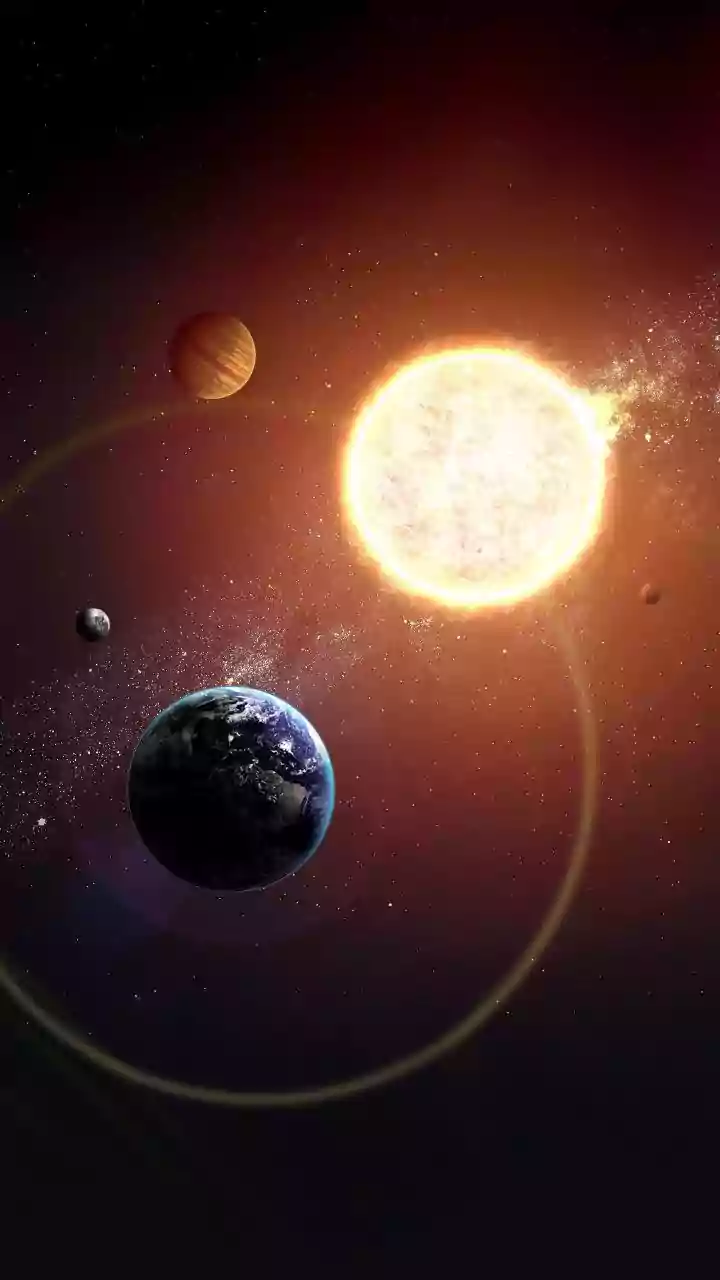
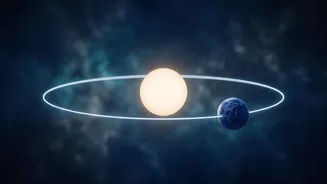
The magic behind the equinox—and all our seasons—is Earth's axial tilt. Our planet spins on an axis that is tilted at an angle of about 23.5 degrees. It’s this tilt, not our distance from the Sun, that causes seasons. As Earth journeys around the Sun, this tilt means different parts of the planet lean into the Sun's direct rays at different times of the year. During the solstices in June and December, one hemisphere is tilted most directly towards the Sun, leading to its longest day and the peak of summer. The other hemisphere is tilted away, experiencing its shortest day and the depths of winter. The equinoxes are the halfway points in this journey. At these moments, Earth's axis isn't tilted toward or away from the Sun; it's perfectly sideways. As a result, sunlight shines directly on the Equator, illuminating both the Northern and Southern Hemispheres almost equally.
A Global Shift in Sunlight
On the day of the equinox, the Sun's position changes fundamentally. It rises almost exactly due east and sets almost exactly due west for everyone on Earth. Before the September equinox, the spot on Earth's surface directly beneath the Sun, known as the subsolar point, is in the Northern Hemisphere. After the equinox, this point crosses the Equator and begins its journey southward, bringing more direct sunlight and longer days to the Southern Hemisphere. This transition is what kicks off spring in places like Australia and Brazil, while in India, Europe, and North America, it signals that the days will continue to shorten and cool as autumn sets in. For the Northern Hemisphere, the days will grow shorter than the nights until the winter solstice in December. For the Southern Hemisphere, the days will now become longer than the nights until the summer solstice.
Are Day and Night Truly Equal?
Despite its name, the equinox doesn't feature exactly 12 hours of day and 12 hours of night. On this day, daylight is actually slightly longer than darkness at most latitudes. There are two main reasons for this. First, sunrise is defined as the moment the upper edge of the Sun becomes visible over the horizon, and sunset is when its last edge disappears. This means we see the Sun's disk for a few extra minutes compared to if we measured from its geometric centre. Second, Earth's atmosphere bends sunlight, a phenomenon called refraction. This bending makes the Sun appear on the horizon a few minutes before it has actually risen and keeps it visible for a few minutes after it has set. Together, these factors add several minutes of extra daylight. The day when day and night are truly closest to equal is called the 'equilux', which occurs a few days after the autumnal equinox in the Northern Hemisphere.
The Equinox in India and Around the World
While the equinox is a global astronomical event, its seasonal meaning varies. In India, the autumnal equinox falls after the peak monsoon season for many regions and marks the transition towards cooler, drier, and more pleasant weather. It heralds the post-monsoon season, a time of harvest festivals and preparation for winter. Culturally, equinoxes have been significant for centuries. For example, in Japan, the holiday of Higan is celebrated around the autumn equinox as a time to remember ancestors. Modern pagans celebrate Mabon, a harvest festival. At higher latitudes, the equinox also signals prime time for viewing the aurora borealis, as geomagnetic activity is often stronger during the equinox months. It’s a moment that connects us all, a planetary reminder of the elegant mechanics governing our world and the steady march of the seasons.