



For the organised traveller, 2027 is already on the horizon. Planning far ahead opens up a world of possibilities, and nothing offers a deeper cultural immersion than a festival. Here are eight vibrant global celebrations worth planning a trip around.
Carnival of Venice, Italy
Step into a real-life masquerade ball on the winding canals of Venice. The Carnevale di Venezia is a world-famous spectacle of elaborate masks, decadent costumes, and grand processions. For two weeks, the city transforms into a historical fantasy, with events ranging from public parades in St. Mark's Square to exclusive, ticketed balls in ancient palaces. It is a magical, theatrical experience that feels like stepping back in time. The main celebrations for 2027 are expected to run from late January to Tuesday, February 9.
Holi Festival, India
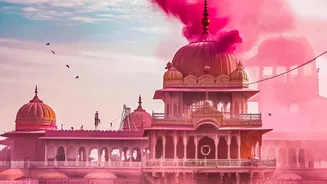
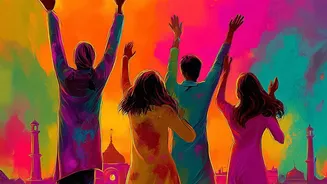
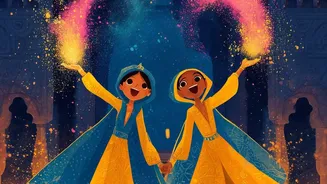
Known as the 'Festival of Colours', Holi is an exuberant and joyous celebration of spring's arrival and the triumph of good over evil. On the main day, streets across India erupt into a playful battle of colour as people throw brightly coloured powders (gulal) and water at friends and strangers alike. The night before, known as Holika Dahan, involves lighting bonfires. For an unforgettable experience, consider the historic celebrations in Mathura and Vrindavan. In 2027, the main day of Holi falls on March 22.
Songkran, Thailand
Welcome the Thai New Year with the world's biggest water fight. Songkran takes place during the hottest month of the year in Thailand, and the nationwide water splashing is a welcome relief. While the festival is famous for its wild, fun-filled water battles in the streets of Bangkok and Chiang Mai, it also has a gentler side. Traditionally, it is a time for cleansing, visiting temples, and paying respect to elders by pouring scented water over their hands. The official national holidays are fixed from April 13-15.
Gion Matsuri, Japan
One of Japan’s most famous and impressive festivals, Gion Matsuri takes over the city of Kyoto for the entire month of July. The main events are the grand processions of massive, elaborately decorated wooden floats called 'yamaboko', some weighing up to 12 tonnes. These are pulled through the city streets by teams of people on July 17 and July 24. The evenings before the parades, known as 'yoiyama', are particularly atmospheric, with floats lit by lanterns, streets closed to traffic, and food stalls creating a lively atmosphere.
La Tomatina, Spain
For one hour on the last Wednesday of August, the small town of Buñol, near Valencia, becomes the site of the world's messiest food fight. Tens of thousands of participants gather to hurl more than 100 metric tons of overripe tomatoes at each other in the streets. The event is pure, chaotic fun, leaving the town and everyone in it drenched in red pulp. It is a ticketed event to control crowd sizes, so booking in advance is essential. In 2027, the fight is scheduled for August 25.
Oktoberfest, Germany
Despite its name, the world's largest beer festival begins in September. For 16 days, Munich hosts millions of visitors who come to enjoy Bavarian culture, traditional food, lively music, and, of course, beer served in giant steins inside massive tents run by local breweries. The festival opens with a grand parade of landlords and breweries. It's a spirited celebration of Bavarian tradition that goes far beyond just drinking. The likely dates for the 2027 festival are September 18 to October 3.
Diwali, India
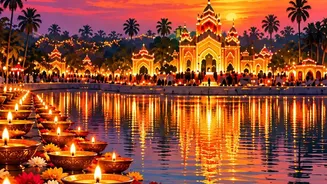
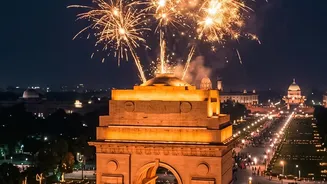
The 'Festival of Lights' is one of the most significant holidays in India, symbolizing the spiritual victory of light over darkness. Celebrated over five days, the main festival night sees millions of lamps, candles, and lanterns lit in homes, temples, and public spaces, creating a breathtaking spectacle. It is a time for family feasts, exchanging gifts, and fireworks. The atmosphere is one of profound joy and renewal. In 2027, the main day of Diwali is projected to be on Friday, October 29.
Día de los Muertos, Mexico
A beautiful and poignant celebration, the Day of the Dead honours deceased loved ones. Far from being a sombre occasion, it is a vibrant and life-affirming event. Families create elaborate altars, or 'ofrendas', decorated with marigolds, candles, and the favourite foods of the departed to welcome their spirits back for a brief visit. The traditions are particularly strong in cities like Oaxaca and Mexico City. The main observance always takes place on November 1 (for children) and November 2 (for adults).