
What Are These 'Little Red Dots'?
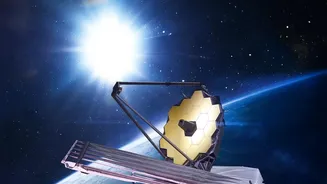
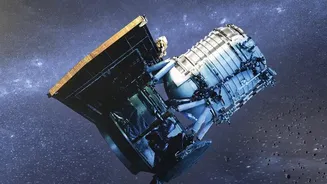
Ever since the JWST began sending back its breathtaking images in 2022, astronomers have been spotting these unusual objects scattered across the very early universe. Officially known as LRDs, or 'little red dots', they are compact, surprisingly bright,
and distinctly red-hued sources of light. What makes them a cosmic puzzle is their specific lifespan. They seem to appear in large numbers about 600 million years after the Big Bang, but then they mysteriously fade from view by the time the universe is about 1.5 billion years old. Their temporary existence has sparked a scientific hunt to figure out what they were and where they went. Their redness is partly due to the 'redshift' effect, where light from extremely distant objects is stretched into redder wavelengths as it travels across the expanding universe. But it may also be a clue to their very nature.
The Prime Suspect: Voracious Black Holes
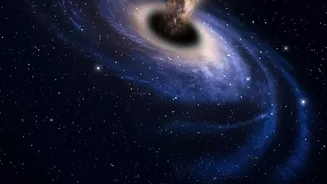
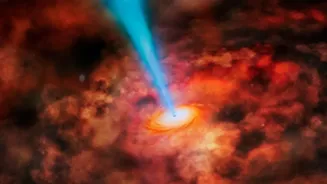
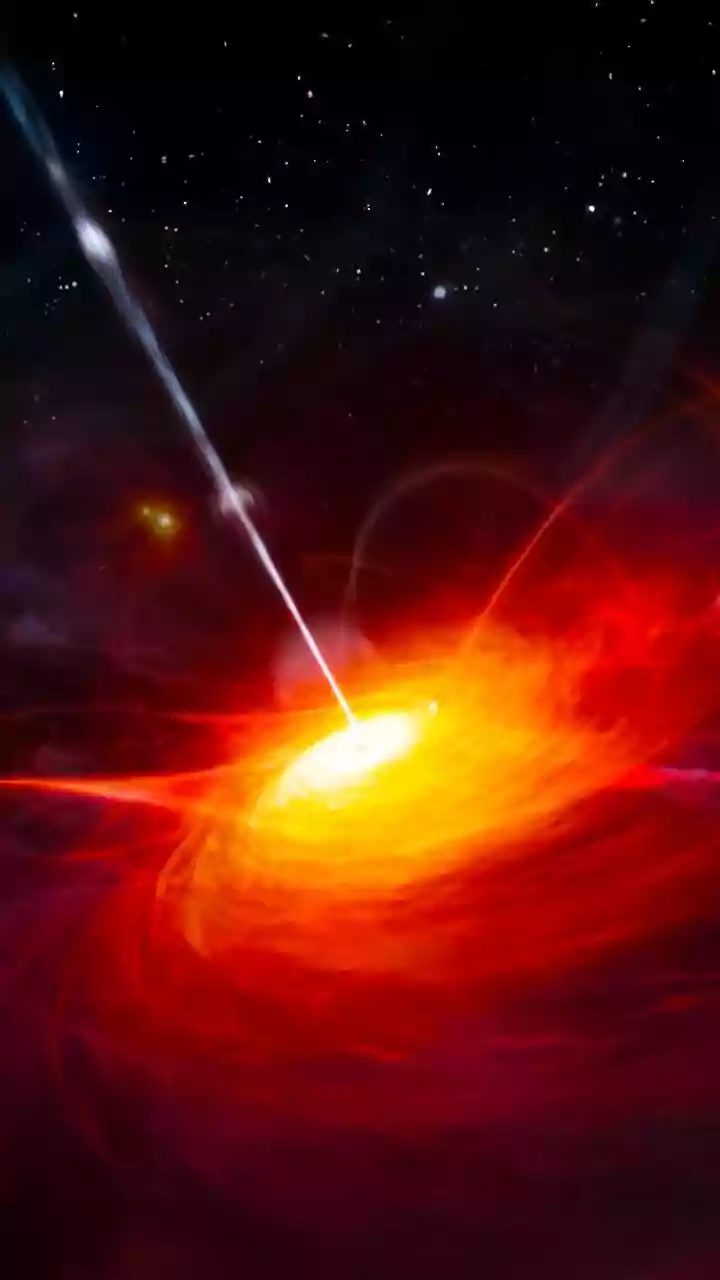
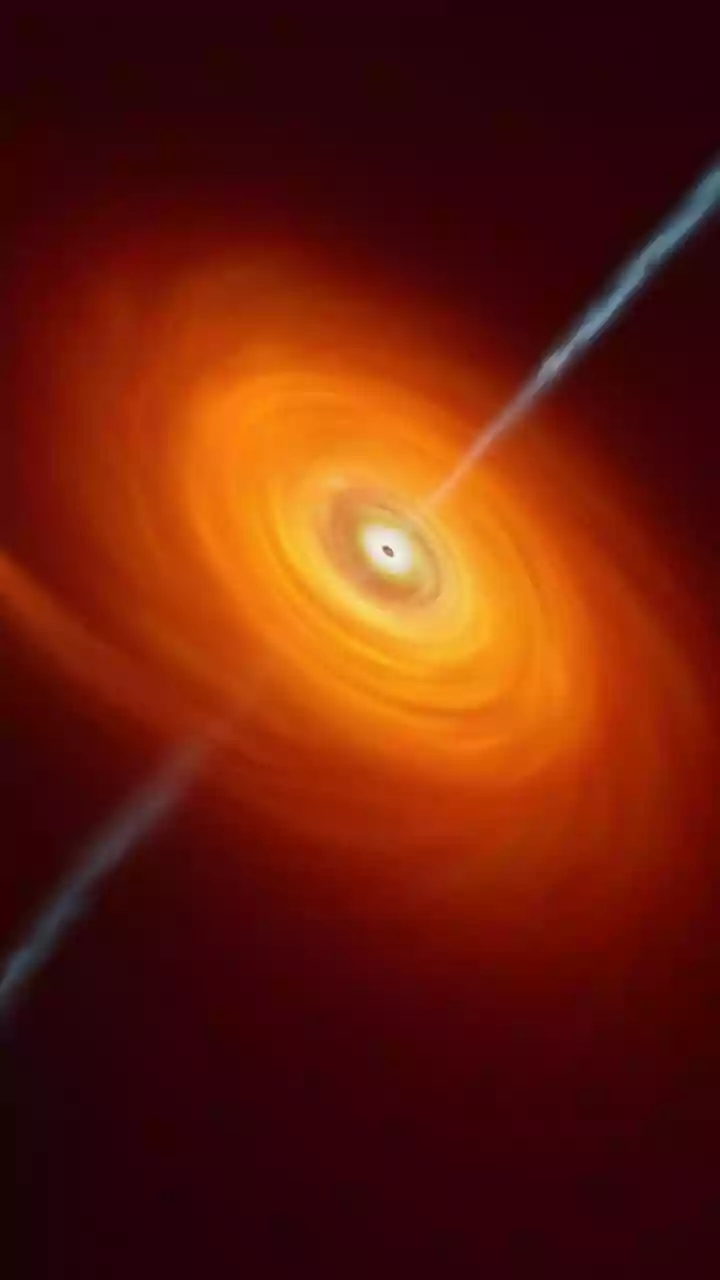
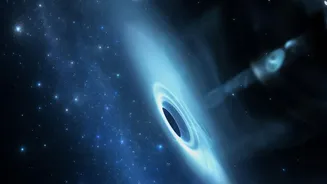
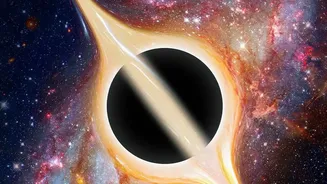
The leading theory, which has gained significant traction, is that LRDs are the chaotic nurseries of supermassive black holes. According to this model, we are not seeing a typical galaxy, but rather a nascent supermassive black hole in a frantic growth spurt. These objects are thought to be feeding so intensely on surrounding gas and dust that they become shrouded in a dense, glowing cocoon. This cocoon is so thick that it absorbs most of the light from the black hole's hyperactive centre and re-radiates it as infrared light, which the Webb telescope sees as a red smudge. Recent deep-space observations of a specific LRD, known as GLIMPSE-17775, have provided the strongest evidence for this 'black hole star' theory to date. By analysing its light spectrum, scientists found tell-tale signs of a dense gas shroud and other features that perfectly match the profile of a growing, hidden behemoth.
A Cosmic Whodunit with Other Theories
But science thrives on debate, and the case isn't closed. The LRD mystery is so new that other compelling theories are also on the table. In mid-2026, a new study proposed a fascinating alternative: what if LRDs aren't a new type of object at all, but the long-lost ancestors of something we see in our own galaxy? This theory suggests LRDs could be globular clusters—ancient, dense balls of stars—in the process of forming. If true, it would solve two major astronomical mysteries in one go: the nature of LRDs and the origin of globular clusters. Other researchers suggest LRDs are simply a temporary, awkward teenage phase that many early galaxies go through before they clear out their dusty cocoons and evolve into the more structured galaxies we see in the universe today. This would neatly explain why they seem to disappear after a certain cosmic age.
Why These Distant Dots Matter
The intense focus on these faint, distant objects is about more than just solving a celestial puzzle. The very existence of LRDs is challenging our fundamental understanding of the early universe. According to many previous models of cosmology, the universe shouldn't have been able to create objects so massive and bright so quickly after the Big Bang. The fact that hundreds of these LRDs, and other surprisingly mature galaxies, are being found is forcing scientists to rethink how quickly the first stars, galaxies, and black holes could form and grow. This gap between theory and observation is where science gets truly exciting. It doesn't mean cosmology is 'broken', but rather that it's about to be upgraded with a more accurate and profound understanding of our cosmic origins, thanks to the data pouring in from Webb.